
The era of Jawi newspapers may have passed, but the memories of producing them continue to hold a special place in the hearts of those who were involved.
One of it was Utusan Melayu that started in 1939 and ceased publication on Dec 31, 2002.
Former Utusan Melayu assistant news editor Nor Sedek Ismail said he still remembered the significant responsibility of ensuring news continued to reach the public through the traditional Malay script.
He said when Utusan Melayu in Jawi was still
published, he was directly involved in coordinating editorial operations, including assigning reporters, reviewing news copy and ensuring content was published in Jawi script with a clear and organised layout.
“The biggest challenge was ensuring the accuracy of Jawi spelling and terminology because even a small mistake could change the meaning of a word and affect readers’ understanding,” he told Bernama when met in Kuala Terengganu.
However, Nor Sedek acknowledged that financial constraints and lack of sustained support were among the factors that made it difficult to sustain the newspaper’s publication.
“We tried to persevere because this was not about individuals, but about preserving the dignity of the nation and Malay heritage.
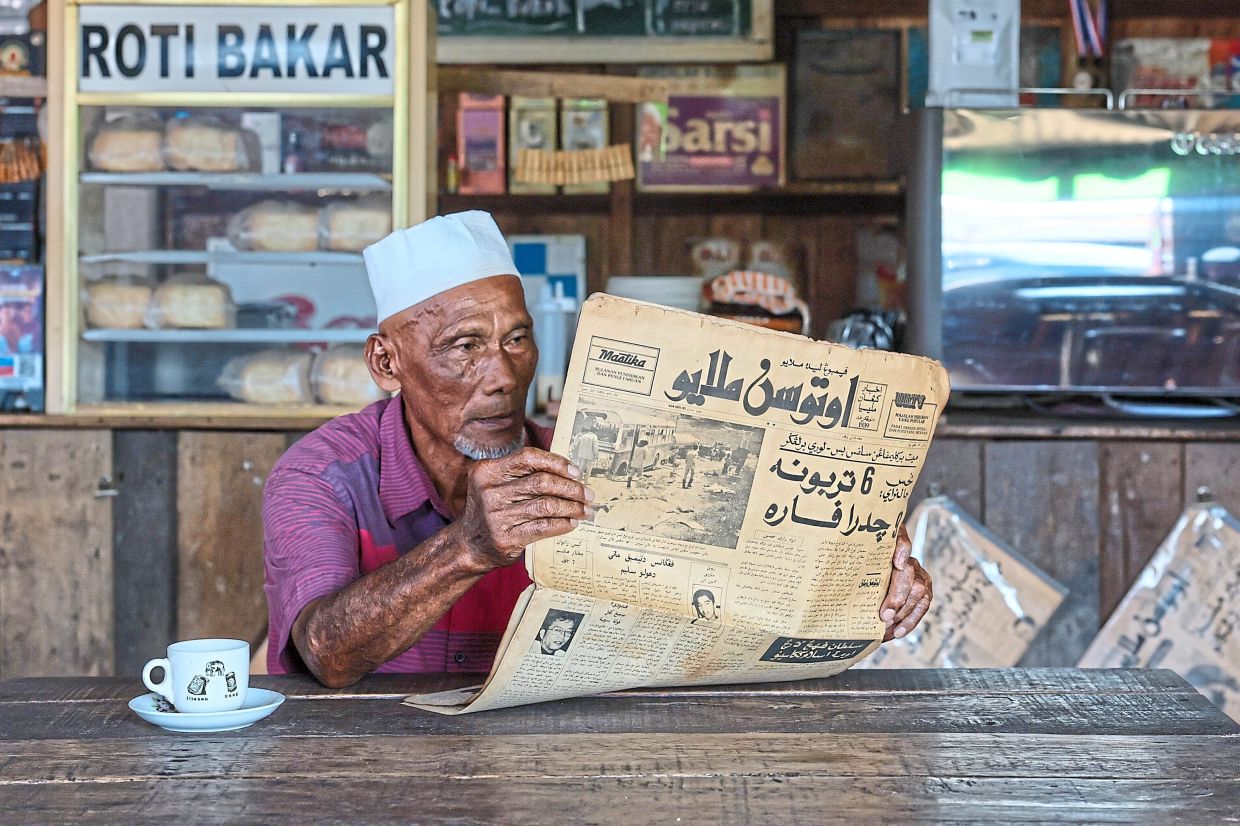
“Without support from companies or other parties, it is difficult to revive Jawi publications,” he said.
Nor Sedek said after Utusan Melayu ceased publication and efforts to continue it on digital platforms were discontinued, the use of Jawi in daily life became increasingly limited.
Today, he said, Jawi is taught in religious schools mainly and villages for the study of classical Islamic texts.
“Many young people today are no longer familiar with Jawi, even though it is part of Malay history and culture,” he said.
Nor Sedek expressed hope that more effort would be made, including by media organisations, to expand the use of Jawi in publications and digital platforms.
Universiti Sultan Zainal Abidin (UniSZA), Faculty of General Studies and Advanced Education senior lecturer
Dr Razi Yaakob said technological developments, the dominance of the Romanised Malay script (Rumi) and growing use of English in the education system and media were among the main factors contributing to the decline in Jawi usage.
Razi, who is also a Fellow at UniSZA Institute of Islamic Malay Civilisation and Product Research, said efforts to revive Jawi should begin in schools with support from the government and media, including through creative digital content to attract younger generations.
He also proposed incentives such as tax relief for premises that used Jawi script on signboards to encourage its wider use in public spaces.
Universities, he said, could also introduce more programmes, clubs and modules related to Jawi to encourage young people to learn it.
“Jawi is not merely a writing system, but part of the identity and intellectual heritage of Malay Muslims.
“If we fail to preserve it, we risk losing part of our own identity,” he said.