STUDENTS from 16 schools across Johor are learning that food security can begin in their own backyards through an innovative programme that combines urban farming, technology and sustainability.
The initiative, known as BioSchool 2.0, brought together more than 530 students to SMK Bukit Batu in Kulai to showcase their urban farming projects, sustainability exhibits and innovations developed under the “Shori no Niwa” (Victory Garden) competition.
Inspired by the Japanese garden concept, the competition was conducted over six months, with participating schools cultivating vegetables and herbs using limited spaces and recycled materials.
SMK Bukit Batu principal Faridah Bujang said participation in the BioSchool 2.0 programme had more than doubled since its introduction in 2023, growing from 230 students to 530 this year.
“BioSchool began with a ‘Design Thinking in Sustainable Food Innovation’ workshop involving 40 students from 10 schools in Johor Baru in 2023.
“In 2024, we carried out a community project at Kampung Melayu Bukit Batu, where students helped to maintain and clean a recreational park, which later won the Malaysia Landscape Architecture Award under the Green Initiative category.”
Faridah said this year’s programme focused on Sustainable Development Goal 2 (Zero Hunger) while exposing students to practical lessons in food production and environmental stewardship.
“By growing their own food, students gain hands-on experience in sustainable agriculture, food security and environmental stewardship.
“They learn teamwork, responsibility, problem-solving and data collection through the GeoTrees application while applying science, technology, engineering and mathematics (STEM) knowledge in real-life situations.
“It also encourages healthier eating habits and helps students appreciate the effort required to produce food,” she said.
“Among the crops commonly planted were chilli, eggplant, ladies’ fingers, spinach, mustard greens, lemongrass, turmeric, ginger and various local herbs selected for their suitability to Malaysia’s climate and ease of maintenance.”
Faridah said produce harvested from the gardens have been used in school canteens, shared among school communities, donated or transformed into value-added products to promote entrepreneurship and circular economy practices.
“This initiative helps create awareness of healthy eating, reduces food waste and strengthens sustainable practices within schools and surrounding communities.”
Students also used the GeoTrees application to record and analyse plant growth data, integrating STEM concepts into real-world sustainability practices.
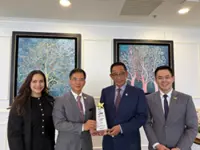
Syarikat Perumahan Negara Bhd (SPNB) Johor director Irwan Sharifuddin launched the programme, toured exhibition booths and interacted with participants before presenting a RM9,000 contribution to SMK Bukit Batu to support the implementation of BioSchool 2.0.
SK (P) Sultan Ibrahim in Johor Baru emerged champion in the Shori no Niwa competition, with SK Parit Kudus in Pontian and SMK Kulai Besar in Kulai as runners-up.
The programme was jointly organised by Universiti Teknologi Malaysia TropicalMap Research Group, SMK Bukit Batu and SPNB to promote sustainability education and encourage students to adopt environmentally responsible practices from a young age.