
Recently, my husband and I had a memorable nine-day adventure that took us through some of China’s most scenic and culturally rich destinations in northern Yunnan, namely, Dali, Lijiang, Shangri-La and Balagezong.
There were 19 travellers in our tour group, ranging in age from 35 to 83, and hailing from Malaysia and Australia. It was a cheerful mix of seasoned travellers.
Our tour leader Soo, and local guide Tsui, took us to explore the wonders of Yunnan with enthusiasm and camaraderie.
We flew in to Kunming, the “Eternal Spring City”, and then toured the various cities by bus.
Dali (at 1,900m above sea level) was a charming Ancient City surrounded by the Changshan Mountain range, and sparkling Erhai Lake. The air was crisp and fresh as we strolled through the old town with its cobbled streets and ethnic Bai architecture. I loved the relaxed pace of life here – little shops selling tie-dye products, authentic silverware and souvenirs.
We had an interesting Bai cultural heritage experience: a three-course tea session with a song-and-dance performance. The tea tasted bitter at first, then sweet and later fragrant.
En route to Lijiang, we were mesmerised by the Shaxi Ancient Town, where the local residents were mainly Bai people. We had fun riding horses and were brought back in time along the Ancient Tea Horse Road.
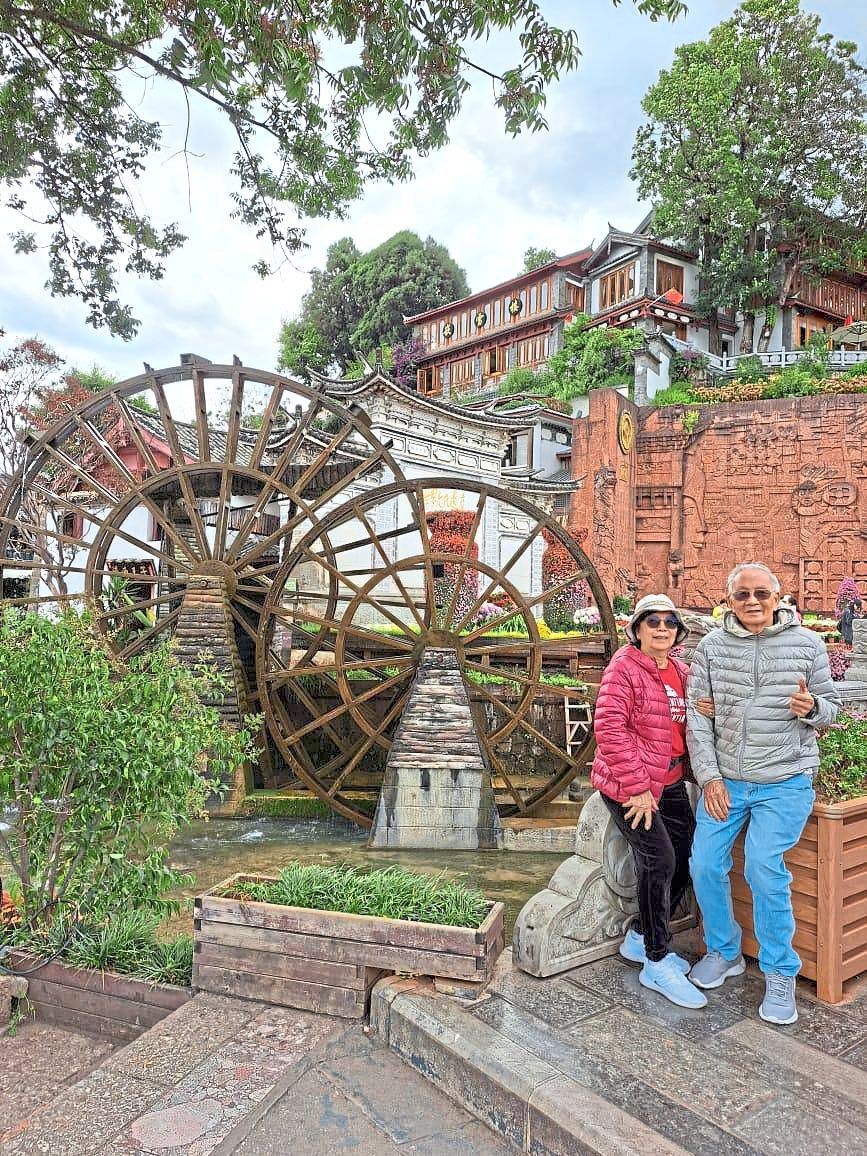
In Lijiang (2,416m), a Unesco World Heritage Site famous for its well-preserved Old Town and winding canals, tastefully arranged flowers of different hues – mainly chrysanthemums – greeted us.
The sound of rushing canals also followed us wherever we walked, and every lane led to a hidden square or a wooden bridge.
Fascinated by the ethnic Naxi culture there, we participated in various local activities. We played the drums to exciting music, donned ethnic bridal costumes, learned pictographic Naxi language and took home sweet mementos of our individual Dongba zodiac symbols.
Then came Shangri-La. The altitude made everything feel different – the air was thinner, the light brighter, the sky azure blue. The temperature dropped sharply, and the cold tested our endurance; many of our members experienced altitude sickness.
Herbal drinks and breathing through oxygen canisters helped us overcome it.
With such challenges, it was wonderful to see everyone in the group being kind and considerate. We shared medicine, ginger tea and words of comfort. That spirit of caring for one another truly warmed my heart.
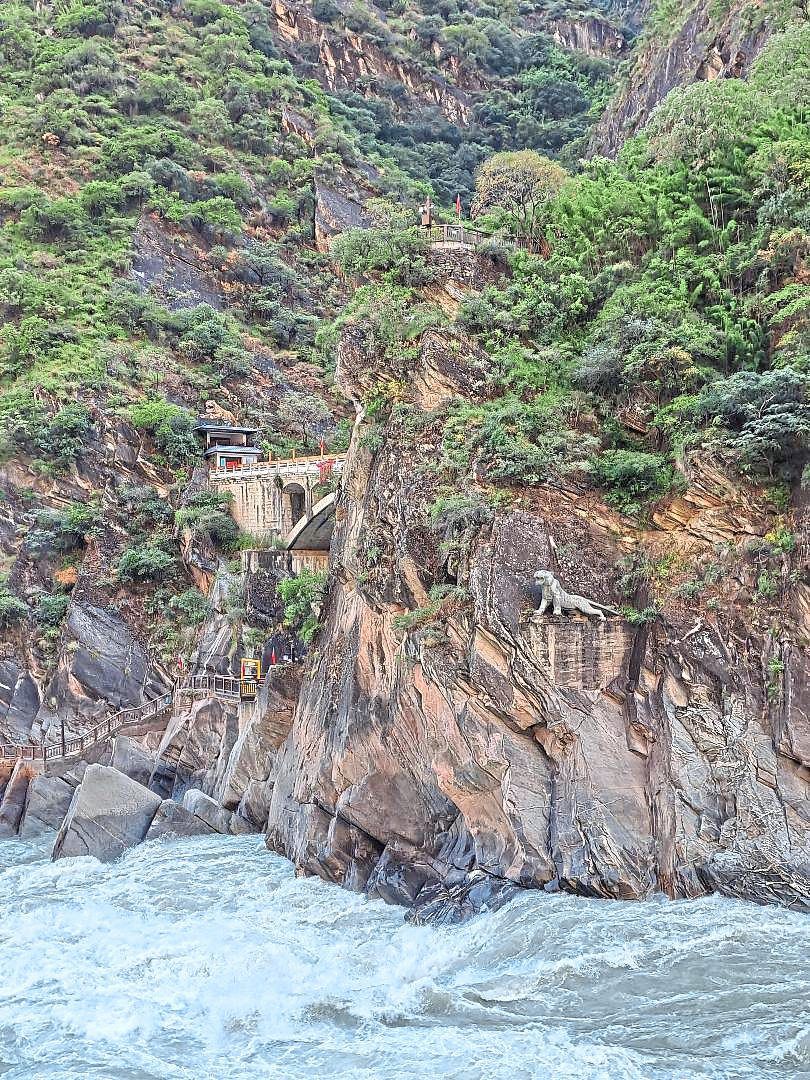
We visited the Tiger Leaping Gorge, one of the deepest and most spectacular river canyons in the world. It was an easy descent for all of us ... we took the long escalators. The views of the gorge were breathtaking while the roar of the Jinsha River was loud and thunderous, mirroring the ferocity of the tiger statues situated above it.
I did not climb up the 140 steps to view the Songzanlin Monastery (or Little Potala Palace), the largest Tibetan Buddhist monastery in Yunnan – I had already been to the Potala Palace in Tibet many years ago.
My fellow travellers told me the monastery was marvellous, though, with its golden roof shining against the deep blue sky.
The final destination was Balagezong (5,545m), an awe- inspiring national park. Its towering cliffs, winding gorges, and crystal-clear rivers made it a fitting finale.
We walked along the plank road to view the stunning spectacle. Standing there, looking at the vastness before me, I felt very small yet deeply grateful to witness such beauty.
Many of my fellow travellers walked up to the top where they had a good view of the spectacle below via a clear glass platform.
From Shangri-La, we took a high-speed train back to Kunming, where we had a great time strolling through Nanping Pedestrian Street. Besides the scenery and intriguing culture, food there was fantastic. We had roast duck, grilled meats, a variety of mushrooms, soups, scallops, oysters, fish, unique vegetables and, of course, Yunnan’s famous “crossing the bridge” noodles.
Throughout the trip, we laughed, shared exciting conversations and had great camaraderie. Even when the weather became too cold or when someone fell sick, we looked out for each other.
Harmony and mutual support bound us together – a rare and heartwarming bond among strangers.
Yunnan had given me not just stunning scenery, but also cordial friendship, care and shared adventure.
The views expressed are entirely the writer’s own.