Federal territories: What can Malaysians see and do at KL, Putrajaya and Labuan?


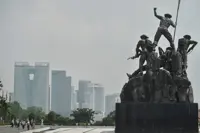
From well-manicured gardens to strategically placed majestic structures, everything about Putrajaya spells order and careful planning. – Photos: Tourism Malaysia

Kuala Lumpur, Putrajaya and Labuan celebrate the Federal Territory Day on Feb 1 every year.

Also known as Hari Wilayah Persekutuan, it marks the anniversary of the formation of the KL federal territory in 1974.

KL, formerly part of the state of Selangor, became a federal territory when the then Sultan of Selangor, Sultan Salahuddin Abdul Aziz Shah, handed it over to the federal government to make it the federal capital.

Meanwhile, Labuan and Putrajaya became federal territories in 1984 and 2001, respectively.

Labuan is famous for its pristine beaches and surrounding islands.

While the observation of the holiday is much appreciated by those who reside or work in the federal territories, many people – especially the younger generation – might have little knowledge about the significance of the day.

Professor Dr Zaid Ahmad, of the Department of Nationhood and Civilisation Studies, Faculty of Human Ecology, Universiti Putra Malaysia (UPM) – in an interview with Bernama – said that it’s important to instil a sense of pride in the federal territories.

“Those born and residing in the federal territories should be taught (about the history) of the place they live in, ” he said.

Seri Perdana in Putrajaya is the official residence of the Prime Minister.

The formation of the federal territories, Zaid said, also promotes unity and stimulates economic growth between Peninsular Malaysia and Sabah and Sarawak.

However, he added that the sense of belonging and pride of the federal territories is still lacking among some Malaysians.

According to the academician, Malaysians can learn to appreciate the territories better through the exploration of heritage and history.

To learn more about the rich background of the federal territories, Malaysians should take some time to visit a few interesting destinations there. We’ve listed some top tourist attractions located in the federal territories of KL, Putrajaya and Labuan that are worth checking out.

Kuala Lumpur

The country’s capital city has certainly come a long way since its initial reputation as a “muddy confluence”. What essentially started as a tin mining hub has today become one of the most dynamic cities in the world.

Lonely Planet describes KL as a capital that’s a feast for visitors’ senses.

“Here you’ll find historic monuments, steel-clad skyscrapers, lush parks, mega-sized shopping malls, bustling street markets and lively nightspots, ” the popular travel publisher wrote in its guide featuring KL.

The remarkable Sultan Abdul Samad Building in KL, built in 1897, served as the government administration building during the British era. It was the largest building of its day.

Its shiny modern appeal aside, there’s certainly much heritage and history to uncover in the city. In fact, KL is the centre stage of Malaysian history.

In 1957, Tunku Abdul Rahman declared the country’s independence at the Stadium Merdeka, which still stands today.

Another historic venue to check out is the Dataran Merdeka and its surrounding colonial buildings.

From Dataran Merdeka, head on to the KL City Gallery to learn some historical facts and see old photographs. The gallery, a beautiful neo Renaissance-inspired building, was once used to accommodate the printing needs of the British administration.

Other colonial buildings to look out for in the vicinity are the Music Museum and the National Textile Museum. The three-storey Music Museum building was once the location of the Chartered Bank, as well as the National History Museum.

One of the city’s most iconic landmarks – the Sultan Abdul Samad Building – is nearby. Built by architects A.C. Norman and R.A.J. Bidwell, its striking clock tower is easily recognisable.

The other landmarks around include the Victorian Fountain and the former High Court building.

The KL Railway Station also has a fascinating facade and is a historical icon in the city. Do a photo walk from the station and admire the National Mosque and the Malayan Railway Administration Building.

Labuan

Of the three federal territories, Labuan is probably the least-known one. Located off the northwest coast of the Borneo island and facing the South China Sea, the territory isn’t high on most Malaysians’ list of places of to visit.

That’s a shame because Labuan does have its fair share of charm and is steeped in history. Local tour guide and self-taught historian Willie Teo said Labuan was eyed by British officials in the past.

“The British wanted Labuan for its port and coal. The island was previously under Brunei, and became a British colony on Dec 24,1846; the place was named Victoria Town then, ” Teo said in an interview.

The Chimney is one of Labuan's most famous landmarks.
Coal was mined in several areas namely Batu Arang, Merinding and Tanjung Kubong. That coal mining history can be traced to one of the island’s most famous landmarks, the Chimney.

The name of the 32.5m structure in Tanjung Kubong would suggest that it was used as a smoke chimney in the past. Curiously, no traces of soot were detected inside the structure.

Locals claimed the structure was built to provide ventilation to miners in the underground tunnel, but excavation works revealed no such tunnel. Another theory is that the museum was a watchtower to observe the arrival of ships.

Labuan was held by the Japanese for three years during World War II, and it was also the place where officers responsible for the death marches from Sandakan in Sabah went on trial.

Spots associated with World War II are the Allied Landing Point, Japanese Surrender Park and Labuan War Cemetery.

The Japanese Surrender Point hosted the signing ceremony that marked the end of the war in Borneo. The memorial point, located in a small park near Timbalai, also rewards visitors with a nice view of the South China Sea.

Within the Labuan War Cemetery is the Labuan Memorial commemorating men of the Aus-tralian Army, Royal Australian Air Force and the local forces of North Borneo, Sarawak and Brunei.

While in Labuan, be sure to check out the pristine beaches and surrounding islands too. The smaller islands of Pulau Kuraman, Pulau Daat, Pulau Rusukan Besar, Pulau Rusukan Kecil, Pulau Papan and Pulau Burong are popular among island-hopping tourists.

Another important fact to know is that Labuan is a duty-free island, so shopping can be quite an experience here too.

Putrajaya

The administrative centre of the country doesn’t shy away from the fact that it is a planned city. From well-manicured gardens to strategically placed majestic structures, everything about Putrajaya spells order and careful planning.

But beneath all that engineering feat, this federal territory holds an important position in the history books of Malaysia. Named after the first Prime Minister of Malaysia (Tunku Abdul Rahman Putra Al-Haj), Putrajaya has been the administrative capital for the federal government since 1999.

As of 2012 all of the country’s governmental ministries had relocated to Putrajaya.

The imposing and majestic five-storey Palace of Justice in Putrajaya houses the nation's Federal Court and Court of Appeal.

The most notable building here is Perdana Putra, which holds the Prime Minister office. With its palatial-style green dome, the imposing building is an instant eye-catcher that features elements of Islamic and modern architectures.

Meanwhile, Seri Perdana is the official residence of the Prime Minister. Located on beautifully landscaped grounds, the building complex consists of three blocks with reception, banquet and residential facilities.

Another distinctive landmark is the Putra Mosque which is located at the edge of a scenic man-made lake. The iconic mosque’s dome is made of rose-tinted granite and stands at 50m high.

For history lovers, the Millen-nium Monument documents milestones and important periods in the country’s history. A multilevel platform is found around the base of the column. Visitors would pass engraved glass panels which trace important milestones in the nation’s history in chronological order.

The Palace of Justice is also an important landmark. Popular among photographers thanks to its majestic minarets, the complex houses various courts and the judicial departments of the country. The scenic bridges, which come alive at night with LED lights, at Putrajaya also warrant a stopover. The Seri Wawasan Bridge for one, resembles a sailing ship. Look out too for the Putra Bridge and Seri Gemilang Bridge.

On weekends, head to the Putrajaya Lake for some cycling, jogging or walking. Most of the water sports activities have not resumed operations yet, but there are still plenty of other things to do there.

Travel around Malaysia and book the best hotels at the best rates with Hotels Promo

Get 20% OFF The Star Digital Access

Monthly Plan

RM 13.90/month

RM 11.12/month

Billed as RM 11.12 for the 1st month, RM 13.90 thereafter.

Best Value

Annual Plan

RM 12.33/month

RM 9.87/month

Billed as RM 118.40 for the 1st year, RM 148 thereafter.

Follow us on our official WhatsApp channel for breaking news alerts and key updates!

Next In Travel

Hello from the other side: Why Penang's Bukit Mertajam is worth a visit
To better understand the American Revolution, go to Barbados
Explore the world with local airlines' holiday campaign, expanded reach
Activists launch new case against luxury lodges in Maasai Mara
Promoting eco-tourism products in Kedah and Penang
Tourists soldier on in Rome despite the blistering heat
Thailand gets serious about chasing high-spending tourists
Floating markets in South-East Asia to check out
This airline has an in-cabin wellness zone for its nearly 20-hour direct flight
Chinese travellers choose South-East Asia destinations this summer

Others Also Read