



EVERY year, thousands of school leavers face one of the biggest decisions of their lives: choosing a university course before they have had the opportunity to discover their interests, strengths and career aspirations.
For many 16- and 17-year-olds, the choice can feel overwhelming. A student may enjoy technology but remain uncertain whether artificial intelligence (AI), cybersecurity, game development or robotics would suit them best.
Another may be drawn to business but is unsure whether their future lies in finance, digital marketing, entrepreneurship or international business.
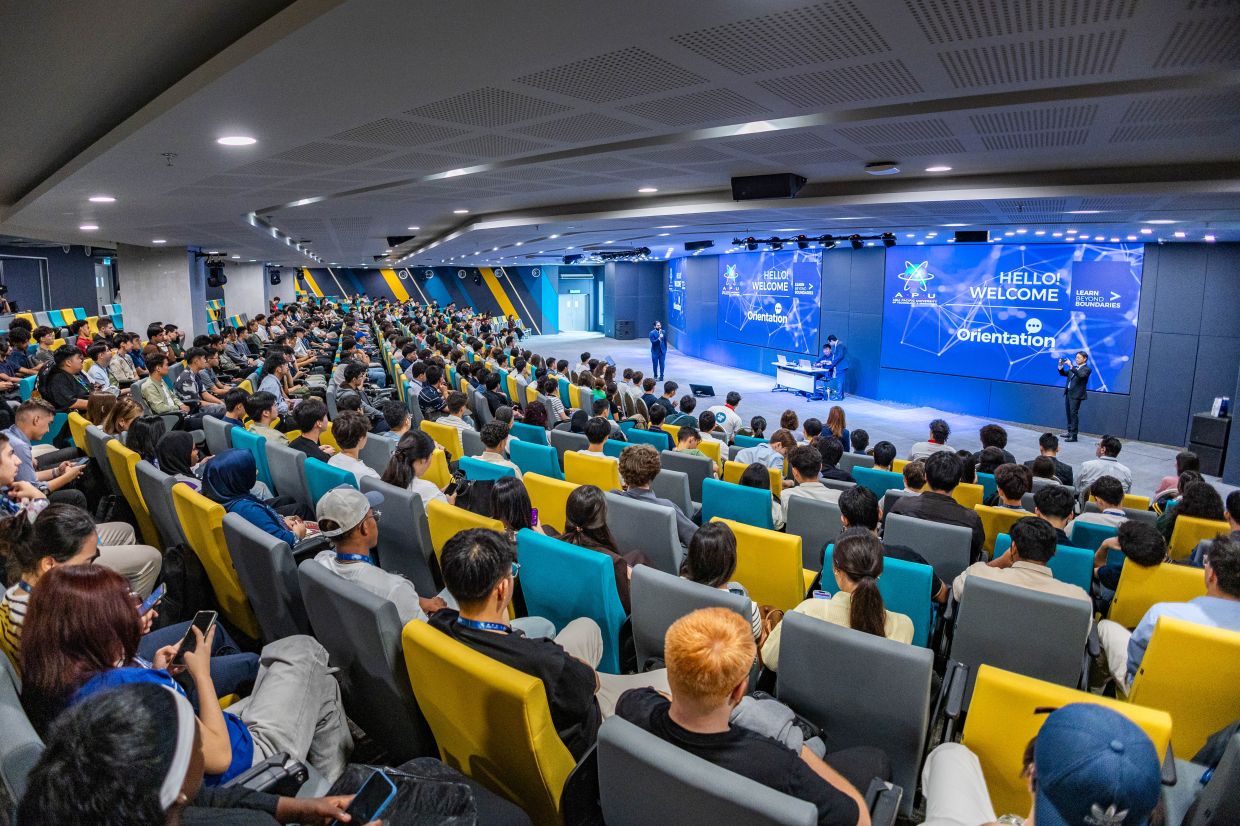
Rather than expecting young people to have everything figured out immediately, a well-designed foundation programme can give them space to explore disciplines, strengthen their academic abilities and make a more informed degree choice.
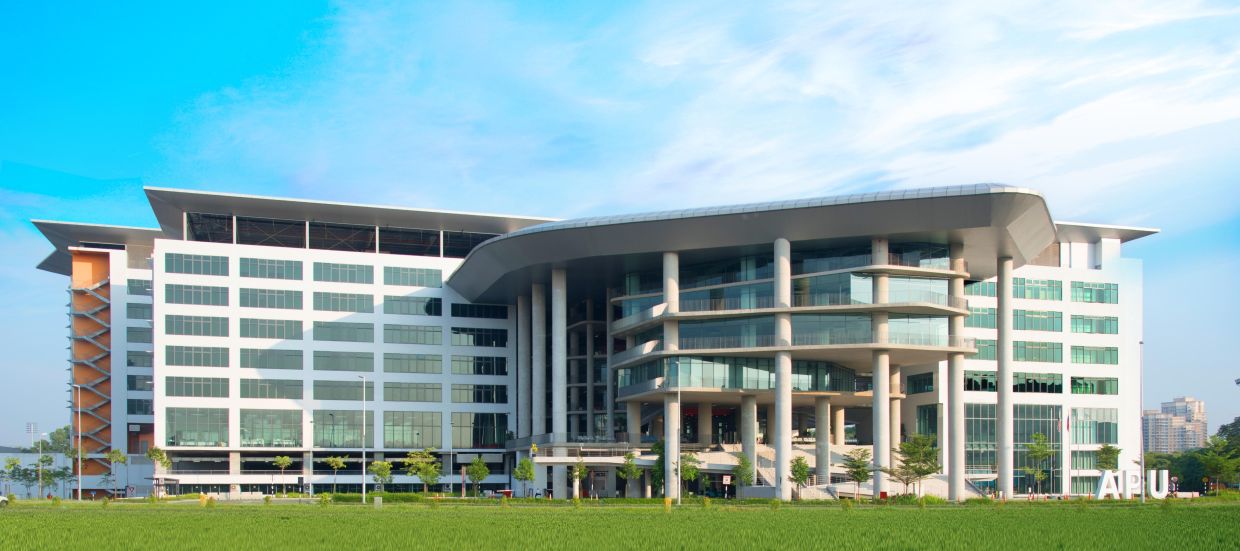
At Asia Pacific University of Technology and Innovation (APU), this philosophy underpins a Foundation Programme that offers students both direction and flexibility.
Through four routes – Business, Finance and Social Sciences; Computing and Technology; Engineering; and Architecture and Design – students gain academic fundamentals and early exposure to fields they may eventually pursue at degree level.
Its message is clear: one foundation. unlimited possibilities.
Your future, your choice
APU’s one-year Foundation Programme features robust modules, clearly defined learning outcomes, practical assessment approaches and flexible progression pathways.
Students complete a common first semester before selecting a route aligned with their interests in Semesters Two and Three. This structure gives them time to adjust to university learning, explore potential pathways and avoid committing too early to one narrowly defined profession.
The learning outcomes are contemporary and discipline-focused, providing students with clearer exposure to AI, game development, architecture, international relations and other specialised fields.
AI literacy begins at Foundation level
One of the programme’s most significant features is the integration of AI across several study routes.
The programme introduces AI through models such as AI essentials for the digital world; AI for business and design; and AI, robotics and automation fundamentals. AI-related learning also appears within architecture, design and digital subjects.
This means students encounter AI in context. Computing students connect it with programming and cybersecurity; business students examine its role in innovation and decision-making; and engineering students explore its relationship with robotics and automation.
A computing route rebuilt for the digital world
The Computing and Technology route reflects today’s digital ecosystem through models including computational thinking and programming; computer systems, networks and cloud technologies; cyber security and digital resilience; and AI essentials for the digital world.
Game development is also presented as a distinct pathway. Students build relevant skills through subjects such as ‘exploring games and immersive technologies,’ while progression options identify ‘game development’ separately alongside areas such as AI, data analytics, digital forensics, immersive technology, cybersecurity and quantum computing.
Business education for a changing economy
The Business, Finance and Social Sciences route moves beyond conventional introductory subjects to develop future-focused competencies.
Students will explore digital business and entrepreneurship; business economics and global markets; next-gen accounting tech and fintech; fundamentals of risk management; global citizenship and cultural intelligence; and AI for business and design.
These interdisciplinary choices reflect how modern business connects finance, technology, culture, innovation and global decision-making.
Stronger direction for engineering and design
Engineering pathways are clearly defined across Electrical and Electronic Engineering, Mechatronic and Mechanical Engineering, Computer Engineering and Petroleum Engineering.
Students also gain exposure to AI, Robotics and Automation Fundamentals; Computational Thinking and Programming; and Digital Business and Entrepreneurship, combining technical foundations with innovation and commercial awareness.
Architecture and design students benefit from distinct preparation through options such as Architecture and Built Environment; Architectural Drawing and Communication; and Architectural Design Project. These options differentiate preparation for architecture from pathways in industrial design, animation, visual effects and digital advertising.
Skills that extend beyond the classroom
APU academic development and strategy deputy vice-chancellor Prof Dr Murali Raman said the common curriculum extends learning beyond academic preparation.
“Through modules such as Digital Communication and Collaboration; Research and Data Literacy; and Public Speaking and Personal Branding, students build the confidence to communicate effectively, interpret information and data, collaborate productively and present themselves professionally,” he said.
Supported by academic mentors, Foundation students can explore their interests, recognise their strengths and make degree choices based on experience and informed understanding rather than pressure or assumption.
Learn, apply and improve
APU’s Foundation Programme emphasises practical, continuous learning rather than relying only on one high-stakes final examination.
Depending on the module, students are assessed through assignments, presentations, projects, case studies, quizzes, coursework and class participation. Final examinations are included where appropriate to maintain a balanced academic foundation.
This approach gives students several opportunities to demonstrate understanding, receive feedback and improve. It also develops critical thinking, communication, teamwork, problem-solving and time management.
“APU’s Foundation Programme offers an applied, digitally fluent and future-ready pathway,” said APU vice-chancellor Prof Dr Ho Chin Kuan.
“By integrating AI, data literacy, cybersecurity, entrepreneurship and personal branding with clear discipline-specific preparation, we aim to equip students with the exposure, direction and confidence to make informed degree choices and embrace future opportunities.”
Prospective students and parents can visit APU’s Open Day on Aug 22 and 23 to explore the campus, meet lecturers and students, as well as discover how one Foundation Programme can open the way to many future possibilities.
For more information, visit the website.
