
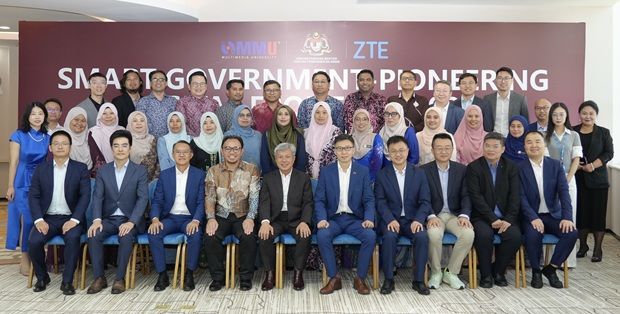
GLOBAL leading provider of integrated information and communication technology solutions, ZTE Corporation announced that a one-week international programme themed "Smart Government – Pioneering Digital Frontiers 2030" concluded successfully in Shenzhen, China.
It brought together 21 Malaysian government senior officers to strengthen their understanding of artificial intelligence (AI), cybersecurity and emerging digital technologies for public sector transformation.
The programme was conducted in collaboration with Multimedia University (MMU) and ZTE, with sponsorship from the Public Service Department of Malaysia.
It provided a platform for knowledge exchange, industry engagement and exposure to technological developments relevant to Malaysia's ambition to build a more intelligent, secure and citizen-centric government.
The closing ceremony marked the culmination of a week of learning and engagement focused on the opportunities and challenges associated with a digital government.
The programme placed particular emphasis on the strategic use of AI to improve public service efficiency and decision-making, as well as the importance of cybersecurity in protecting government data, digital infrastructure and public trust.
Commenting on the significance of the programme, ZTE Malaysia managing director Liu Bang said: "Digital transformation is about more than deploying technology; it is about creating meaningful improvements in the way governments operate and serve their citizens.
“Artificial intelligence can help public institutions make better-informed decisions and improve operational efficiency, while cybersecurity provides the foundation of trust required for digital services to succeed.
“Through collaboration with Multimedia University and the Malaysian Government, we hope to contribute to knowledge exchange and support Malaysia's journey towards a smarter, more secure and more connected public sector."
Multimedia University chief executive officer and president Prof Datuk Dr Mazliham Mohd Su'ud, emphasised the role of human capital development in supporting the country's digital ambitions.
"Building a smart government requires more than access to advanced technology. It requires capable leaders, a skilled workforce, and a strong understanding of how to apply innovation responsibly to address real public sector needs.
“By strengthening knowledge in artificial intelligence and cybersecurity, we can help prepare government leaders to make informed decisions, manage emerging risks and translate technological advancements into better outcomes for the people of Malaysia," he shared.
He further emphasised that collaboration among universities, industry and government provides an important platform for continuous learning, applied knowledge and developing future-ready public sector talent.
Speaking at the ceremony, Public Service Department (JPA) public sector reform division principal assistant director Syed Ahmad Bashah Syed Anwar said: "The sponsorship by the Public Service Department of Malaysia reflects the importance of continuous professional development in preparing public officers for the evolving demands of digital governance.
“Investment in leadership capabilities, digital literacy and technological awareness is essential to ensuring that public sector institutions can adapt to emerging challenges while maintaining high standards of accountability, security and service quality."
The programme's conclusion reinforces the aspiration behind "Smart Government – Pioneering Digital Frontiers 2030" to encourage innovation, strengthen digital capabilities, and promote a forward-looking approach to public administration.