TAKE a drive through Kuala Lumpur, Petaling Jaya or George Town and the picture is painfully familiar: double-parked cars strangling busy streets, buses forced into impossible turns and illegal spots claimed outside LRT stations, banks and night markets.
The root cause is no mystery.
A culture of tidak apa thrives because enforcement is patchy.
Motorists gamble on the odds of escaping a ticket, knowing manpower is stretched thin.
Convenience wins, compliance loses.
It is time to admit the obvious: outdated manual patrols cannot solve a modern urban crisis.
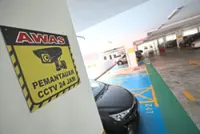
The solution lies in technology – specifically, the strategic deployment of high-definition closed circuit television (CCTV) cameras at parking hotspots.
Unlike human officers, cameras never blink, never tire and never miss a plate number.
Their presence alone reshapes behaviour.
Once drivers realise that every illegal stop is automatically recorded, the excuse of “just one minute” evaporates.
Enforcement becomes certain, not occasional. This shift delivers two critical benefits; deterrence and efficiency.
Visible surveillance backed by warning signage discourages violations before they happen.
Automated monitoring frees enforcement teams to focus on traffic flow and serious offences, rather than chasing routine infractions.
Kuala Lumpur City Hall (DBKL) has already committed to installing 10,000 new smart CCTVs, bringing the city’s total to 20,000 units.
Allocating part of this network to illegal parking zones is the logical next step.
With photographic proof, catching culprits becomes straightforward – and with AI integration, alerts can be triggered the moment a violation occurs.
But technology is only as strong as its upkeep.
Cameras must be maintained, monitored and trusted to function. A broken system is worse than none at all.
Kuala Lumpur cannot reclaim its roads with manpower alone.
Automated surveillance offers a scalable, cost-effective and undeniable solution.
By placing CCTVs at strategic choke points, city councils can finally restore order, protect public transport and give our urban centres the breathing space they desperately need.
DR POLA SINGH
Kuala Lumpur