
Clad in a baju kurung, Siti Azmira Mat Ghani, 39, cuts a graceful figure as she makes her way to work. But instead of heading to an office, she climbs into the driver’s seat of a 44-seater double-decker tour bus.
For this bus driver, traditional Malay attire is more than just clothing – it is a symbol of her identity as a woman which she carries with pride.
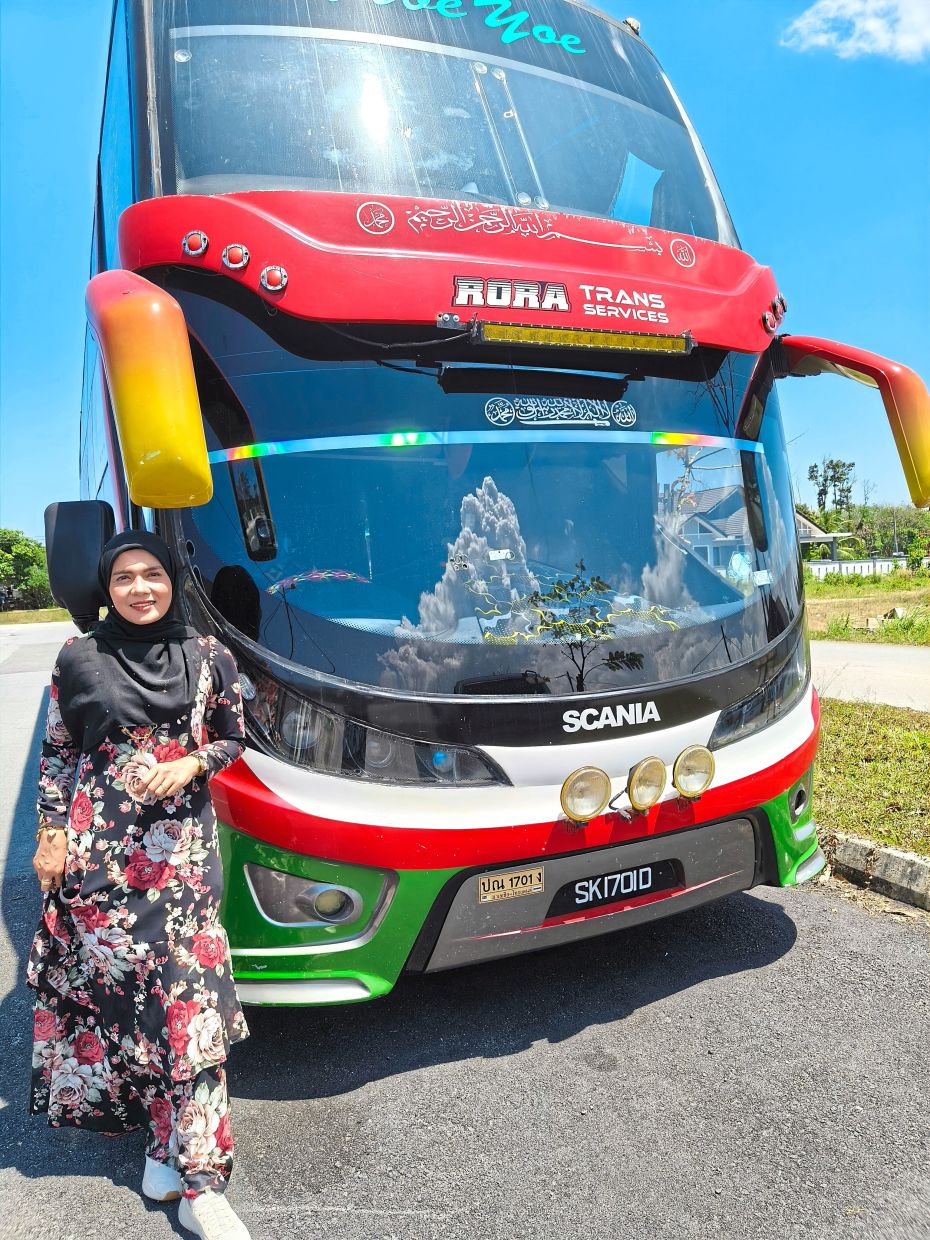
“I think it looks 'ayu' (elegant and graceful),” she says during a recent video interview from her home in Kampung Banggol Peradong.
Her choice of workwear often turns heads, but for Siti Azmira, combining grace with grit is simply her way of staying true to her heritage while doing her job.
“Passengers and the public are often surprised to see me driving a bus in traditional attire,” she says. “It’s not common, so people notice. But for me, it makes me feel more confident and comfortable.”
The tour bus driver shares snippets of her long-distance journeys in beautiful outfits on TikTok, where her unique work style has attracted growing attention. Her choice of attire has since earned her interview appearances on TV and radio.
Grace on the road
Siti Azmira is living proof that those behind the wheel can be both professional and graceful, even in a role long associated with conventional uniforms such as trousers and long-sleeved shirts.
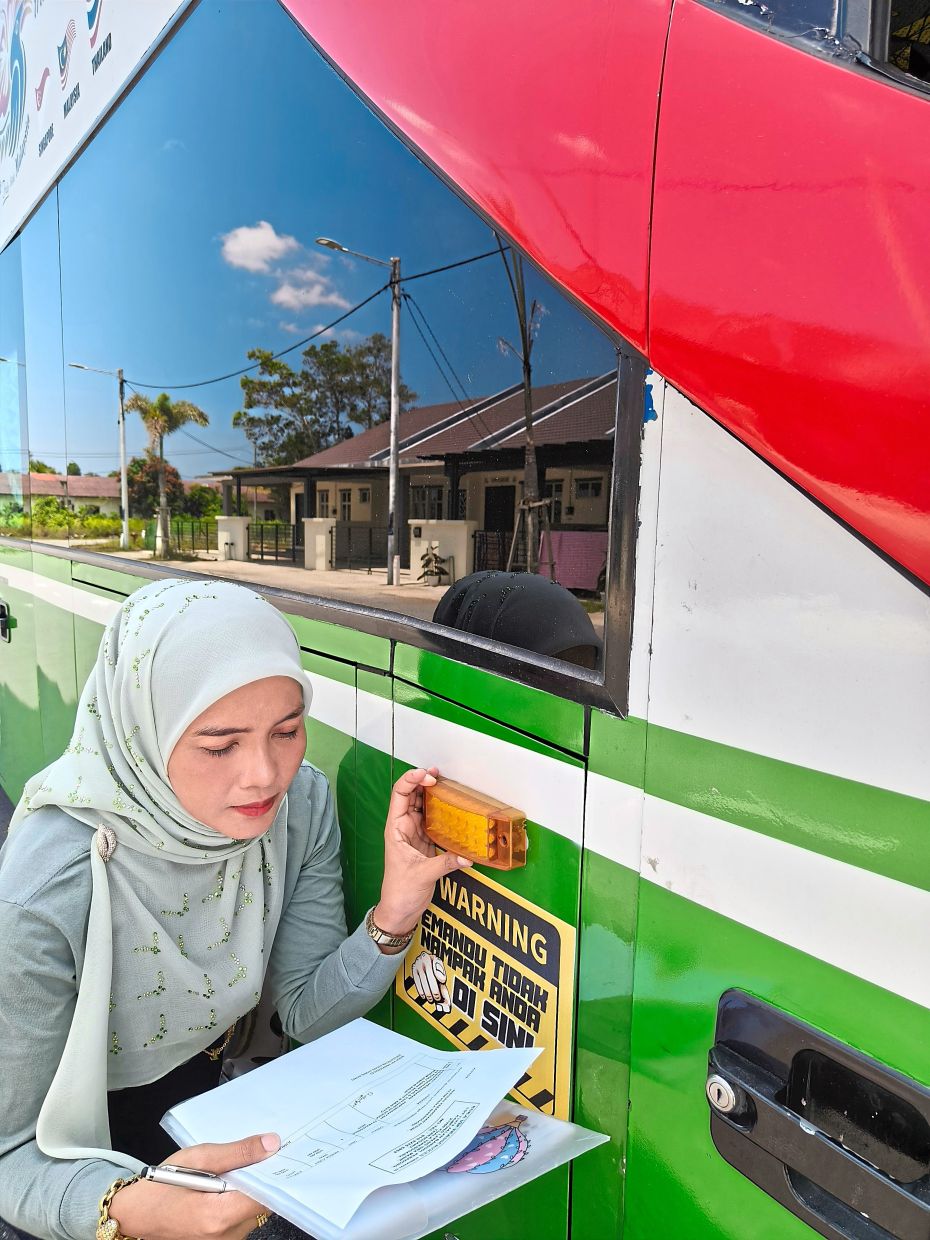
"It’s not difficult to get to my seat, as there are steps leading up to the driver’s area,” says Siti Azmira, who has been a tour bus driver since 2025.
Some might wonder whether a more practical outfit would be easier if she encounters mechanical issues.
“A bus tyre is between 1m-1.2m and I’m about 160cm. So it’s almost three-quarters of my height. If I get a flat tyre, I definitely can’t change it myself.
“A bus weighs several tonnes, so the tyre can’t be changed like a car tyre. I would need to call roadside assistance because they have specialised heavy-duty tools. You can’t rely on a basic emergency kit (like those in cars) for this.”
Instead of sandals or heels, she opts for sports shoes, which are more comfortable and safer for driving.
The mother of three obtained her Public Service Vehicle (bus) licence and Class E heavy vehicle licence in 2024. She also holds Class B (motorcycle) and Class D (car) licences.
In 2016, Volvo Group launched the Volvo Iron Women initiative, a nine-week vocational training programme aimed at preparing women for careers as heavy-duty truck drivers. To date, more than 800 women worldwide – including Malaysians – have completed the programme.
In the rail sector, Farah Amira Abdul Halim made history as the first woman to operate the KL Monorail. On Rapid Penang’s buses, just 19 of over 700 bus captains are women, according to a 2025 article “Penang bus ridership hits 46,000 daily; more women drivers wanted” in The Star.
Meanwhile, container truck driver Sufiah Zainudin has gained more than 1.1 million TikTok followers, who watch her confidently load and manoeuvre large container trucks.
Their journeys show that with resilience and determination, barriers can be broken and women can thrive in traditionally male-dominated fields.
“If you are interested in something, everything becomes easier. You just have to push yourself to try,” says Siti Azmira.
Don’t give up
Siti Azmira and her husband, Mohd Amirul Amri Mohamad, 35, have been running a Kuala Terengganu-based transportation and car rental business for over a decade. Together, they manage a fleet of about 20 vehicles, including cars, multipurpose luxury vehicles and a tour bus.
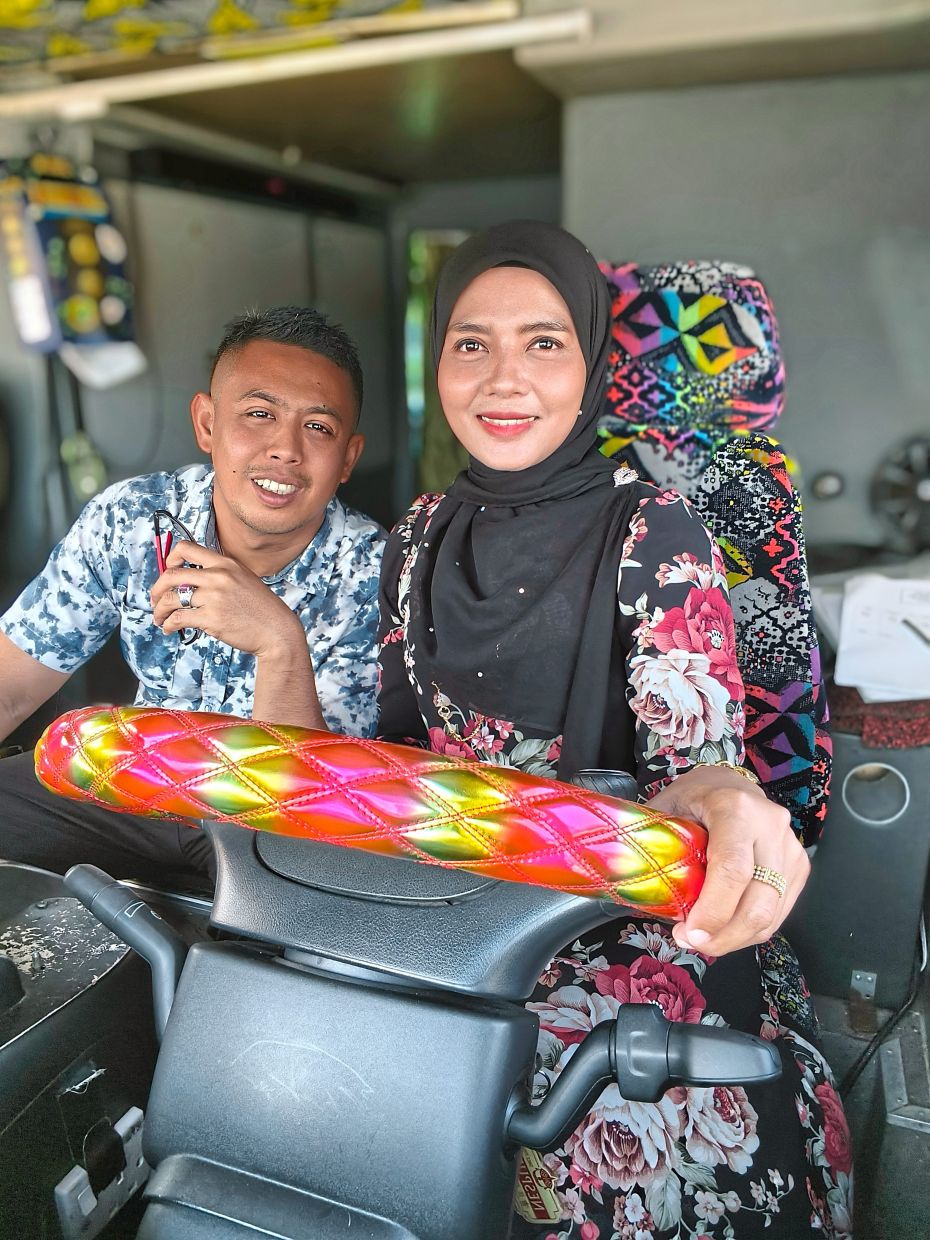
“Driving together has made our bond stronger,” she says. Being each other’s backup driver has taught us patience, teamwork, and trust.”
The career path was not something she had planned. A former hotel receptionist, Siti Azmira never imagined she would one day manage a transportation business – let alone drive a bus.
“After I got married, my husband worked as a taxi driver. To help increase our family income, I started operating a private taxi service, taking passengers to the jetty for boats to Redang and Perhentian Islands.
“Initially some people looked down on my job as a woman taxi driver, but I always reminded myself that this is honest work and a halal source of income. That’s what matters. If we feel ashamed of our work, how can we make a living? This is our rezeki (livelihood),” she says.
With the addition of tour vans to the business, Siti Azmira transitioned from driving cars to larger vehicles.

Two years ago, when her husband invested in a bus, she spent many sleepless nights coming to terms with the reality that she would soon be driving it.
“I was scared at first, especially about carrying passengers in such a big vehicle. But my husband has supported me every step of the way and helped me learn how to drive a double-decker bus.
“The biggest challenges are parking in tight spaces, watching out for low-hanging wires and avoiding narrow village roads. It takes focus and confidence.
“Even now, I get nervous driving the bus. But you have to be brave enough to face your fear. That’s how you discover what you are capable of,” says Siti Azmira.
The long hours and demanding journeys can be tiring, with some trips lasting up to four days. During such times, her mother helps care for their children.
Still, the satisfaction of safely delivering passengers to their destination makes it all worthwhile.
“When customers are happy and comfortable, it feels rewarding. If you treat them well, they will come back.”
On days when she is not on the road, Siti Azmira enjoys unwinding with simple family activities such as cooking and baking for her children.
But when it is time to return to work, she once again slips into her baju kurung and takes her place behind the wheel – carrying with her not just passengers, but confidence, pride in her heritage and the determination to show that grace and strength can go hand in hand.
Grace and grit
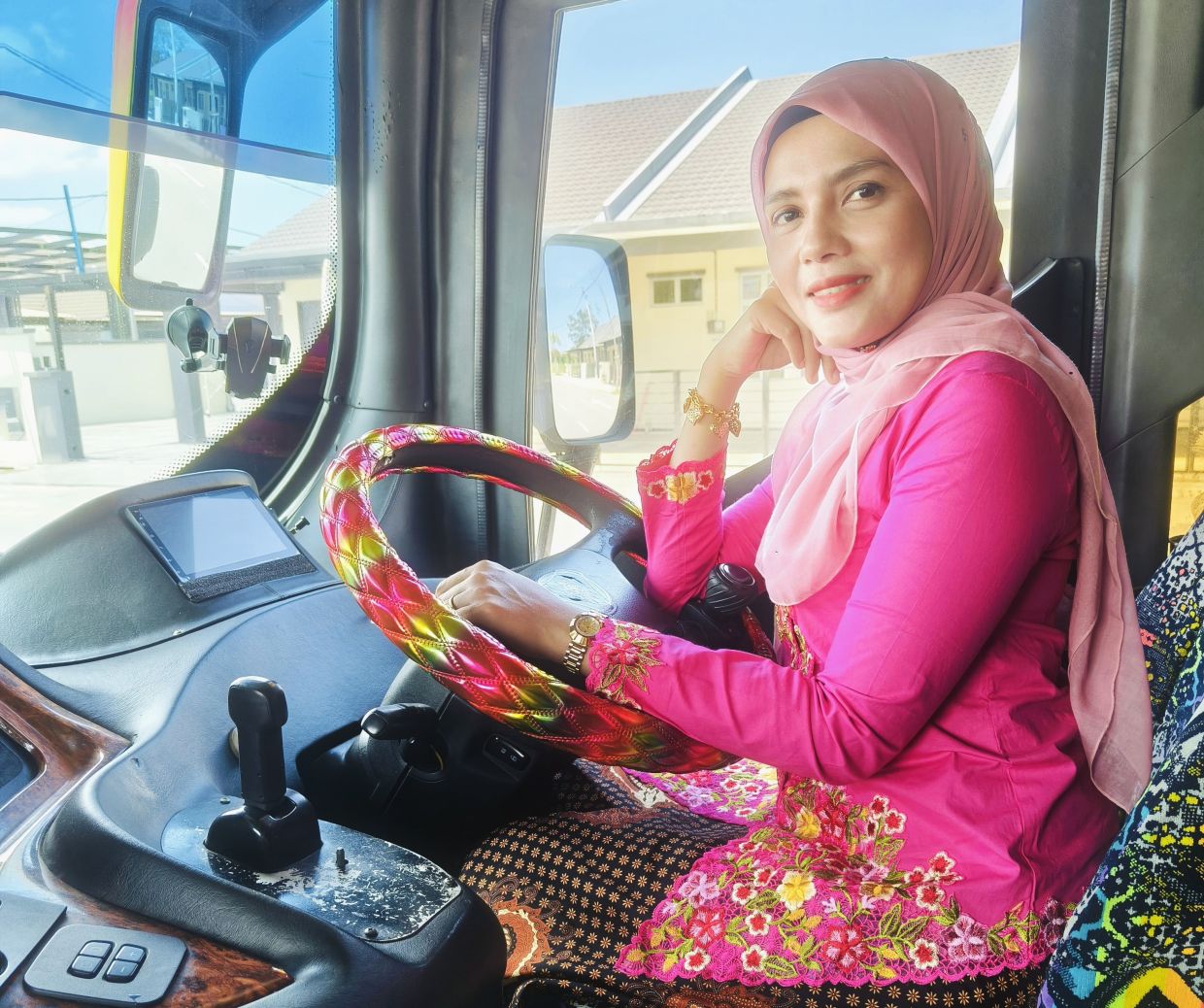
Siti Azmira usually drives her tour bus in traditional attire. Photos: Siti Azmira Mat Ghani
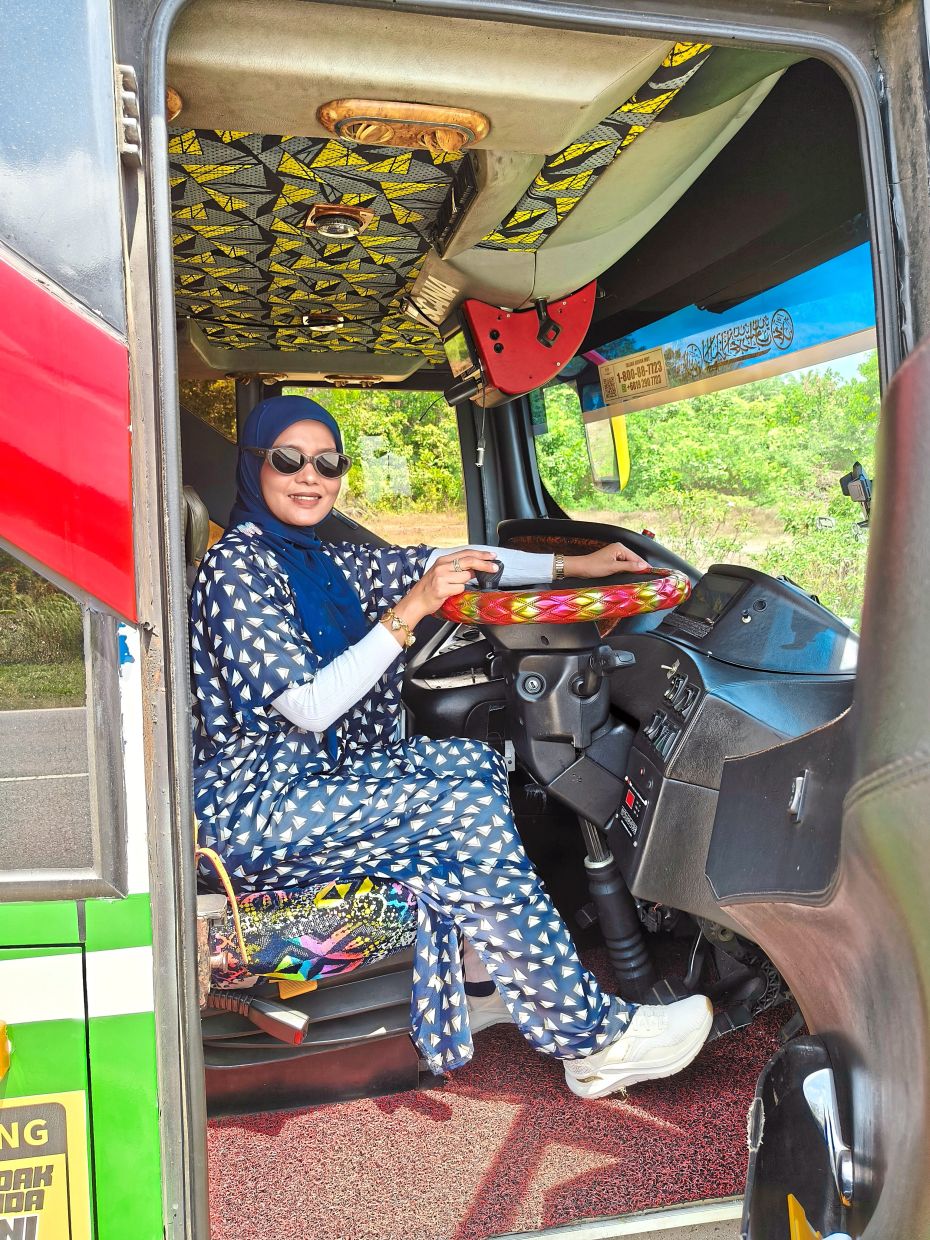
Siti Azmira brings elegance to a job rarely associated with traditional attire.
Photo: Siti Azmira Mat Ghani
Safety comes first: Siti Azmira inspects the bus before a journey.
Photo: Siti Azmira Mat Ghani
Siti Azmira with her husband Mohd Amirul Amri. They take turns driving long-distance routes.
Photo: Siti Azmira Mat Ghani
Despite her busy schedule as a bus driver, Siti Azmira makes it a point to spend quality time with her son, Khalifah Ziqri Mohd Amirul Amri.
Photo: Siti Azmira Mat Ghani
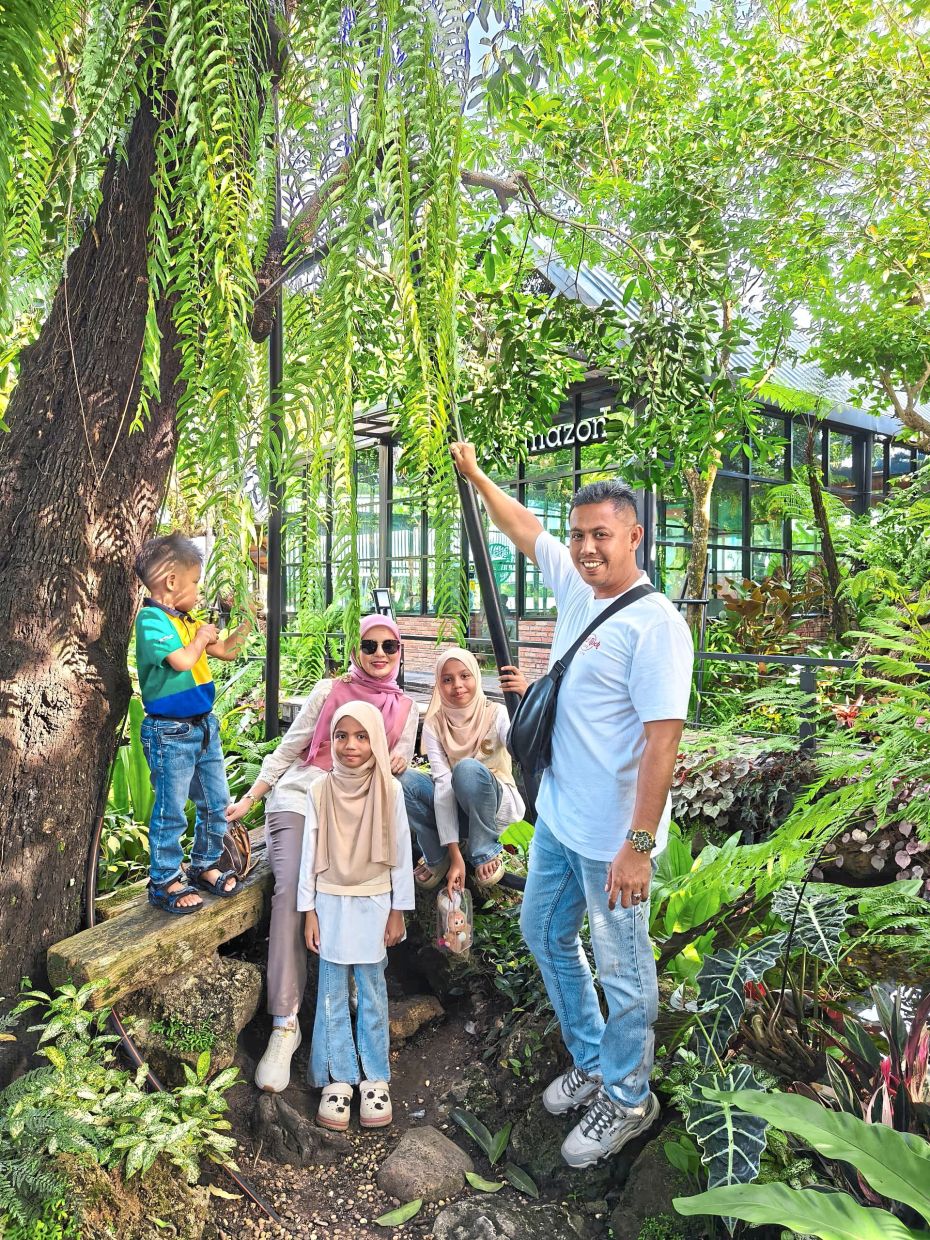
Off duty, Siti Azmira (second from left) cherishes time with her family.
Photo: Siti Azmira Mat Ghani
Passengers are often surprised and impressed to see Siti Azmira in traditional Malay attire during her tours.
Photo: Siti Azmira Mat Ghani