Yuri Tan, 52, never complains when close friends drop off used paper items such as paper bags, piles of magazines or pamphlets at her home in Petaling Jaya, Selangor.
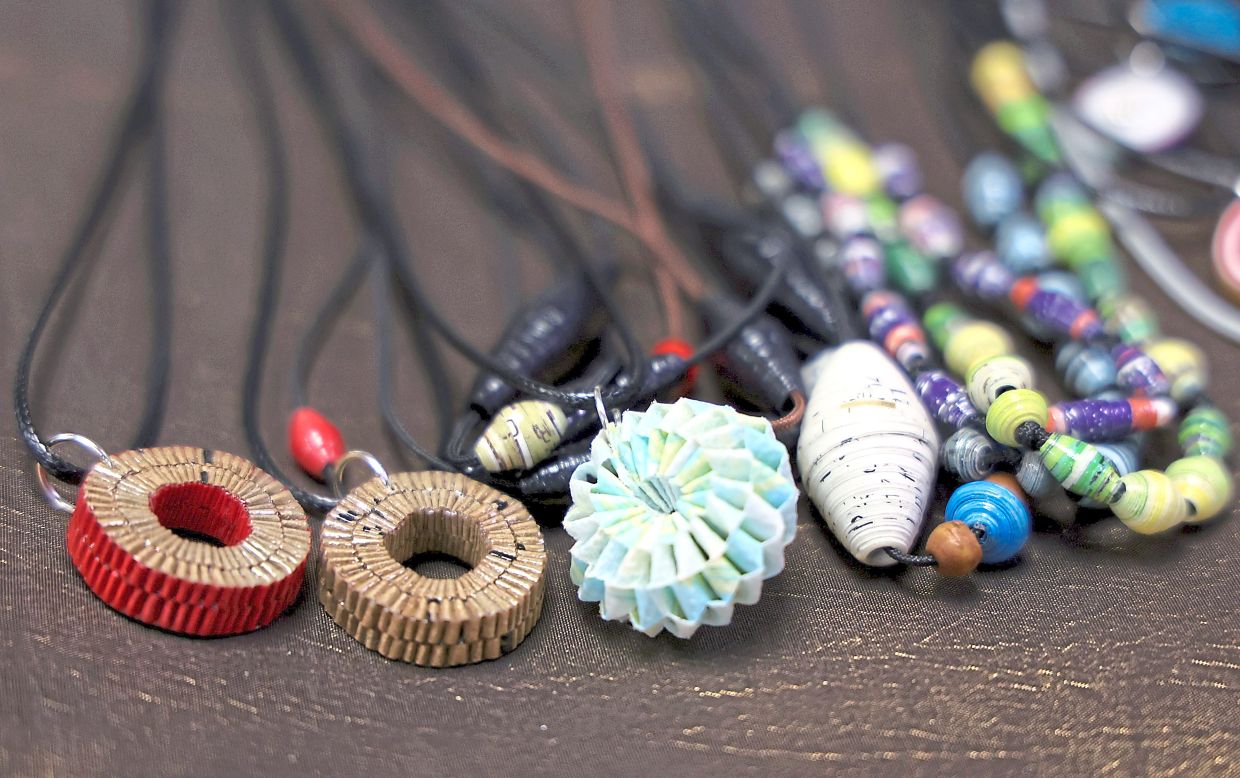
A crafter by trade, Tan transforms recycled paper into paper bead accessories such as earrings, necklaces and bracelets.
“Each day, tonnes of paper waste are thrown into landfills. This is alarming as it contributes to many environmental problems,” she says during an interview in PJ.
“By creating paper beads from upcycled paper, we can lessen our carbon footprint,” says Tan, who has been making paper beads since 2020.
Paper beads is not a new trend. History suggests that paper beading dates back to the mid-19th century during the Victorian era, when young women created beads from leftover wallpaper scraps.
The craft saw a revival in the 1970s, as recycled magazines and junk mail were transformed into accessories and home decor items.
If you were born before the 1980s, chances are you’d remember beaded paper curtains, a signature boho trend of the 1970s.
Tan – a fine arts graduate (majoring in metal craft) of Bunka Gakuen University in Shinjuku, Tokyo, Japan – is driven by concerns over climate change and pollution and wants to do her part to reduce paper waste via paper beads.
“In university, I worked with materials such as steel, clay, cement and paper. So breathing new life into discarded paper comes naturally to me,” she says.
“It may look like a small thing, but every piece of paper reused is one less item going into a landfill.
“If more people start small, the impact can be much bigger.”
She adds that people throw away printed papers, packaging or scrap paper so easily because they think it’s just trash and don’t see it as something useful.
“I also think there aren’t enough recycling bins in neighbourhoods. People just toss everything into the regular bins, thinking the rubbish collectors will handle it,” says Tan.
“But in the end, most of it end up in landfills. If we all make small changes, like separating paper or finding ways to upcycle it, we could make a real difference for the environment,” says Tan, who has four siblings.
She firmly believes that with some creativity, disposable paper can be turned into beautiful accessories and functional items.
“Disposable paper can be pounded down to papier-mache and later crafted into bangles, pencil holders and DIY jewellery containers,” says Tan.
“There are many videos on social media platforms like Instagram, YouTube and TikTok showing how paper can be reused and repurposed to make accessories, coasters and flower pots.”
Towards sustainability
Tan was formerly a designer at a jewellery retail chain. After resigning, she helped her family run a vegetable business at the Sungai Way Market in Petaling Jaya.
She later went to Brisbane, Queensland in Australia to study early childhood education and worked as a teacher in the Gold Coast for several years.
She returned to Malaysia in 2018, focusing on handicrafts and teaching painting as her main source of income.
Tan also contributed to mural projects in Sungai Way New Village and helped create the Sungai Way New Village History Corridor, a mini museum showcasing artefacts and stories of the location’s development from a tin mining and rubber plantation area, to a Chinese new village.
Today, Tan joins a growing community of Malaysian women crafters committed to protecting the environment.
In Kota Kinabalu, architect and Upcycled Shack founder Tressie Yap teaches local communities in Sabah how to upcycle household waste.
There is also Hanisa Boumin, a homemaker from Kota Marudu, Sabah, who turns discarded banana fibre into rope, which is then crafted into coasters, baskets and lampshades.
All these individuals share a concern about the growing waste problem.
A 2025 study, entitled Towards Sustainable Paper Waste Management: Insights from Source-Level Composition Studies, examines the challenges of paper waste management in Malaysia and finds that, while paper is highly recyclable, it still makes up a significant portion (15.3%) of domestic waste.
Published in AIP Publishing, the research identifies key obstacles to effective paper waste management, including inadequate infrastructure, low public participation in waste segregation, and weak enforcement of regulations.
Budget-friendly craft
Since 2022, Tan has been operating a pop-up stall at the PJ Eco Recycling Plaza, a hub for recycling and upcycling education located in the Sungai Way Free Trade Zone.
The space is conveniently situated just a stone’s throw from her home in Sungai Way New Village.
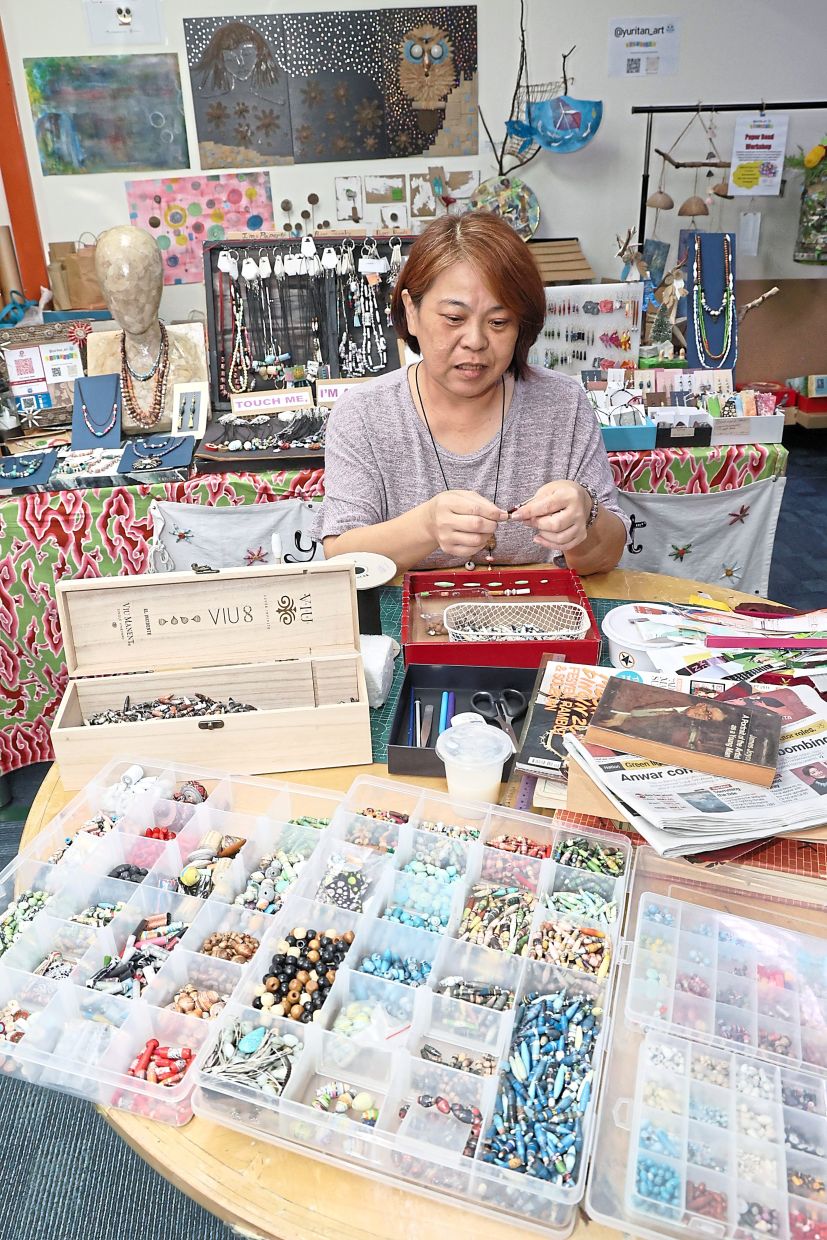
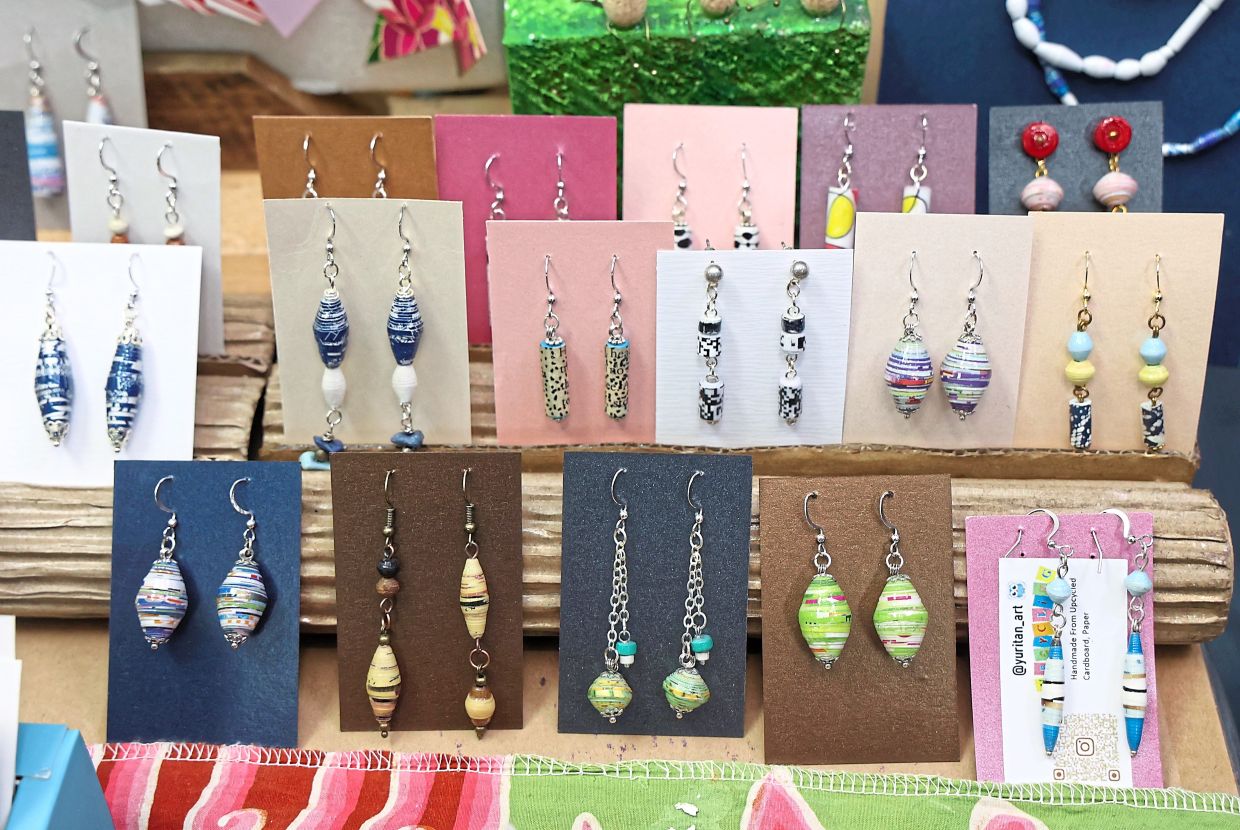
With five other sustainabilityminded crafters, she sells her handcrafted paper bead accessories, which include earrings, necklaces and bracelets in shapes such as round, oval and hourglass, in a wide range of colours.
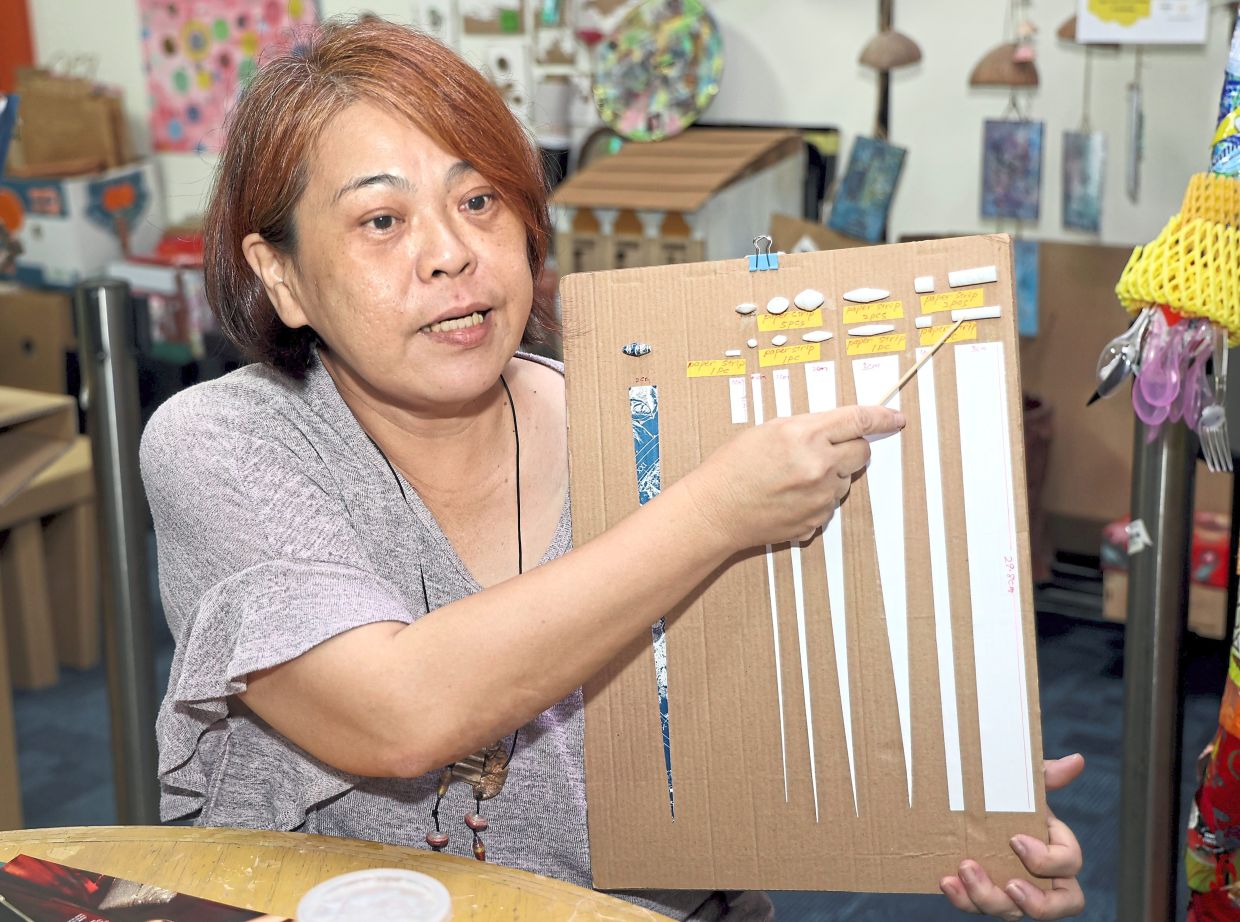
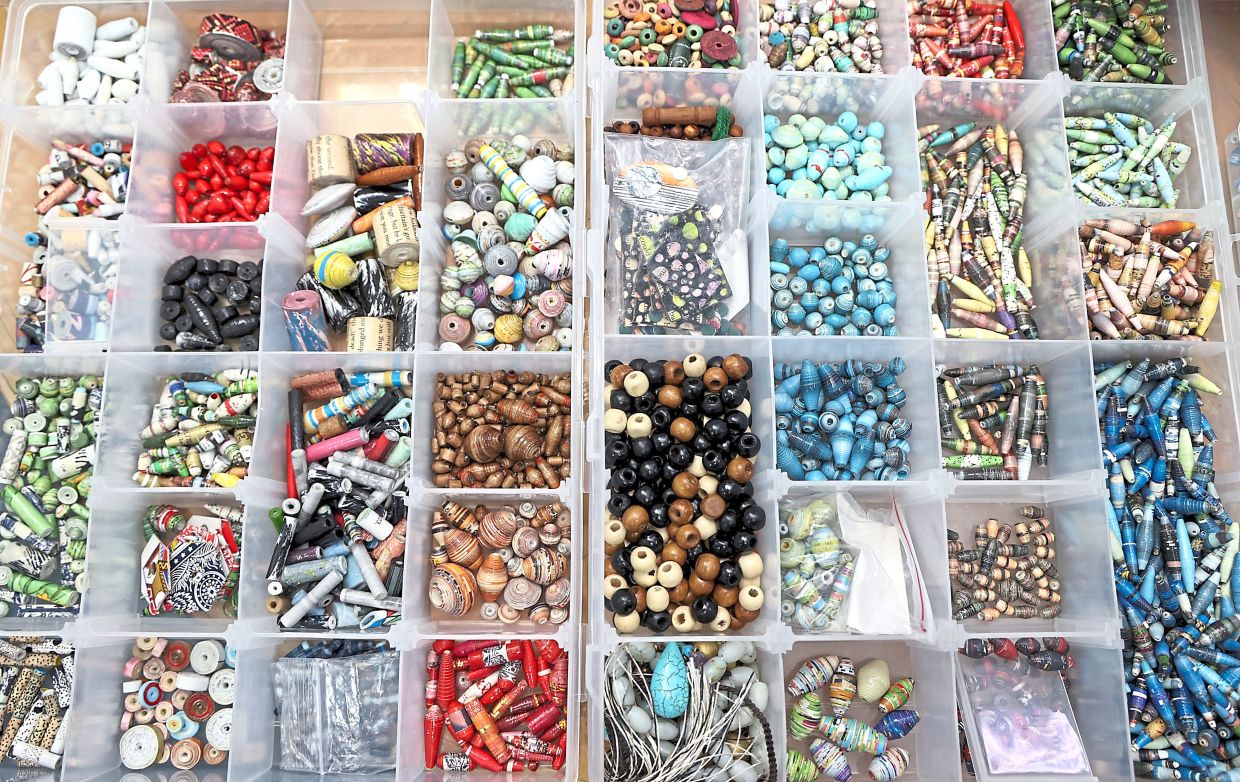
In a box, she neatly arranges tapered strips of triangular paper in varying lengths, cut from glossy magazines, paper bags, wrapping paper and scrap paper.
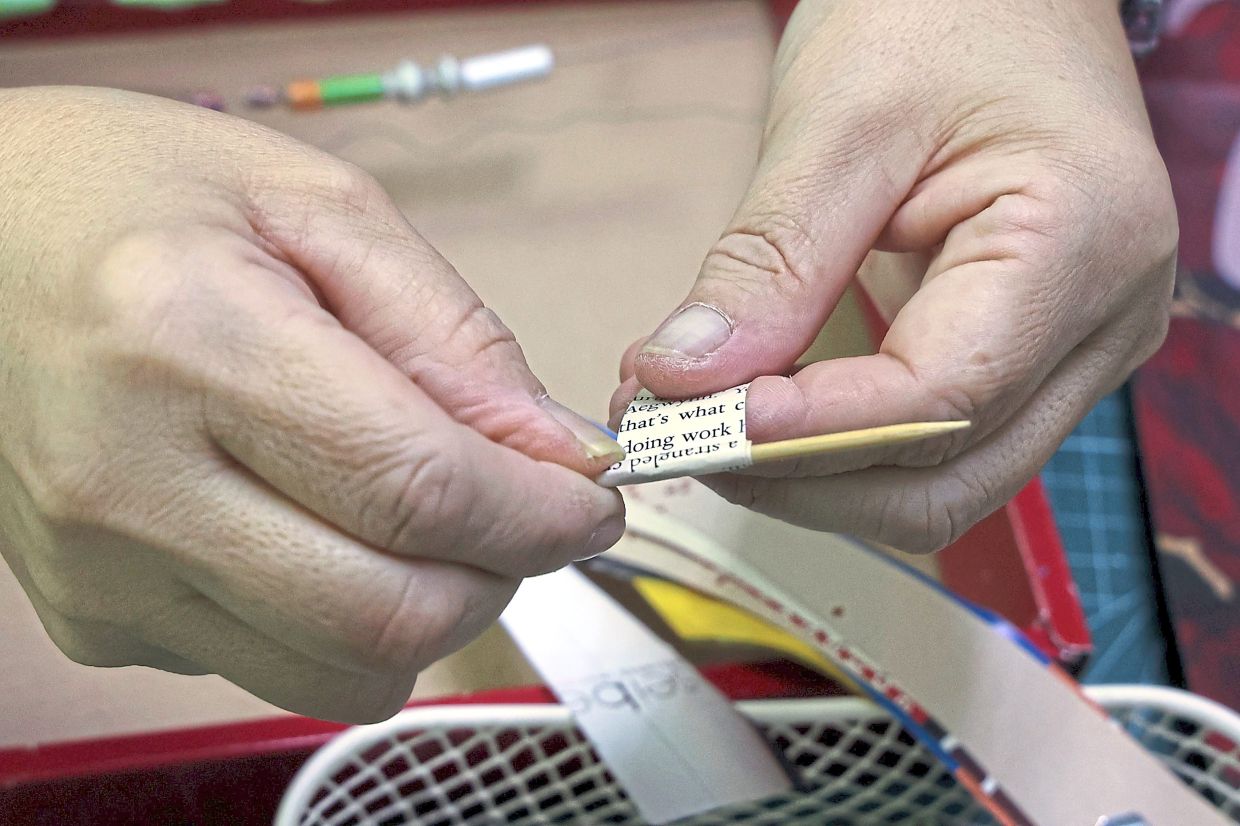
To make paper beads, she rolls each strip of paper from the wide end to the tip, securing it with a dab of glue. The beads are then varnished and left to air dry for 24 to 48 hours.
“The most exciting part is seeing the end product after it’s rolled,” Tan says, her eyes lighting up. “You never know what colour will come out. Every time I roll a strip, I’m excited to see the bead and its final colour – it’s always a surprise.”
Each accessory set – including a simple necklace, earrings and bracelet – takes about four days to complete.
Given her background in the arts, it’s no surprise that Tan can create beautiful designs.
“Ever since I was young, I’ve loved arts and crafts,” Tan says. “To do this well, you need creativity – and a genuine interest in what you’re making.”
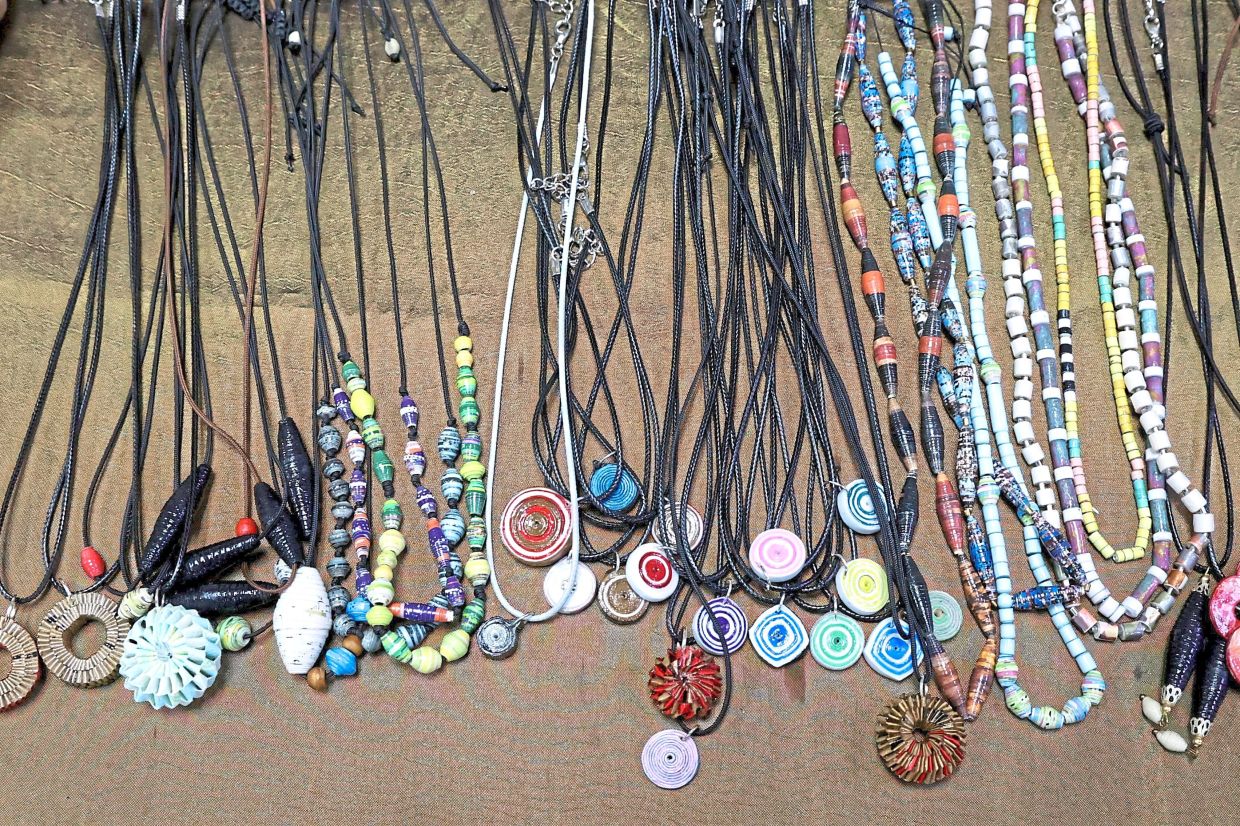
A pair of her handcrafted paper bead earrings starts at RM5, making eco-friendly accessories both affordable and stylish.
Tan says making these items is easy and that it is also a perfect arts-and-crafts project for kids.
However, she notes: “Make sure the paper is clean. It’s best not to use paper that was used to store cooked food or drinks.”
Tan says the response to her pop-up stall has been encouraging. In a typical week, many visitors come to the recycling centre, giving her the chance to sell her paper bead accessories.
On one occasion, she sold 200 products in just 30 minutes to visiting tourists.
Tan participates in the booth once or twice a month, often following the schedule set by the Petaling Jaya City Council (MBPJ) for their recycling events. In busy months, she can earn up to RM1,000 from sales at the stall.
When visitors stop by, she takes the opportunity to educate them about the importance of recycling.
“People can learn that before paper becomes waste, it can be turned into art. Don’t just throw it away,” Tan emphasises. “Even receipts can be used to make jewellery, chains or blended to create sculptures and papier-mache items. It’s a budget-friendly craft.”
She also hopes to share her skills by teaching underprivileged women and single mothers how to make paper beads so they can earn supplementary income.
“By turning waste into something beautiful, people not only earn a living but also do their part to protect the environment,” Tan concludes.
Rolling in creativity
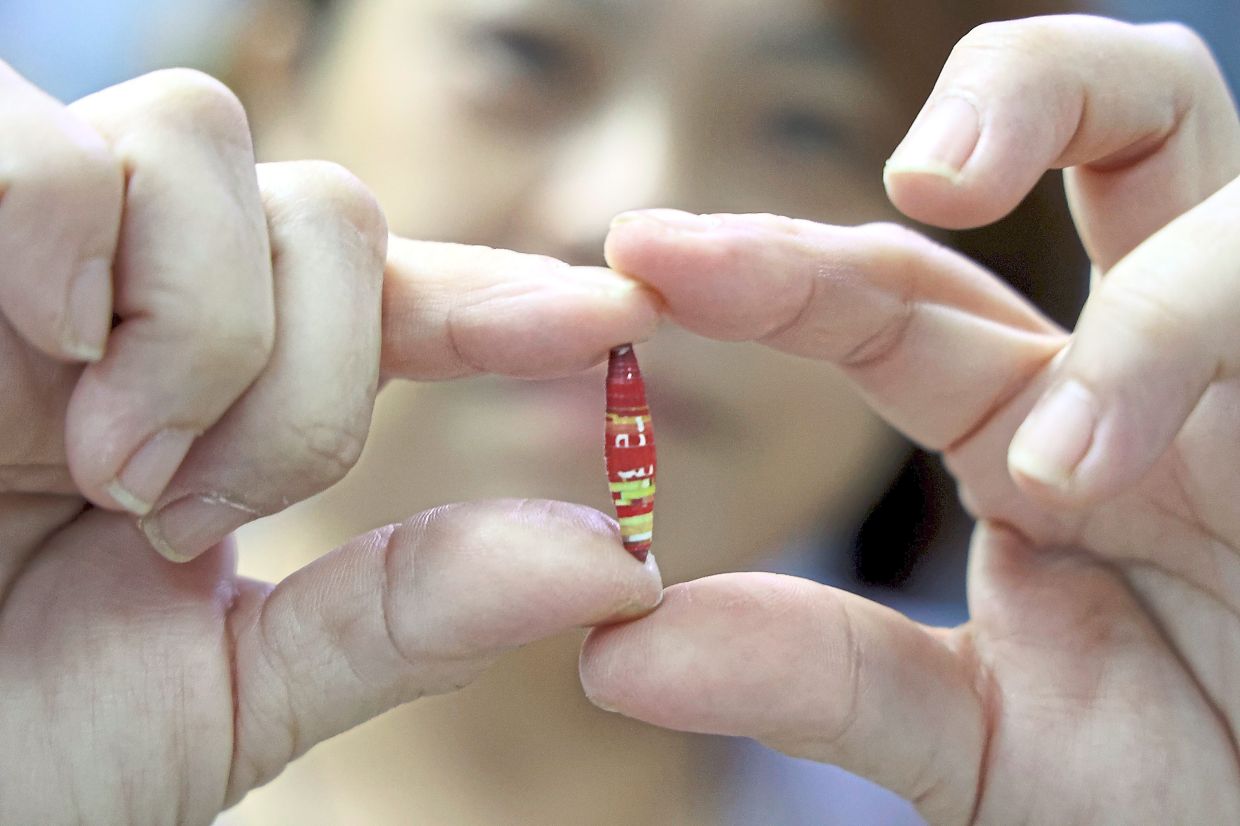
Tan showing an example of a paper bead upcycled from paper waste. Photos: The Star/Art Chen
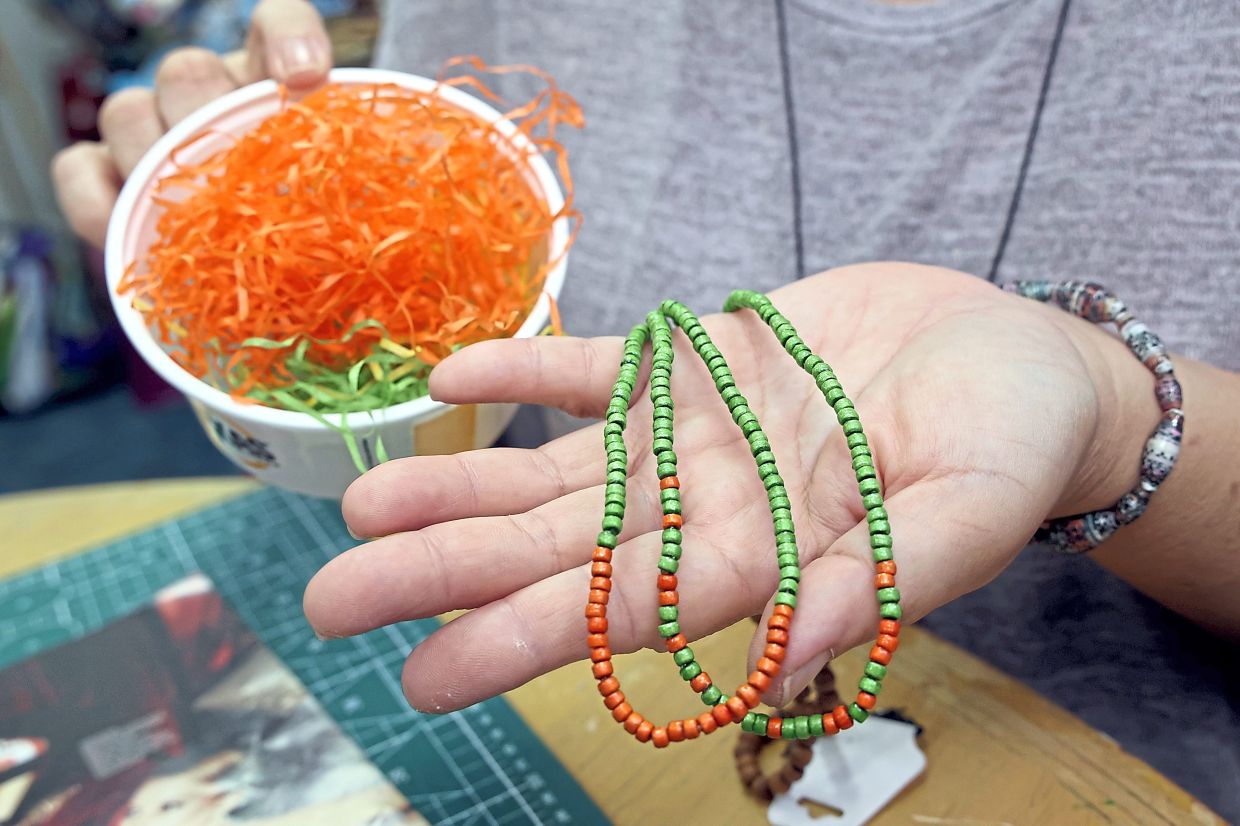
Handcrafted necklaces made from recycled paper prove that sustainable fashion can be stylish and affordable.
Photo: The Star/Art Chen
Creating paper beads encourages people to upcycle unused paper that would otherwise be discarded.edthathatencouragecarbon footprint, says Tan.
Photo: The Star/Art Chen
Tan showing paper strips of varying sizes that are rolled into beads of different designs and patterns.
Photo: The Star/Art Chen
A paper strip in the process of being rolled into a bead.
Photo: The Star/Art Chen
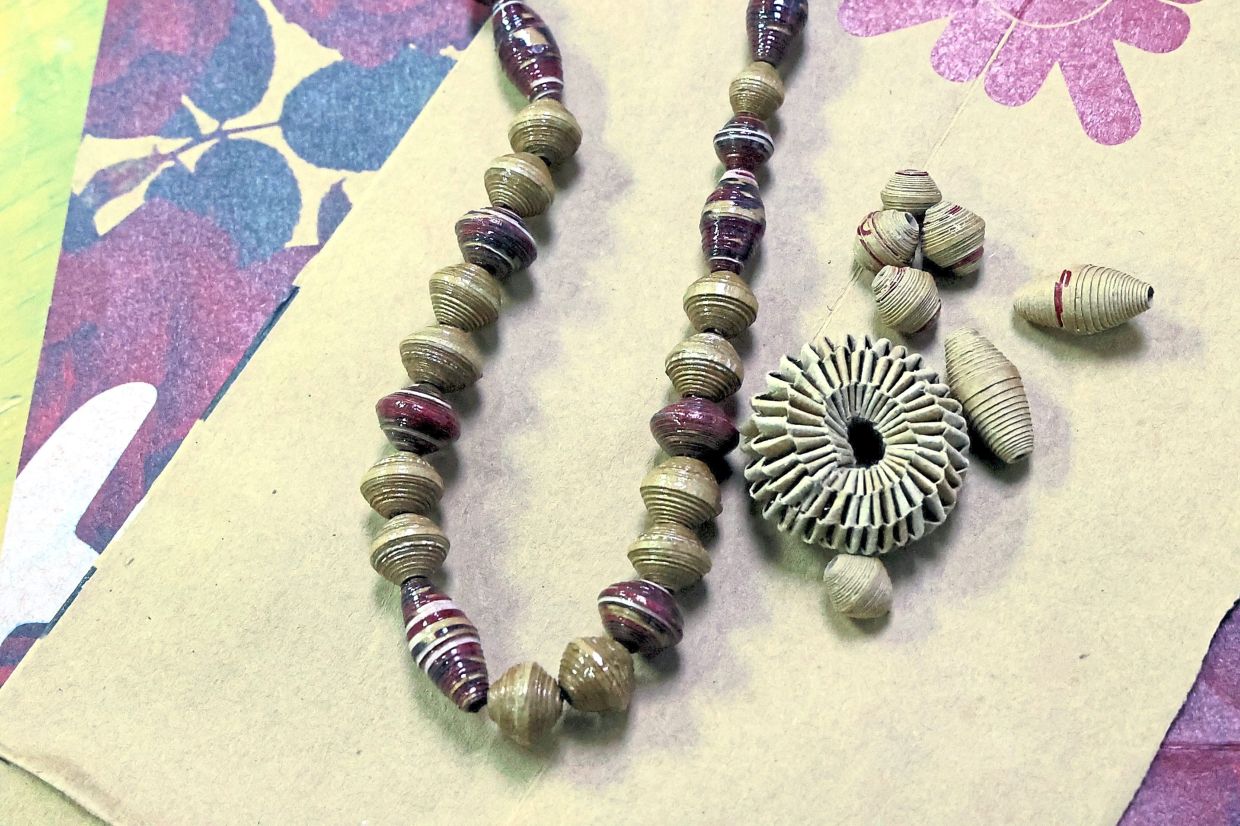
Examples of paper strips rolled into beads for a necklace.
Photo: The Star/Art Chen
Upcycling paper into beads is a simple way to reduce waste.
Photo: The Star/Art Chen
Handcrafted necklaces made from recycled paper prove that sustainable fashion can be stylish and affordable.
Photo: The Star/Art Chen
Paper beads in different sizes waiting to be turned into accessories.
Photo: The Star/Art Chen
Colourful earrings made by Tan from paper beads.
Photo: The Star/Art Chen