
A few years ago, I was in England a couple of days before Christmas. It was the dead of winter and temperatures had dipped to 3 C. It was so cold, my entire body felt like a glacier and even through thick gloves, my hands were like icicles.
So my husband and I stopped at a bar and that is when I had my first glass of mulled wine. It smelt of spices, festivities and Christmas miracles and was hot and sating with delicious spice-enhanced undercurrents. It also had the immediate effect of warming me to the core and cheering me up in one fell swoop.
As our journey through Europe continued, I repeated this practice every where I went, imbibing mulled wine at Christmas markets in France, at a pub in Switzerland and even at a swanky eatery in Milan, Italy. I had found both the antidote to the bruising cold and a charming Christmas wonder and I wasn’t about to let it go anytime soon.
But just what is mulled wine and why is it such a big draw come Christmastime in Europe?
Mulled wine has a long and gilded history that dates back to the 2nd century AD, when Romans would heat wine with spices to keep their bodies warm. At the time, it was called Conditum Paradoxum and it was made from boiled red wine, to which honey, spices (like saffron and pepper) and dates were added. This bitter mixture was then mixed with better-quality red wine, to give it a sweeter finish.This warming wine was thought to ward off winter-borne illnesses and so gained traction as a December must-have.

There is also a precursor to mulled wine, which dates back to the ancient Greeks and was called hippocras. This was a drink fashioned out of wine that was spiced and sweetened, but not heated.
Still the Romans are generally credited with spreading and disseminating a love for mulled wine throughout the European continent, which in turn resulted in mulled wine being drunk everywhere from England to Germany, Sweden, Denmark, Belgium, France and many eastern European countries.
In England, King Henry III was reputedly very fond of this warm tipple and the beverage gained mainstream traction during the Victorian era when it was used to disguise the taste of poor-quality wine. One of the earlier formal recipes for British mulled wine dates back to 1860 and can be found in Mrs Beeton’s Book of Household Management.
In Germany, mulled wine is called Gluhwein and dates back to 1420. It is so popular that at Christmas markets in Germany, there is even a non-alcoholic version served up for children, called Kinderpunsch.
In Nordic countries, a variation of mulled wine called glogg (pronounced glook) is made using red wine and aquavit, often with raisins and almonds too. Traditionally, it is served in mugs with spoons on the side for eating the raisins and nuts.
In practically every other country in Europe, there is a version of mulled wine in existence, from France’s vin chaud (which often contains star anise) to Poland’s grzane wino.

The tradition of Christmas markets itself dates back hundreds of years. The first Christmas market in Dresden, Germany, for instance was held in 1434. While Germany is said to be the originator of the Christmas market, these markets are now a holiday feature in most European countries. And in nearly all of these Christmas markets, mulled wine is a classic holiday offering.
“I grew up with mulled wine at Christmas. It is so cold in December – that’s why we drink it. And my grandmother used to make it too. I think with the younger generation in Belgium, they don’t normally make it at home; they just go to the Christmas markets and drink it.
“But it’s definitely a Christmas thing – when you go to a Christmas market at night, you will definitely have a glass of mulled wine,” says Evert Onderbeke, the Belgian-born head chef at European eatery Soleil, a Michelin Selected restaurant in Kuala Lumpur.
Marek Klecka meanwhile is a native of the Czech Republic who is also the bar manager at Gordon Ramsay Bar & Grill at Sunway Resort. Klecka says for him, Christmas is always synonymous with mulled wine.
“Yes, it’s very common so it is something that people drink to warm up during Christmas. It basically brings back Christmas memories for me.
“When you walk down the Christmas markets, the whole market smells wonderful – you have cinnamon and often star anise in the mulled wine and it smells so good – and it is just something that warms you up when you’re walking down the markets,” says Klecka.
In Klecka’s family, his mother also makes a large batch of mulled wine for the family Christmas reunion, which is why the spiced drink has such special meaning to him.
“My mother’s mulled wine is delicious – I think her secret ingredient is love,” he quips.
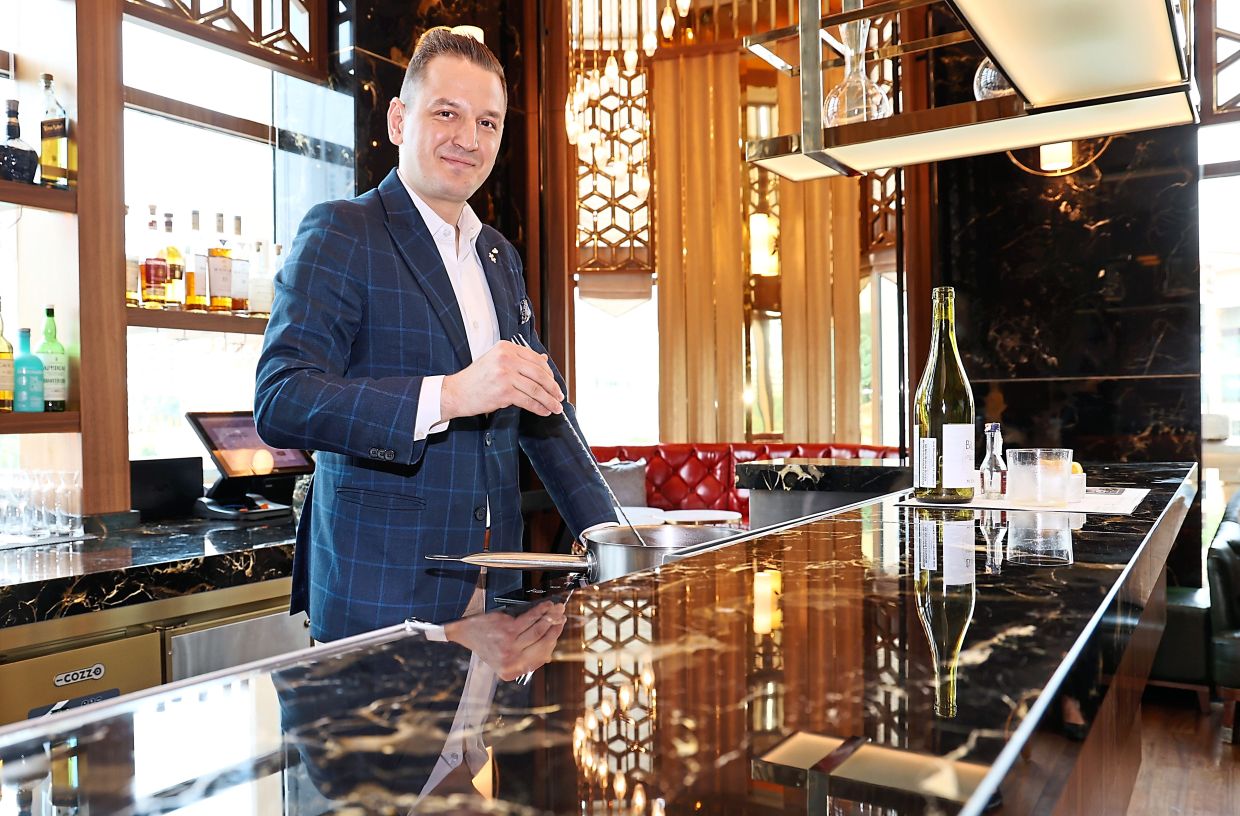
It seems rather odd to have any sort of warm drink – much less warm wine – in a tropical country like Malaysia.
But Malaysians are increasingly more well-travelled and even those who don’t travel, often vicariously visit exotic locations via the Internet and social media posts. Which is why mulled wine has been gaining slow Christmas traction of late.

“The accessibility is more global, so the moment a reputable place has done it, it has some form of credibility. Also I think it is not as foreign, you can Google it or see in social media and everyone seems to be making it,” says Marcus Low, the owner of local restaurant Table & Apron.
Low has been making and selling mulled wine for Christmas at his eatery for the past few years now. But he too has noticed that this year, the mulled wine fascination has kicked up a notch or two on the local front, with eateries like Colonial Café at The Majestic Kuala Lumpur offering mulled wine and restaurants like Limone serving up unique twists like mulled wine brownies!
There is also the trickle-down effect that large or influential restaurants can have on the local dining scene. At Gordon Ramsay Bar & Grill for instance, Klecka will be serving up a traditional English mulled wine this year and it is quite likely that when a highly respected restaurant like this does it – others will follow suit. This impact may not be felt as keenly this year, but next year, other restaurants and bars are likely to cash in on this mulled wine interest.
This is exactly what mulled wine aficionado Klecka hopes will happen in the future, as more and more Malaysians wise up to the beauty of this warm drink.
“The whole idea behind it is I wanted to bring a piece of my hometown and a piece of Europe here. I think Malaysians are missing out on a lot not to drink it, but obviously it doesn’t have the same effect when you are drinking it in Europe, because it is something that is supposed to heat you up, which you guys definitely don’t need in Malaysia!
“But it is more about the Christmassy sense and the warm feeling that it brings. So it is something that I want more Malaysians to experience because I think it should definitely be a part of Christmas every year – even in Asia,” he says.
Already a subscriber? Log in
Get 20% OFF The Star Digital Access
Cancel anytime. Ad-free. Unlimited access with perks.