
When you look at your garden beds and borders, do you see any bare soil? If so, mulch is in order.
Mulch is defined as a protective layer applied over soil to retain moisture, suppress weeds and moderate soil temperature around plants, as well as in uncultivated areas.
But if used incorrectly, mulch can cause more harm than good.
Folks use everything from gravel, plastic sheeting and shredded tires to organic materials like compost, pine needles, shredded bark, hay, straw and wood chips. Some are better than others, to say the least.
Gravel and stones reduce weeds and retain some moisture, but affect plants differently than organic mulch. Stone absorbs heat, which can scorch plants and roots. Removing gravel later can be a Sisyphean task.
Still, in fire zones, gravel is recommended to cover soil, since organic mulches are flammable.
Shredded tires? Please don’t. Crumb rubber can contain volatile organic compounds, lead and other heavy metals. And even if you remove it someday, the chemicals it leaves behind will remain in the soil for a very long time – maybe permanently – unless you’re willing to strip out and replace layers of soil. It’s hard to imagine that tradeoff being worth it.
Any benefits of plastic sheeting should be weighed against eventual disposal problems. Sooner or later, it will end up in a landfill, where it’s likely to outlive you, and break down into microplastics that will contaminate the soil and groundwater.
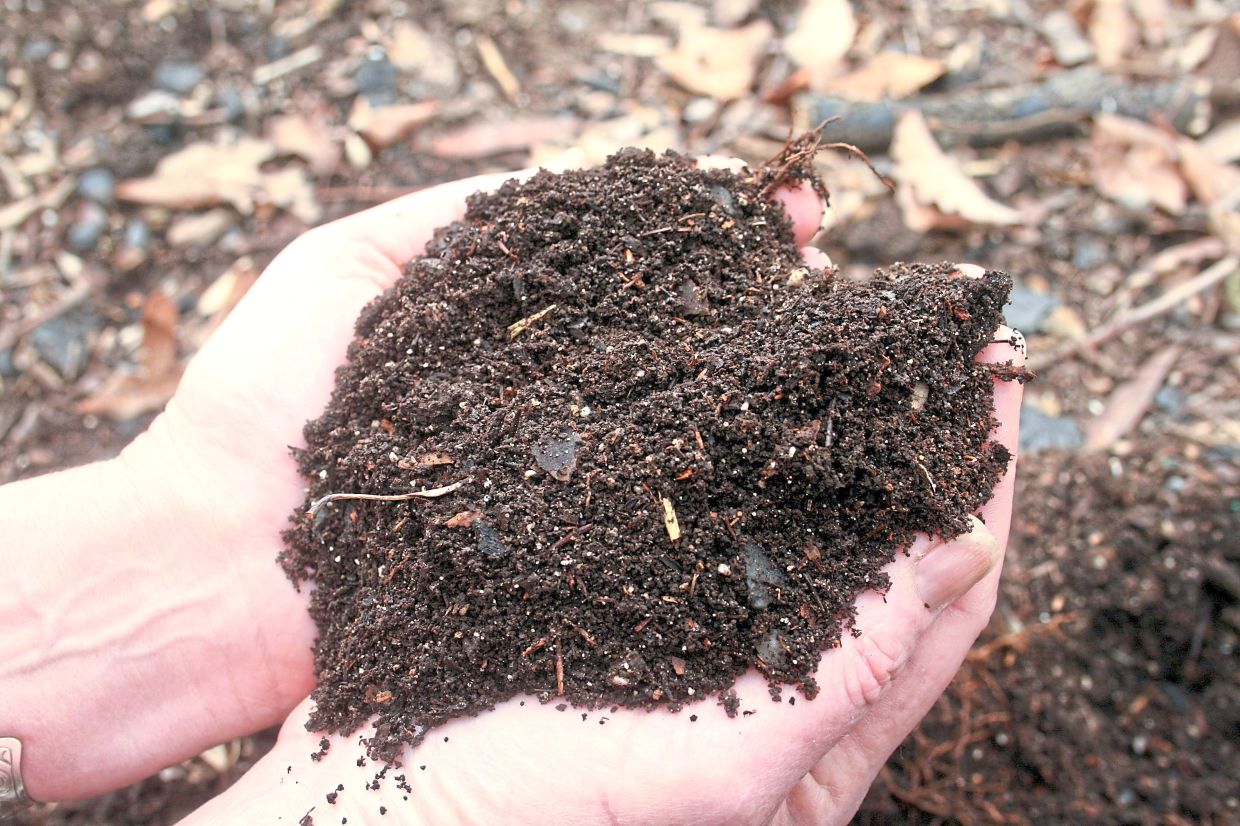
Natural materials like shredded bark, wood chips, straw and pine needles are always the better choice because they improve the soil as they decompose.
Since a large portion of wood chips comes from the inner wood of the tree, they also hold moisture longer and release it more evenly than other mulches do.
Wood chips are the National Park Service’s secret weapon for keeping the legendary Washington, DC cherry trees healthy.
Shredded bark mulch is my second choice. It handles most of the same jobs that wood chips do, though it doesn’t absorb and hold moisture quite as well. It’s also lighter, so a hard rain can wash it away, and my landscaper’s magical leaf blower orchestrates its unfortunate disappearing act every year.
Most dyed mulch is made from recycled wood of unknown origin rather than actual shredded bark. Sometimes that wood comes from construction debris or other questionable sources, and it may contain harmful substances like arsenic.
And the cheaper dyed mulches are often cheap for a reason. Some are made with toxic pigments, so they’re not really the bargain they may appear to be.
If you’re determined to use dyed mulch anyway, at least keep it away from food crops.
In most cases, three to four inches (7.6-10.2cm) is the ideal depth for mulching around plants. Keep it a few inches away from trunks and stems to allow for air circulation. When mulch sits directly against bark or stems, moisture gets trapped, and rot eventually follows.
A properly mulched tree leaves the flare at the base of the trunk exposed and fully visible.
All in all, besides improving soil health, mulch will make your garden look polished, too. – AP