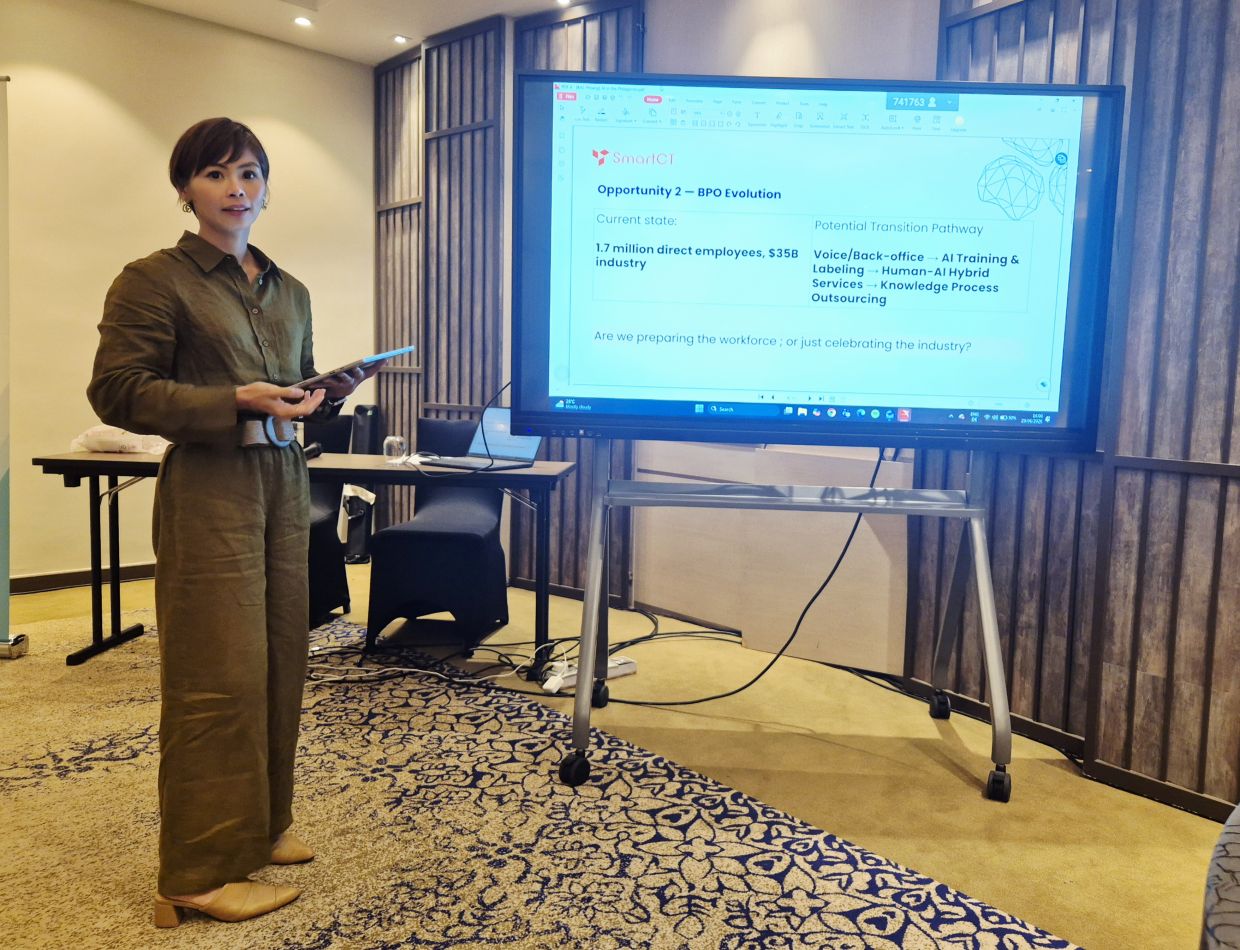
Manila-based non-profit organisation SmartCT's chief sustainability officer and executive director of technology Kris Villanueva-Libunao says a gathering of women who work in the field was an opportunity to move towards this approach.
"Security threats in the Indo-Pacific, especially cyber threats, disinformation and hybrid warfare, don't respect borders. So people addressing them shouldn't work in isolation either," said Villanueva-Libunao.
She explained gatherings that bring women leaders together can help break that disconnection.
"Conversations like these build informal networks and shared vocabulary that let us do things in our field of work collectively. Every woman who stops having to prove she belongs in the room is one step closer to the field itself."
Villanueva-Libunao was part of a group of women leaders from Europe and Asia who gathered in Penang recently to discuss the security landscape.
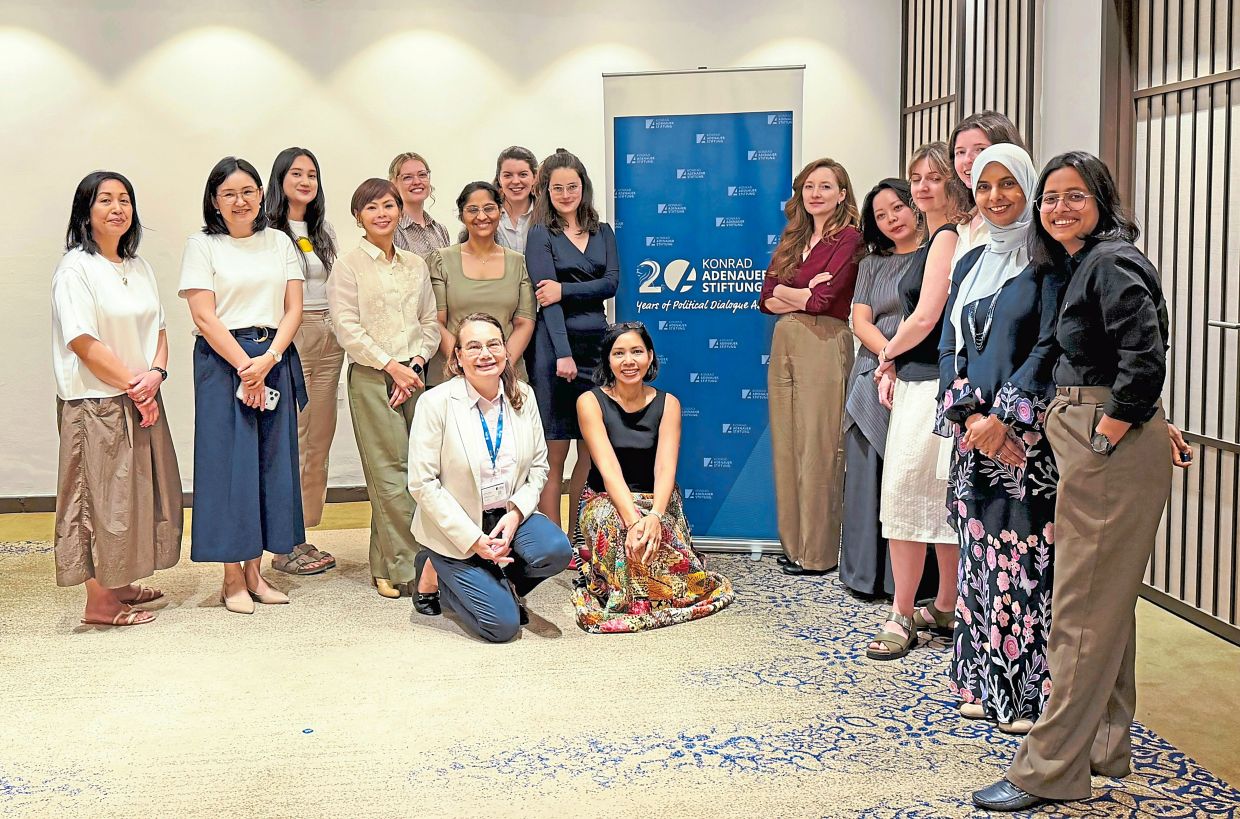
They were 16 participants at the "Building Capacities, Leading Security, Shaping the Future: Connecting Women Security Leaders from Europe and Asia in Addressing Indo-Pacific Challenges conference", organised by German non-governmental organisation and independent think tank Konrad Adenauer Stiftung (KAS).
The three-day programme, which ended on July 3, aimed to create a platform for women working in security-related fields to exchange experiences, build networks and explore how collaboration between Europe and Asia can help address emerging challenges at a time when security is no longer limited to traditional defence issues.
Cyber threats, disinformation, artificial intelligence, online harms and social resilience have become increasingly important concerns, requiring cooperation across borders and sectors.
Balancing act
The conference also highlighted challenges women face in balancing work and family.
Doctoral candidate Cecilia von Ilsemann said women from different countries often face similar challenges.
She said women in Malaysia and Germany, for example, encounter similar struggles when it comes to balancing family and career responsibilities, gaining access to the security sector and having their voices heard in traditionally male-dominated fields.
"Bringing together women from different cultural and national backgrounds to share their experiences in the field of security is a truly enriching experience," said von Ilsemann, who is pursuing her studies on South East Asian state's foreign policy behaviour in the contemporary Amercian/Chinese great power rivalry at the Netherland's University of Leiden.
The exchange, she added, was both uplifting and empowering as it strengthened her confidence to pursue her goals and contribute meaningfully to society.
"Without such opportunities for exchange, women may feel isolated and begin to question their abilities, their behaviour and the decisions they make," she said.
Beyond the discussions on security and leadership, participants also had the opportunity to experience Penang's rich heritage and gain a deeper understanding of Malaysia.
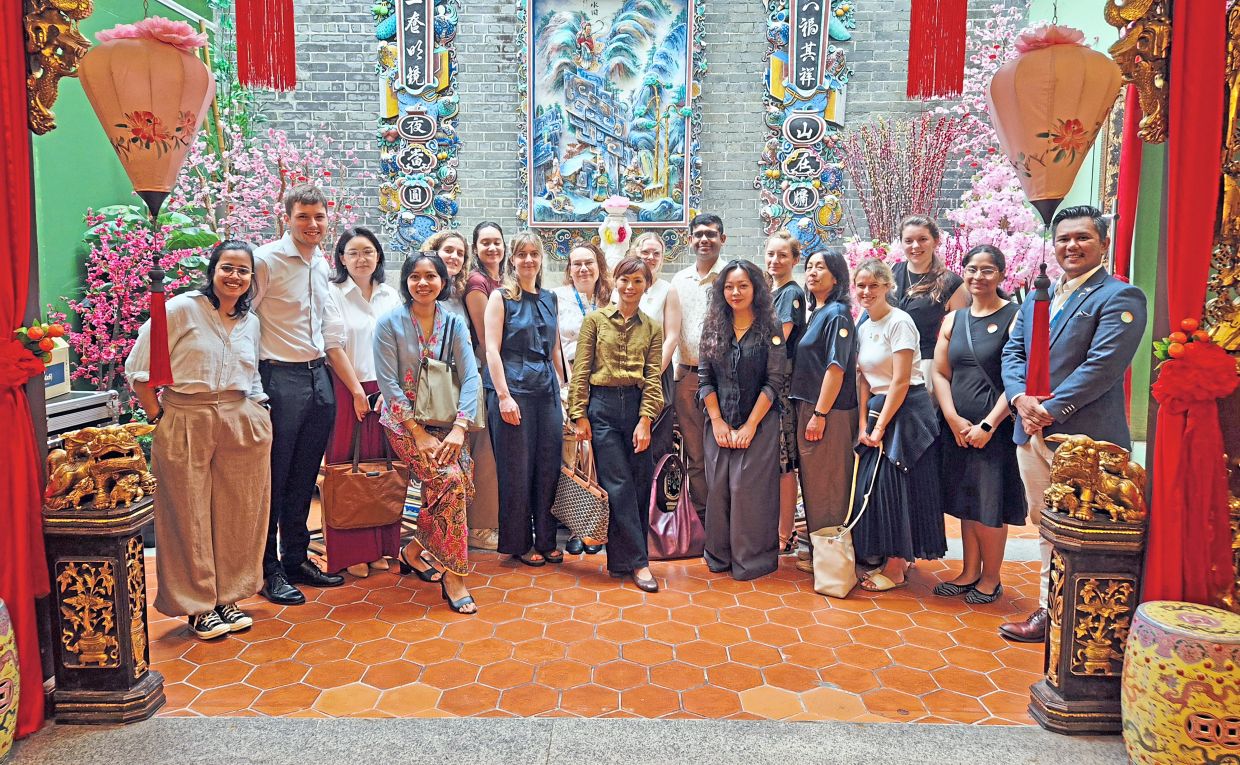
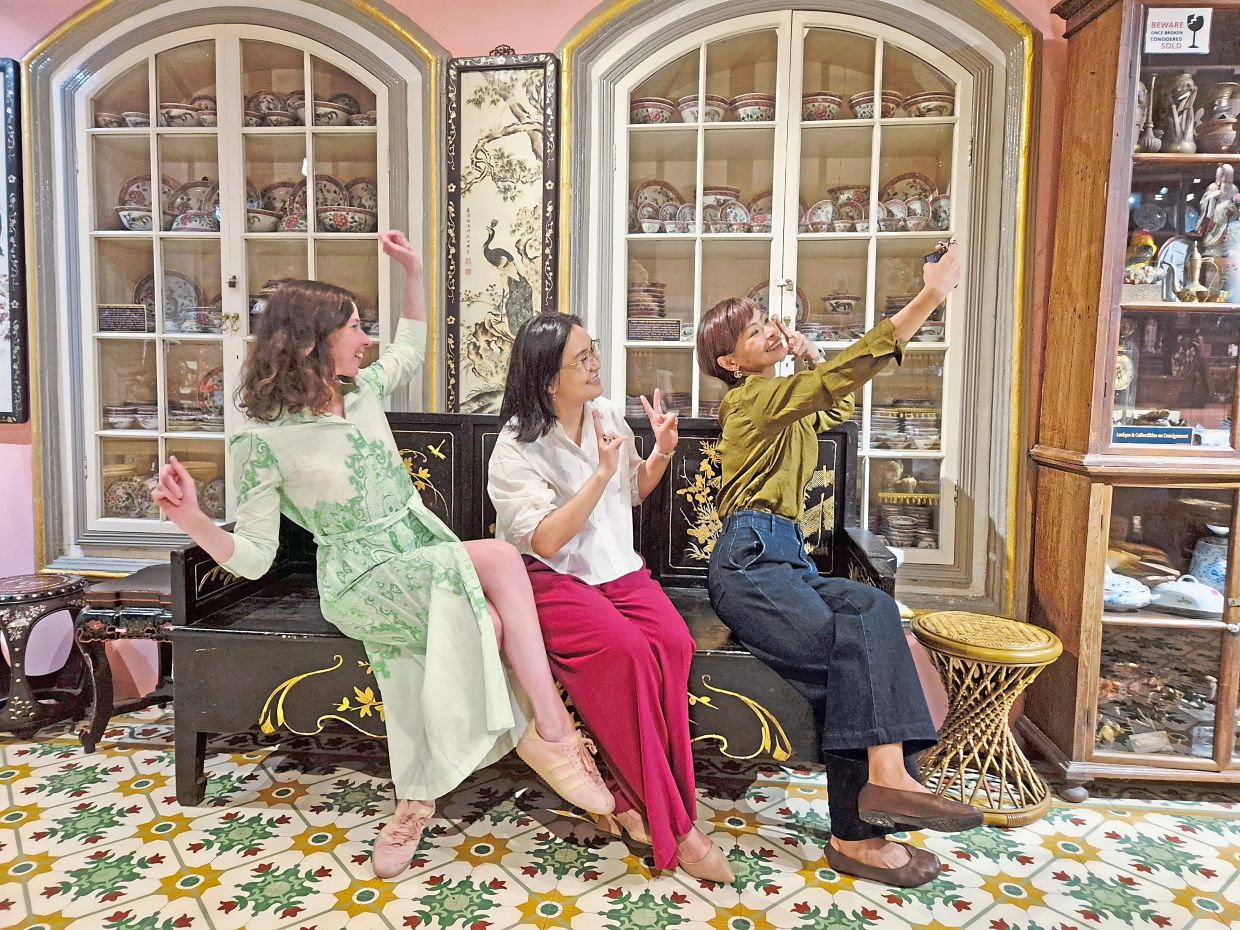
They visited the Penang Peranakan Mansion, where they learned about Peranakan culture, tradition and custom.
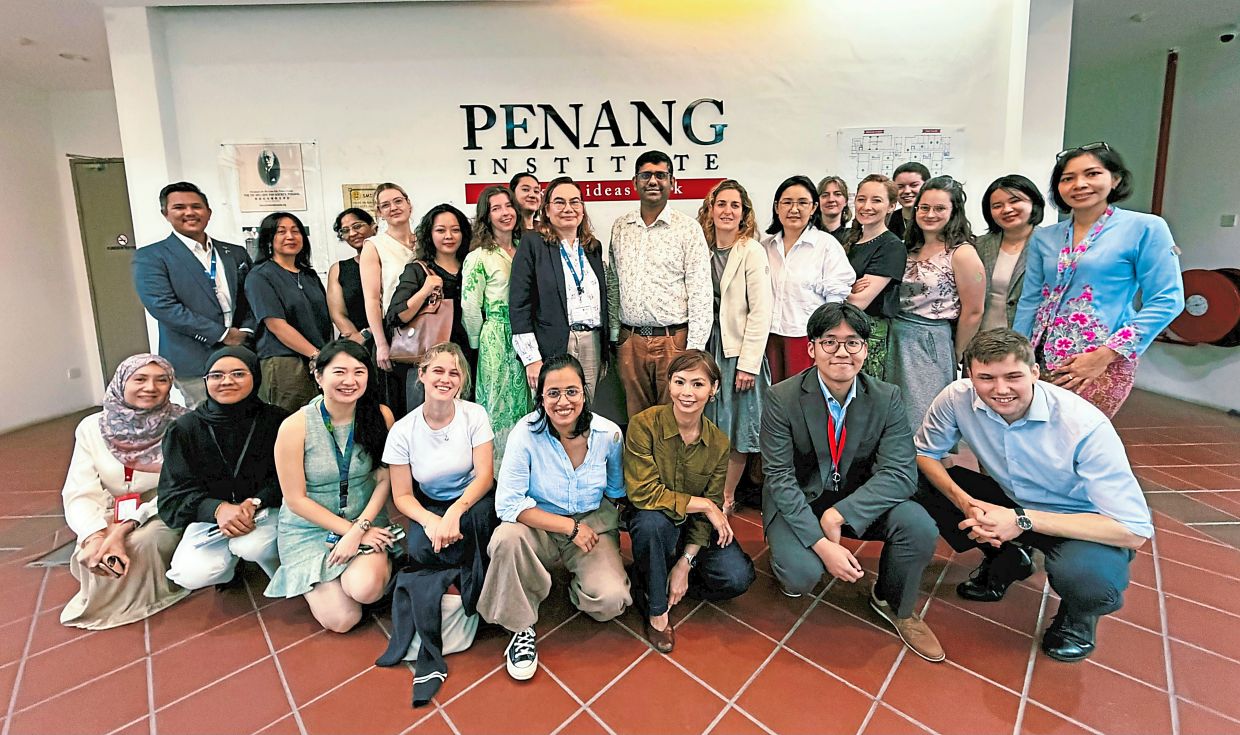
The programme also included a visit to the Penang Institute for a roundtable discussion on the state's strategic importance in the region, as well as insights into Malaysia's political landscape.
Providing valuable insights
KAS (political dialogue Asia) policy advisor Jonas Nitschke said the seminar aimed to bring together different experiences of how security is understood, shaped and communicated across Europe and Asia.
"The participants represent different regional realities and professional journeys. What connects them is their ability to contribute to discussions on how societies respond to a rapidly changing security environment.
"We wanted to create a dialogue between Europe and Asian countries – connecting European experiences of multilateral cooperation with Asian perspectives from a region experiencing significant geopolitical, economic and technological transformation," said Nitschke, who is based in Singapore.
He explained women working in the security sector often operate in environments where leadership positions have traditionally been dominated by men.
While knowledge and experience are important, Nitschke said career progression also depended on visibility, access to opportunities and strong professional networks.
"Creating opportunities for women to meet peers, exchange experiences and build trusted networks can help remove some of these barriers."
He added that women are already making significant contributions across Europe and Asia, with diplomats, researchers and policy experts helping shape discussions on issues ranging from maritime security and digital threats to economic resilience and emerging technologies.
"Ultimately, stronger security cooperation between Europe and Asia would depend on the people who build bridges between regions. By investing in women leaders and creating spaces for meaningful exchange, we can build a broader and more connected security community that is better prepared to address future challenges."
Learning from each other
Conference moderator Dr Razwana Begum Abdul Rahim said the exchange between participants was about learning from different experiences and perspectives.
"We all face different challenges, and that's exactly why these conversations are so valuable," she said. She adds leadership approaches are shaped by different cultures, institutions and communities, and what works in one country may not necessarily apply to another.
Razwana, who heads of the Global Security & Strategy graduate programme at Singapore's University of Social Sciences, added Europe and Asia could offer each other valuable perspectives, with both regions seeing women take on leadership roles through different pathways, including institutional policies, collaboration and community engagement.
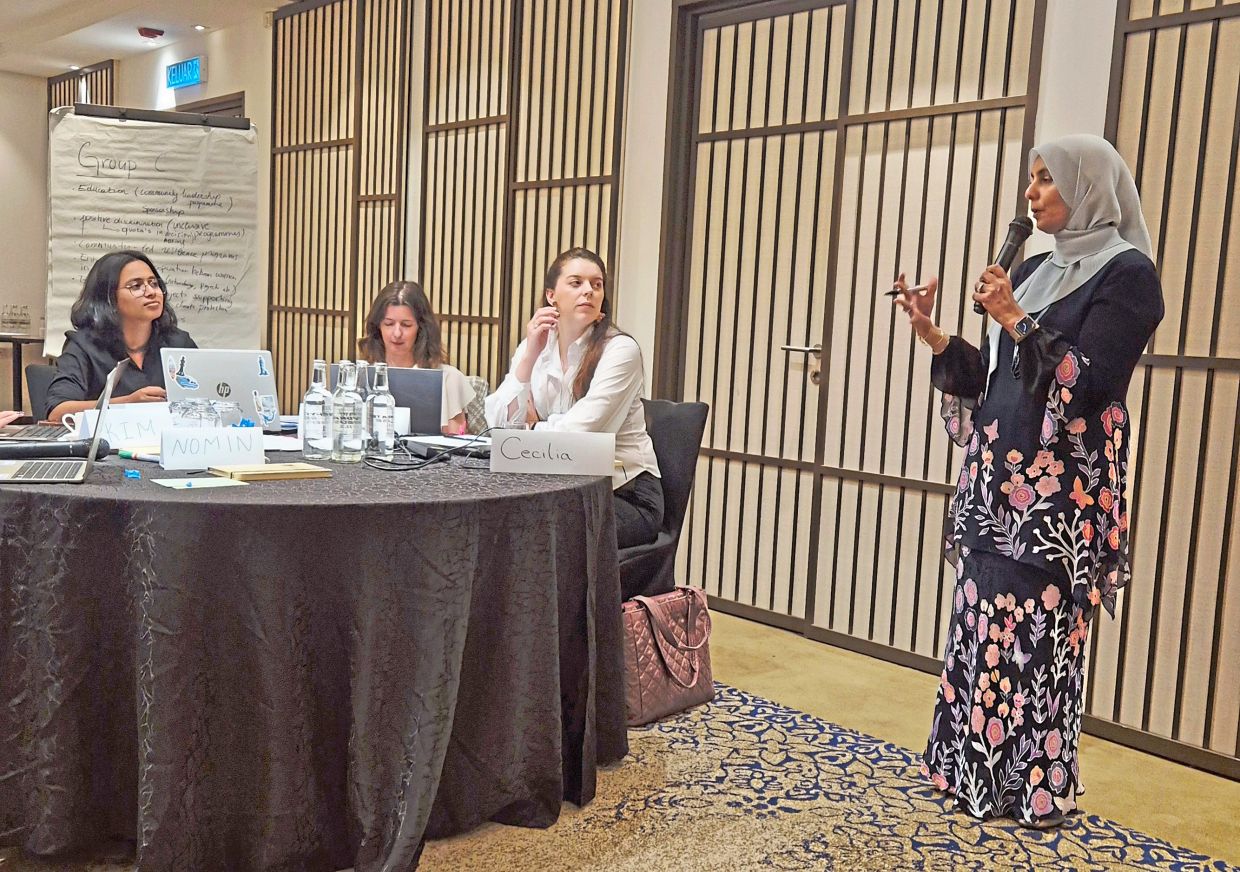
"Leadership is not just about having a seat at the table. It's about having the opportunity to contribute meaningfully, influence decisions and bring others along with you," she said.
She noted that while more women are entering the security sector, the challenge now is ensuring they have equal opportunities to move into leadership and decision-making positions.
"What they often needed isn't more capability – it is greater visibility, stronger networks and someone willing to back them when leadership opportunities arise."
Razwana said women have an important role to play because complex challenges require diverse experiences and perspectives. "The more complex our security environment becomes, the more important it is to have diverse voices around the table."
For young women aspiring to enter the field, her advice was to stay curious, keep learning and not underestimate the value of their experiences.
"The strongest security strategies don't begin at our borders. They begin by building trust, strengthening communities and giving people hope."
Conversations on shared experiences
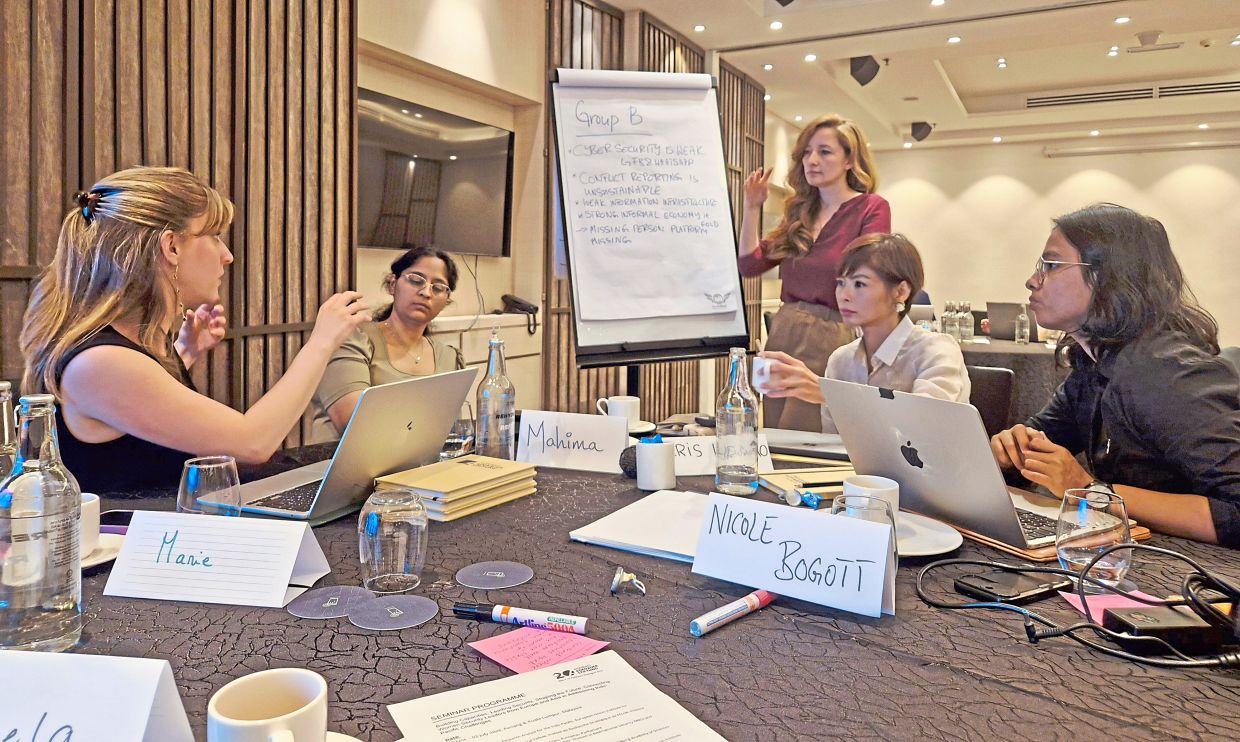
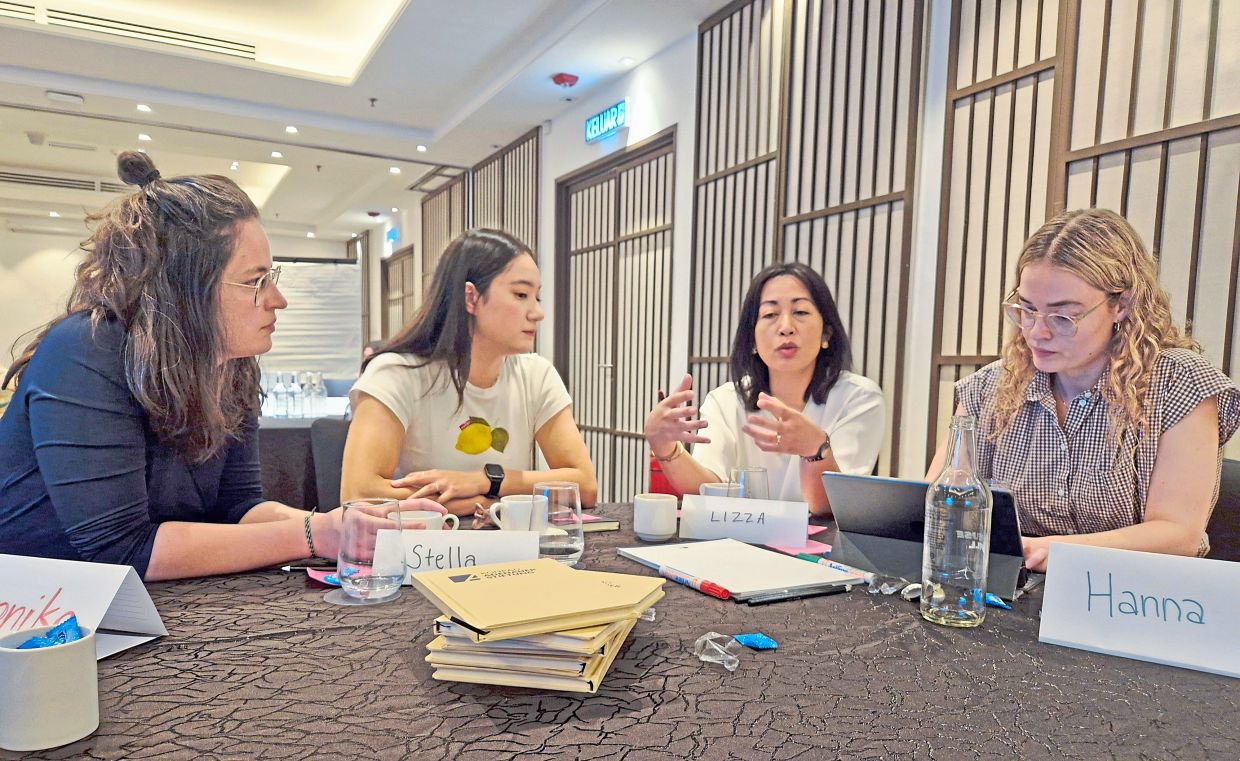
Participants exchange ideas on strengthening collaboration between Europe and Asia in addressing Indo-Pacific security challenges. Photos: The Star/Sheela Chandran
Villanueva-Libunao says networks among women security leaders are vital in tackling cross-border threats such as cyberattacks and disinformation.
Photo: The Star/Sheela Chandran
From left: Prague's Central European Institute of Asean Studies research fellow Veronika Blablova, Germany's Heidelberg Academy of Sciences and Humanities PhD candidate in armed conflict and polycrisis Stella Kim, European Union Institute for Security Studies research analyst for the Indo-Pacific Lizza Bomassi and Embassy of New Zealand in Germany's policy advisor Hanna Gers were among the participants at the conference.
Photo: The Star/Sheela Chandran
The three-day conference brought together women leaders, researchers and policy experts to discuss emerging security issues, including cyber threats and community resilience. Photo: Sabina Yeasmin
Participants, together with KAS representatives at Penang's Peranakan Museum.
Photo: The Star/Sheela Chandran
From left: Eva Houtave of Brussel's European External Action Service and Women in International Security steering committee, Nomingerel Khuyag of Mongolia’s Gerege policy think tank and Villanueva-Libunao take a selfie during their visit to the Peranakan Museum.
Photo: The Star/Sheela Chandran
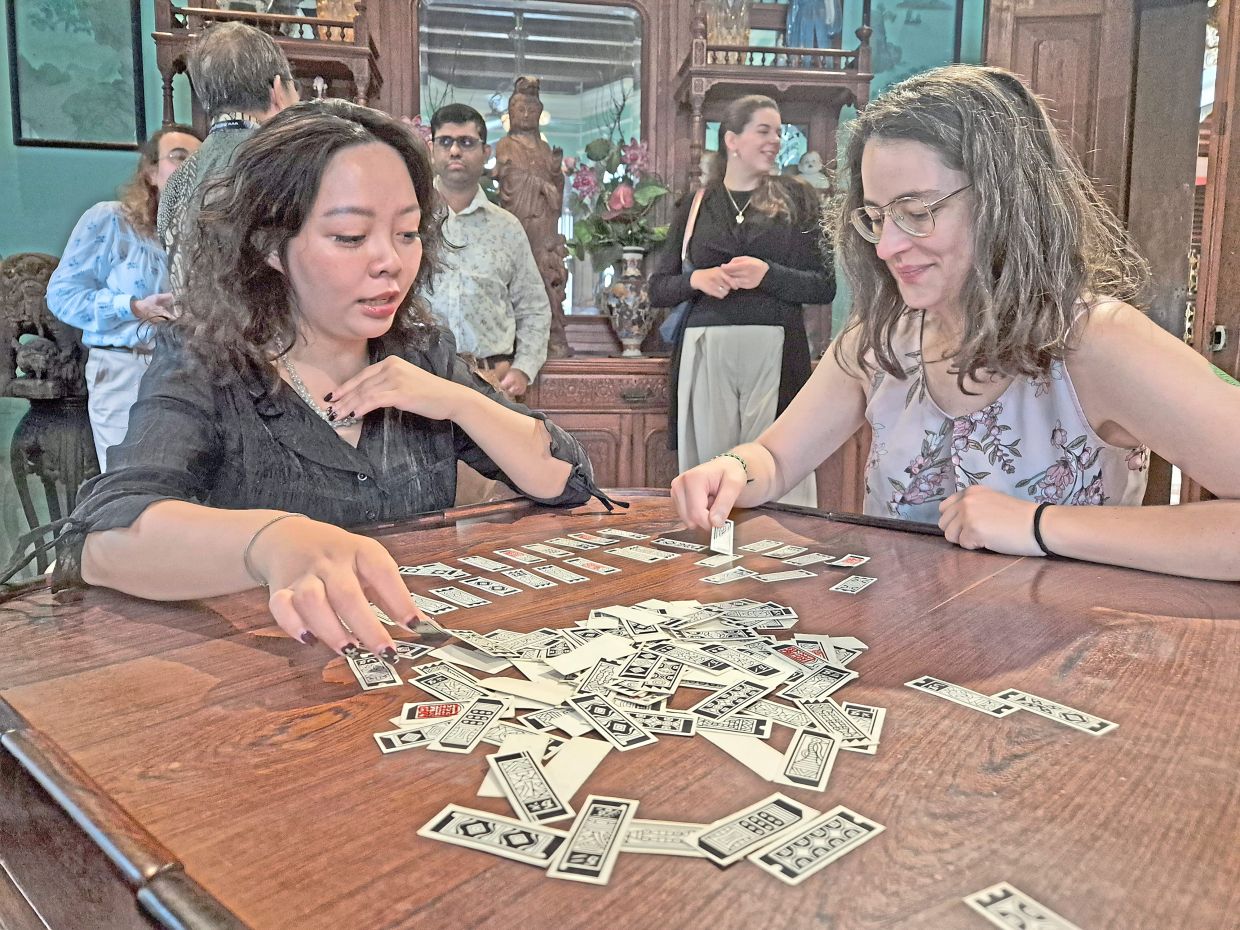
Diplomatic Academy of Vietnam’s Kim Giang Do (left) and Prague Office of the Central European Institute of Asian Studies research fellow Veronika Blablova try their hand at the traditional Peranakan card game, Cherki, during their visit to the Peranakan Museum.
Photo: The Star/Sheela Chandran
Dr Razwana (right) shares her insights on the evolving nature of security and the importance of diverse perspectives in addressing emerging challenges.
Photo: The Star/Sheela Chandran
Participants, together with Konrad Adenauer Stiftung representatives and members of the Penang Institute, visit the Penang Institute for a roundtable discussion on Penang’s strategic importance and its role in the region. Photo: Sabina Yeasmin