Forget tweaking your ISO values and slowing your shutter speed. In the end, good photos often come down to the timing.
When it comes to taking great holiday snaps, the most important factor is often not how you take your photo, but when. This is even more true in the age of cameras with automatic settings that already deliver great results.
Take the classic seaside sunset: "Often the colours are at their most beautiful around 10 to 20 minutes after sunset," explains Hendrik Vatheuer, who writes for a photography magazine in Germany.
As a rule, it is best to avoid shooting in harsh midday sun, particularly for portraits, where strong shadows can be unflattering. "The best light is in the morning or in the evening," says Vatheuer.
If the sun is high or too intense when you want to take a photo, try shooting from a shaded spot or make sure the sun is coming from behind you.
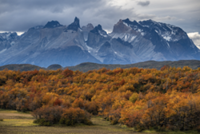
Mountain panoramas, meanwhile, are a notorious pitfall of holiday photography - what looks breathtaking in person often appears flat and lacking in depth on screen. But there are practical solutions.
"Mountain panoramas often look flat because the images lack a foreground," explains Vatheuer. "Good photos live and die by a foreground - a rock, a hiker or a tree in the front of the frame."
This automatically gives the image a greater sense of depth, he says, and photos with a foreground are always more compelling than those without.
Composition also matters, of course. Vatheuer advises against always centering your subject: "Don't always place the mountain panorama in the middle - try positioning it towards the edge and spreading the elements out a little."
Bad weather, meanwhile, is no reason to put the camera away - quite the opposite, according to the expert. "In rain, fog and grey skies, that is precisely when you should get the camera out." Poor weather often produces the more interesting images.
Reflections in rain or puddles are one approach. "Fog creates a lot of atmosphere, and a grey sky with dramatic clouds actually makes many photos more interesting," he says. Landscape shots in particular benefit from a sky that is not simply blue.
People exploring cities tend to focus quickly on architecture and buildings - a mistake, says Vatheuer. "In old town centres, it is best not to photograph only the buildings, but also the life within them," he advises. That means bringing people, cafes, small details and the play of light in alleyways into focus too.
The same rule applies as by the sea or when shooting landscapes: "The light is particularly beautiful in the early morning hours or during the blue hour in the evening." — dpa