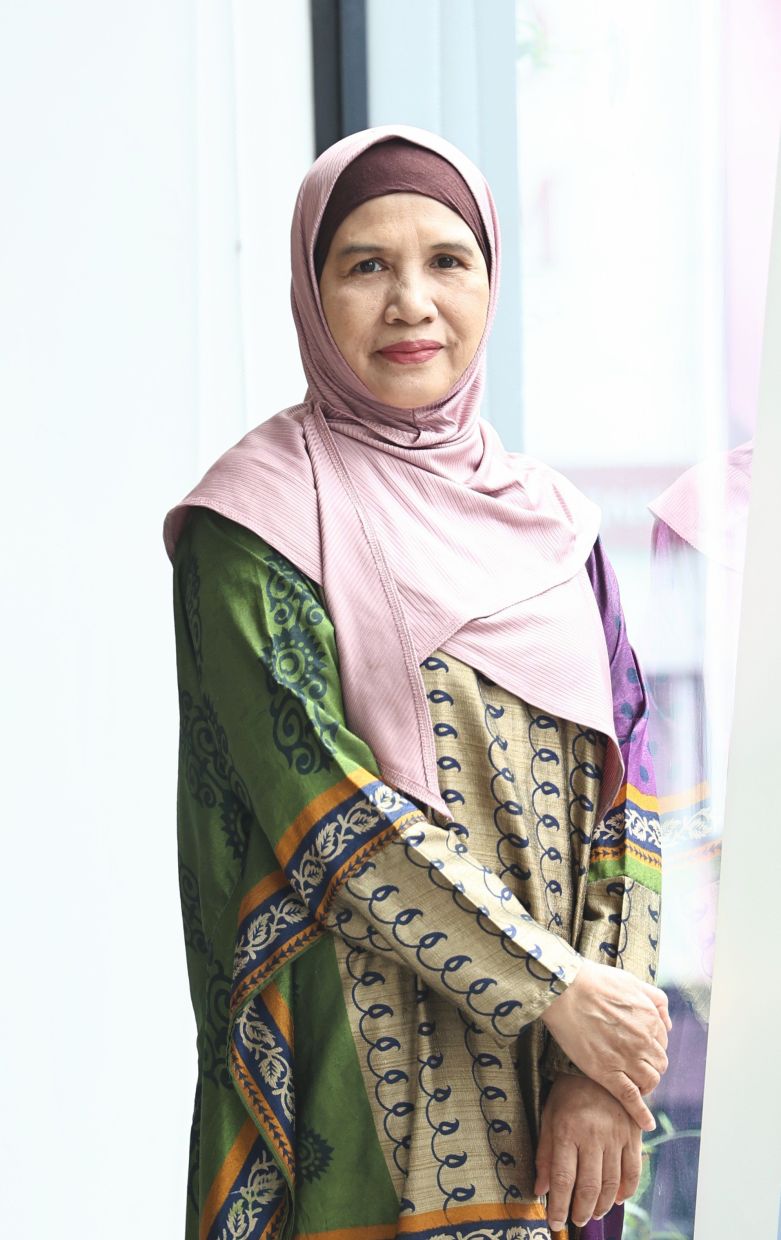
For most of her life, Noor ‘Aishah Abdul Rahman worked quietly, creating art out the spotlight.
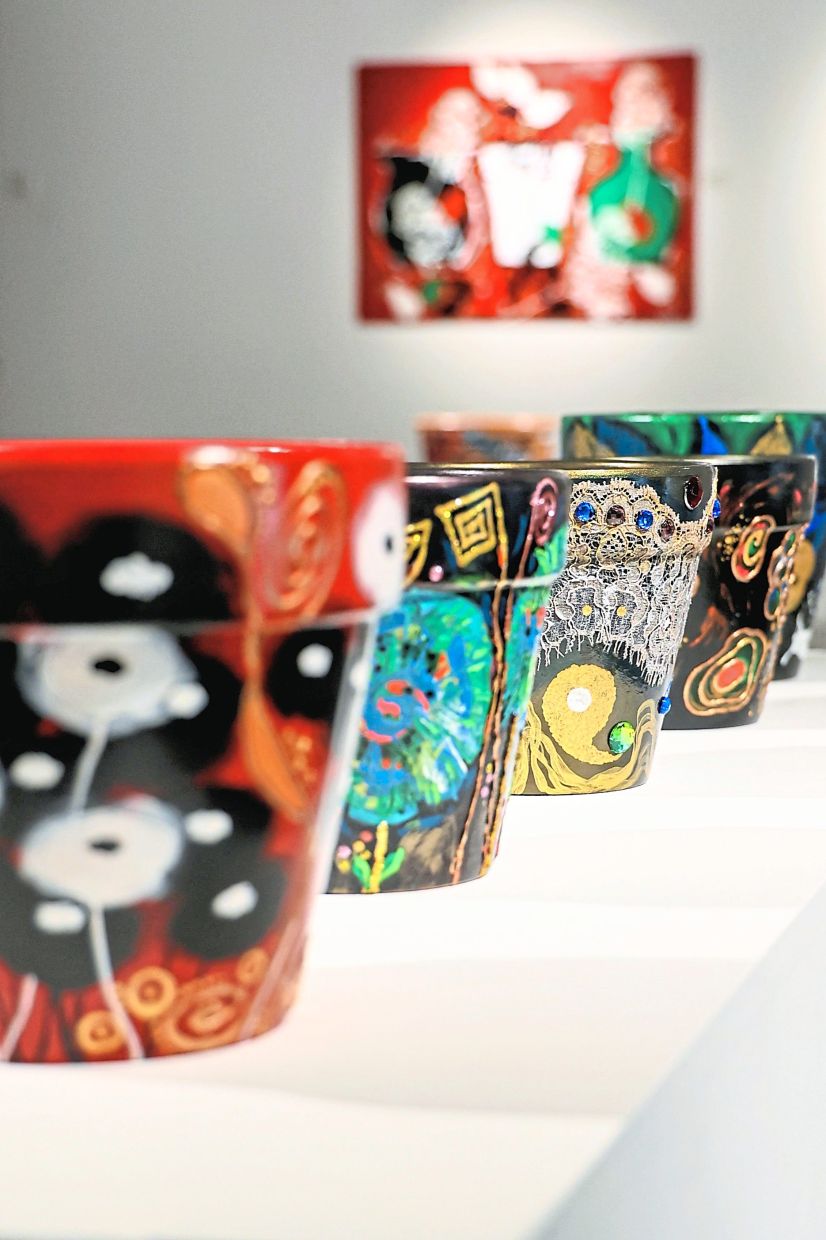
The painter-poet, who goes by the name Noura AR, spent years working on canvases. She also has PotLux, her brand of handpainted pots that transform basic terracotta pieces into decorative items.
But in recent years, her life has changed drastically.
In 2022, Noura lost her husband to a debilitating illness. Not long after, in 2024, she lost her second daughter, also to an illness. The losses were so profound that they completely reshaped her world and her art.
Now, the artist’s deeply personal exhibition, titled Hikayat, draws from that journey of grief and tells a story that weaves together the lives of a mother, wife and an individual.
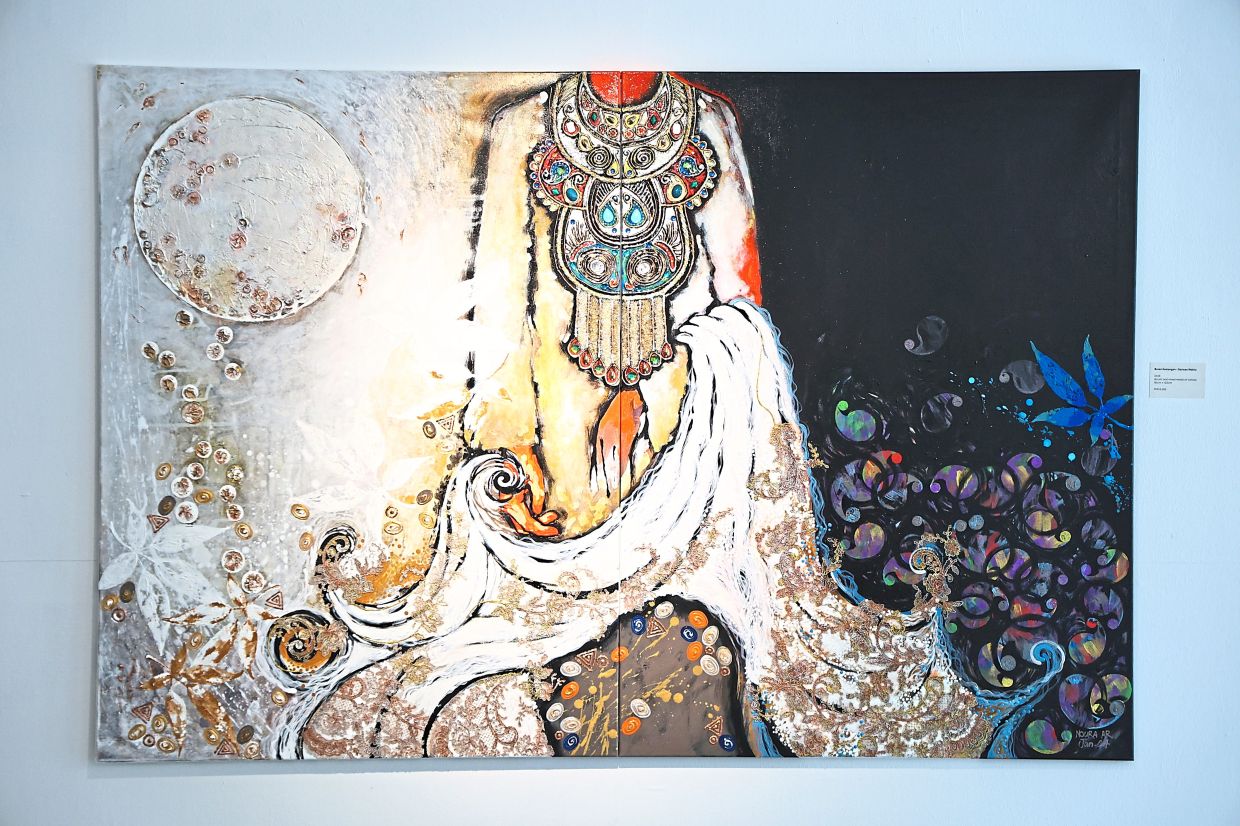
Before settling on the exhibition title, she spent time reflecting on the meaning of the word “hikayat”, a term associated with classical Malay tales of legendary or historical figures.
“Usually when we say ‘hikayat’, we think of figures like Tun Fatimah or Merong Mahawangsa – men and women whose great stories have been passed down,” she says.
“But when I looked at my own journey, I realised the people who make history in our own lives are not those distant figures. They are the ones who live with us every day.”
This show, she explains, is a tribute to those closest to her who formed the fabric of her life, including her late husband and daughter.
“We always think we are nobody in our own eyes. I always say I am no one, my children are no one, my husband is no one,” she reflects.
“But why do we say that? The people around us are the ones who shape our lives. One day, when they are gone, we look back and realise how much they contributed to who we are.”
In other words, Noura’s exhibition is not about the heroes of history books – as what one would think when they approach her show – but about the love and appreciation she holds for the people she loves.
“If you admire someone like Tun Fatimah, you only know her through stories. But the people who share your life, you know them personally. You eat together, sleep under the same roof and understand their good and bad. These are the people who become your real legends.”
Stories of heartbreak
For Noura, art became a way to process and channel her grief that are often too overwhelming for words.
But rather than dwelling on the sorrow, she chooses to paint moments that capture warm and meaningful memories.
Some paintings revisit places within her home – the dining table where Noura and her daughter shared one of their final breakfasts together, the garden and plants cared for by her late husband and the couch where her daughter would rest when she wasn’t feeling well.
“Emotion is very important in my work. Sometimes when I start painting about my daughter or husband, I remember so many things about them,” she says.
“There were times when I would break down and couldn’t continue with the painting.”
In those moments, emotions like grief and guilt would resurface and Noura would find herself talking to her loved ones who were no longer there.
“I would always ask my daughter to forgive me,” she says softly. “I would tell her how much I wanted to be a good mother, because I felt like I didn’t do enough.”
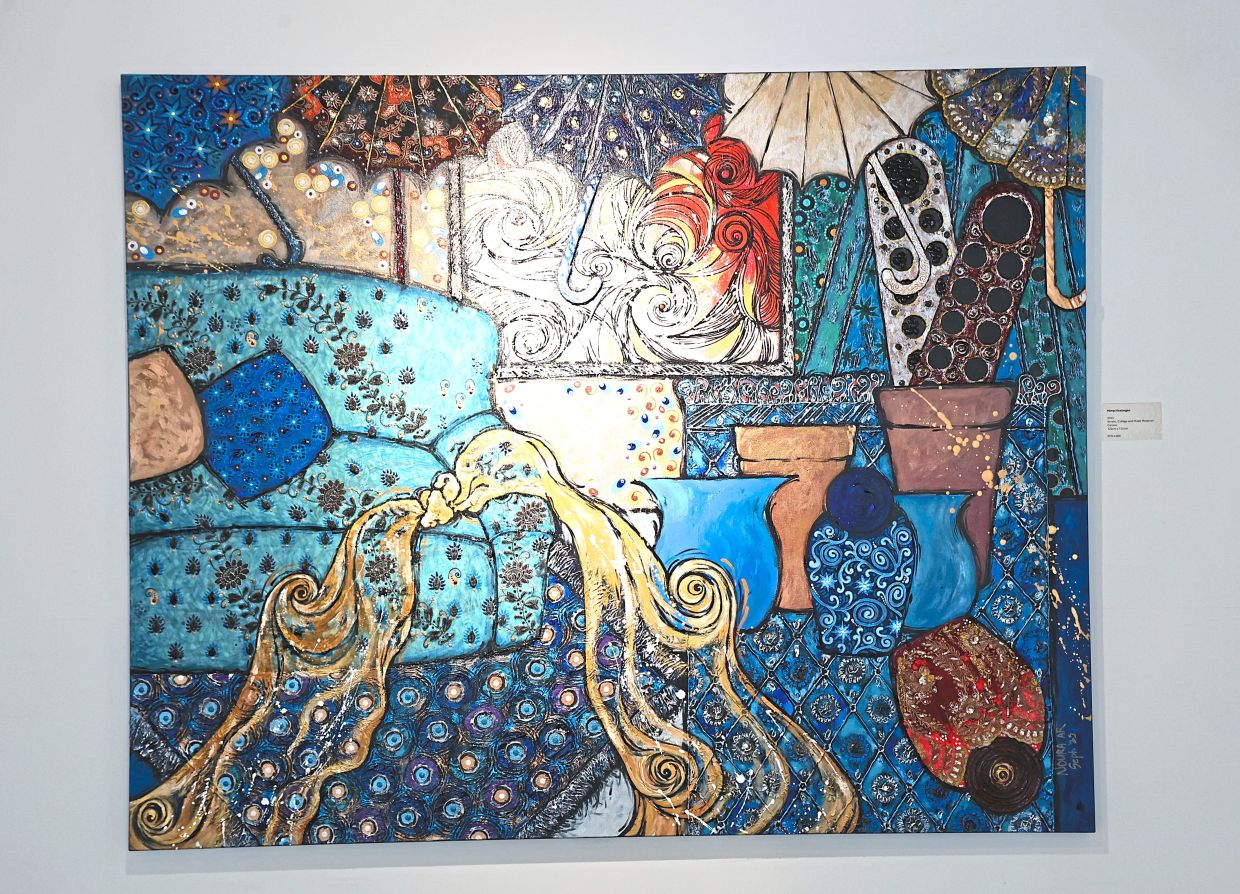
The emotional weight sometimes forces her to put off working on a piece for weeks or even months.
“There are works that are very heartbreaking for me, so sometimes I would stop in the middle of it. Some took me more than two months before I found the strength to continue.”
Despite the difficulties, she returns to the canvas every time, embedding her emotions in each piece.
“Every work has emotions involved, even when I paint the pots. Everything I do, I dedicate it not to myself, but to the people in my life – my children and my husband,” she states.
A woman’s strength
As Noura reflects on her journey as an artist, her late husband undoubtedly becomes a major fixture on those recollections.
Both with backgrounds in art and painting, their relationship was shaped by friendly competition.
“He was a painter, too. When we were studying, we were each other’s rival,” she recalls, the vivid memories putting a smile on her face.
“One semester, I was the best student; next semester, it was him. I was always angry at him because I really wanted that ‘best student’ title.”
He continued to be Noura’s biggest supporter as they grew older.
“He knew how to appreciate what I did. Even when things were difficult, he always supported me no matter what.”
After reminiscing on what once was, her smile drops again. She looks away for a moment before returning with her words.
“To lose a husband is one thing. But to lose a child – I pray no one will be tested to go through something like that. I simply can’t describe how painful it is.
“Until today, I have not fully recovered ... I don’t think I ever will.”
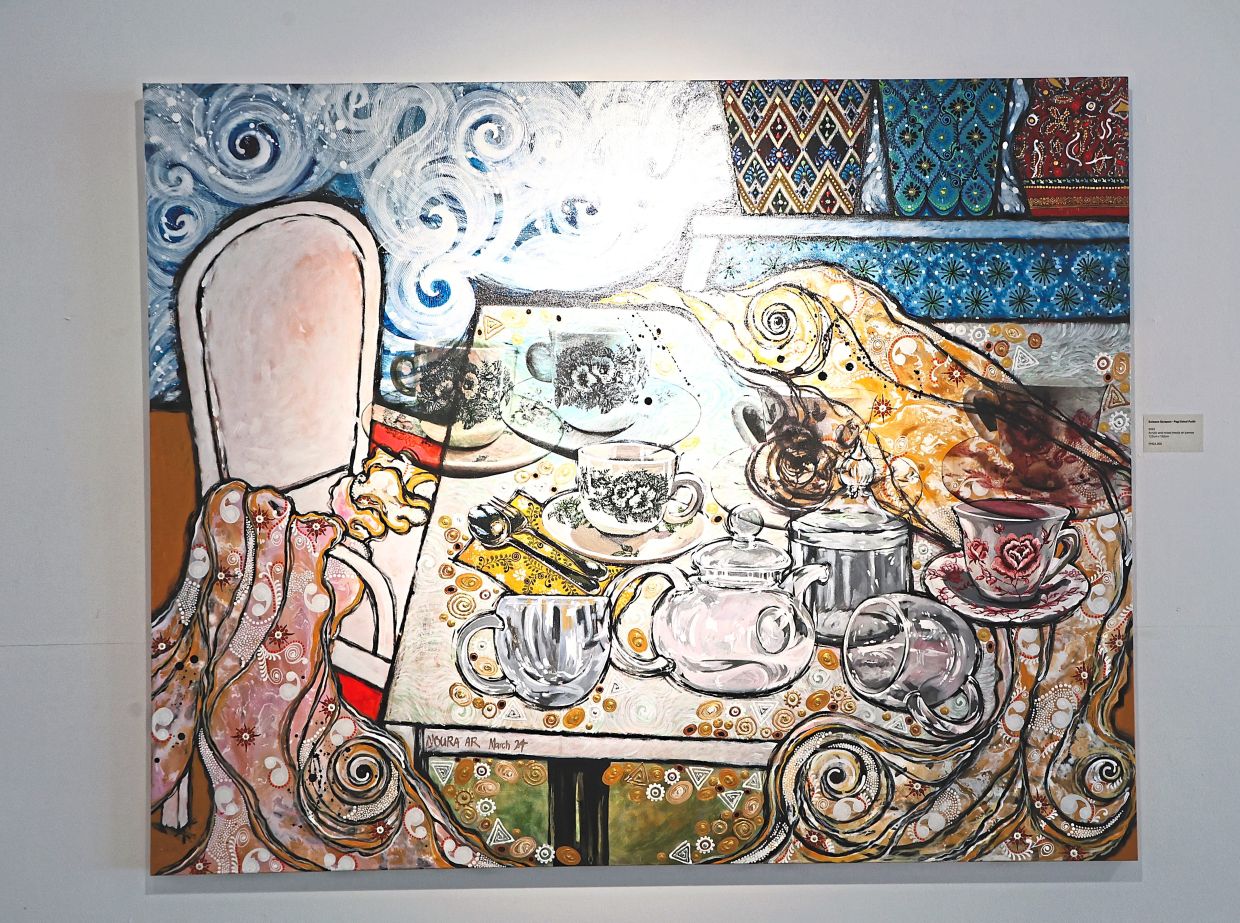
As deeply personal as the exhibition is, Noura hopes its impact extends beyond her own story and experiences.
“I hope women who come to my show will walk away knowing we have self-esteem and dignity,” she remarks.
“We have the ability to stand up again no matter what hardships we face in our life.”
To her, a woman’s power lies in their quiet but powerful fortitude.
“A woman’s strength and resilience is unmatched. Despite all the trials and tribulations, we still have hope,” she says.
“As long as we are alive, we will always have the spirit to keep moving forward.”
Hikayat is on view at Harta Space, Ampang, Selangor until March 31.