
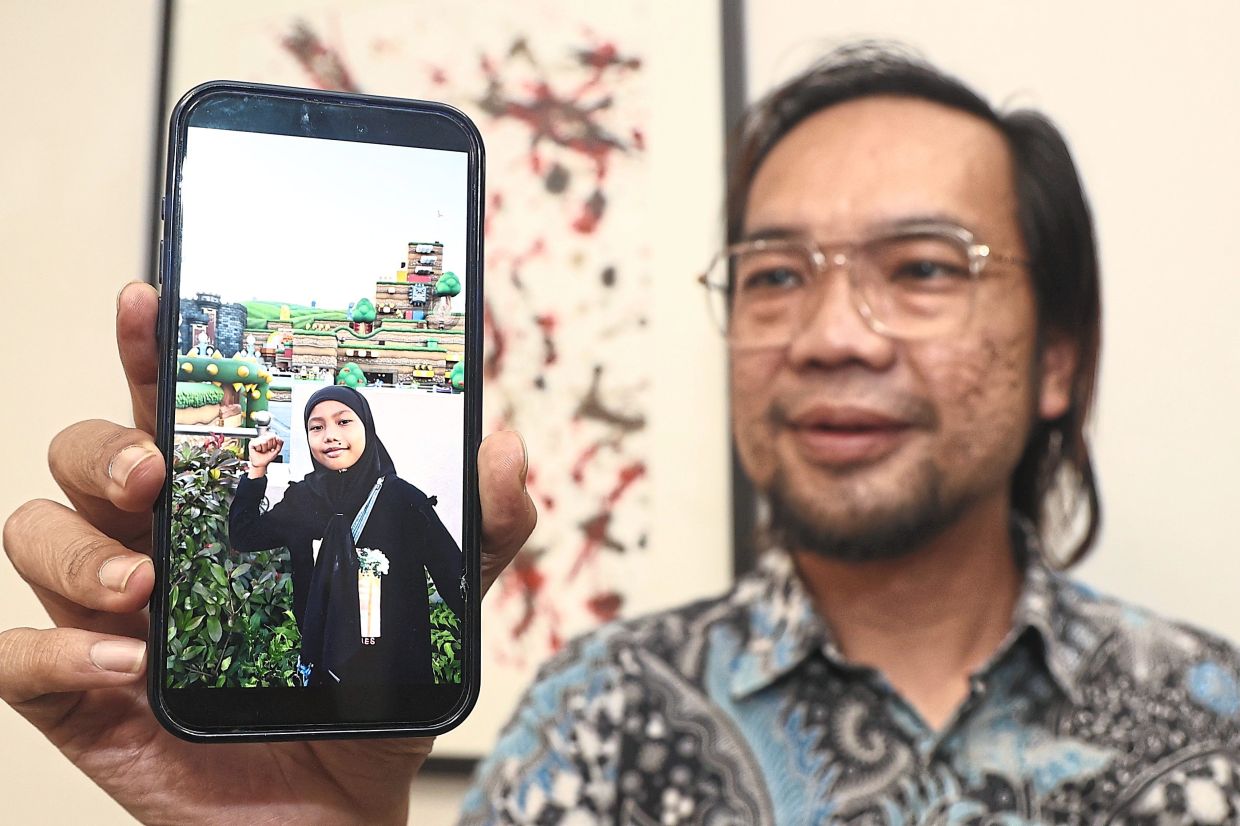
Over the last 12 years, not a day went by without Meor Azimudin Meor Adam, 42, feeling worried and anxious about the health of his second child, who was born with congenital heart disease (CHD).
When Nur Safiyya Hanania Meor Azimudin, now 12, was 23 weeks in utero, Meor Azimudin had planned to apply for her insurance, and a full scan – mandatory for application – revealed symptoms of heart disease.
“When she was born, she was diagnosed with Tetralogy of Fallot (ToF) with absent pulmonary valve,” says Meor Azimudin.
The condition combines four structural heart problems: a hole between the two lower chambers, the narrowing of the valve and artery that connect the heart to the lungs, the aorta shifting slightly to the right, and the thickening of the right ventricle’s muscle wall.
ToF is a rare condition affecting about one in 2,500 babies.
Cardiothoracic surgeon Datuk Dr Hamdan Leman says CHD is a malformation of the heart in utero and the defects are not similar to what you would find in adult hearts.
When the National Heart Institute (IJN) was established in 1992, he says, the focus was on adult heart patients.
“I realised that children have their own heart conditions that are different from adults. And congenital heart defect requires specific skills to rectify the malformation,” he says.
“I developed an interest in repairing congenital heart conditions, and the more operations I did, the more kids I saw that required treatment.”
He adds that the condition affects 7-8% of live births, and for every 5,000 infants born with it, 3,000 would require some urgent form of intervention.
“And when surgeries were not carried out on time, the number compounds and there were more kids that needed operations every year,” says Dr Hamdan, who specialises in congenital cardiac surgery.
Life after birth
After an extensive stay in the neonatal intensive care unit, Nur Safiyya Hanania returned home but would end up with at least one infection every month, her father says.
“When she was over a year old, she went for her first open heart surgery to correct the absent pulmonary valve. It cost about RM90,000, but I was working with an oil and gas company then so I had medical coverage for her. Still, we exhausted our savings for the surgery,” he says.
In the meantime, Dr Hamdan founded the Malaysian Congenital Heart Foundation in 2017 to help children born with the condition.
“I have patients and doctors who share the same concern, and we wanted to give these children the chance to lead normal lives,” he says.
Early this year, Nur Safiyya Hanania required another open heart surgery to correct her blood vessel and Meor Azimudin says by that time, his family needed financial help.
Over 12 years, his family has spent more than RM250,000 for Nur Safiyya’s medical needs.
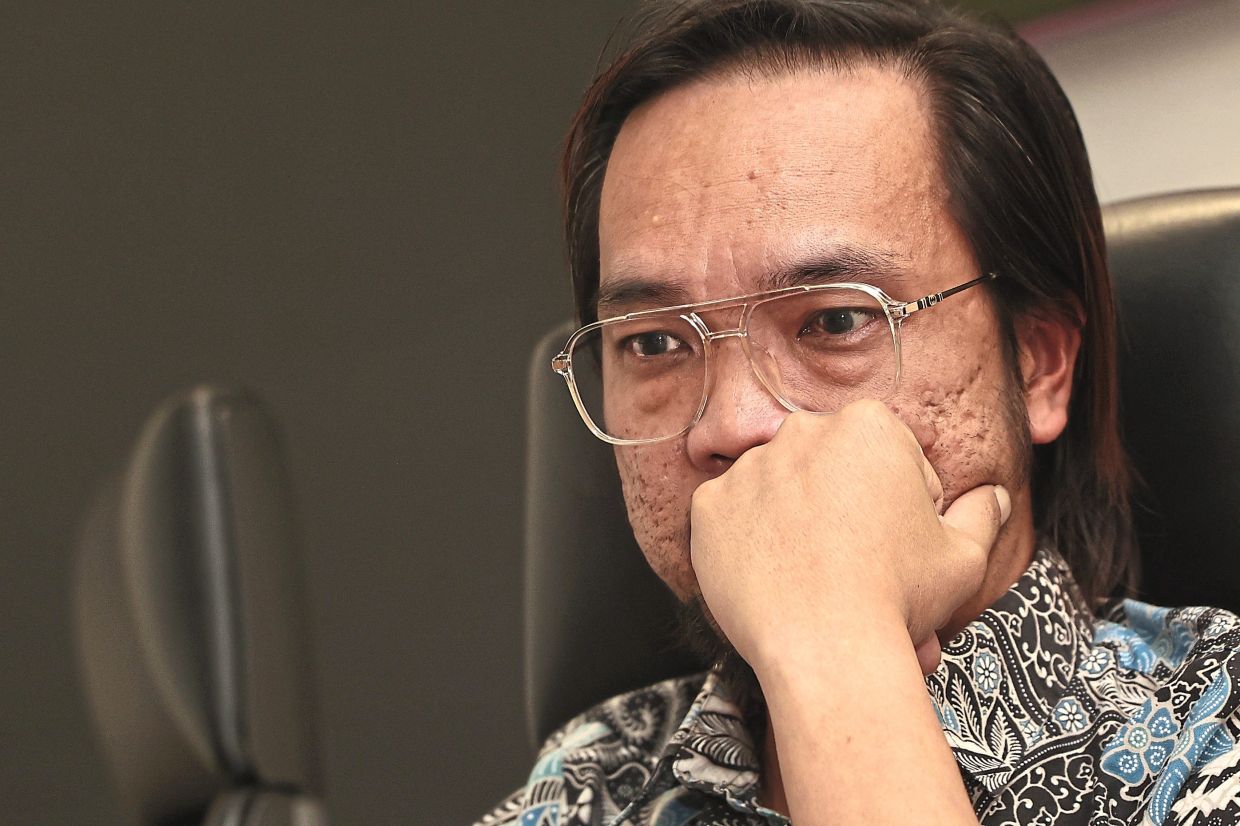
So Meor Azimudin reached out to the foundation, which helped pay a portion of the cost by crowdfunding.
“Their help really stabilised me mentally,” he says. “Between my daughter’s condition and trying to pool money for her surgery, I didn’t have enough headspace to think.”
A month after the surgery, Nur Safiyya Hanania suffered another blow – a minor stroke that required immediate attention. Strapped for cash, Meor Azimudin reached out to the foundation again.
“I was lucky I have a business and assets to liquidate. But during such an emergency, we needed money fast and the foundation’s help to issue a guarantee letter helped us during a crucial time,” he adds.
Financial burden
Dr Hamdan says the foundation will always require fundraising help because the condition the kids face is formidable and operation costs are very high.
“We cannot sponsor patients because our funds will deplete very fast, so we give a certain amount to help manage the parents’ and caregivers’ financial weight,” he adds.
This year, the Kuala Lumpur Standard Chartered Marathon has included the Malaysian Congenital Heart Foundation in its list of beneficiaries for the Run for a Reason programme, where runners raise donations for a specific organisation in exchange for joining the coveted race.
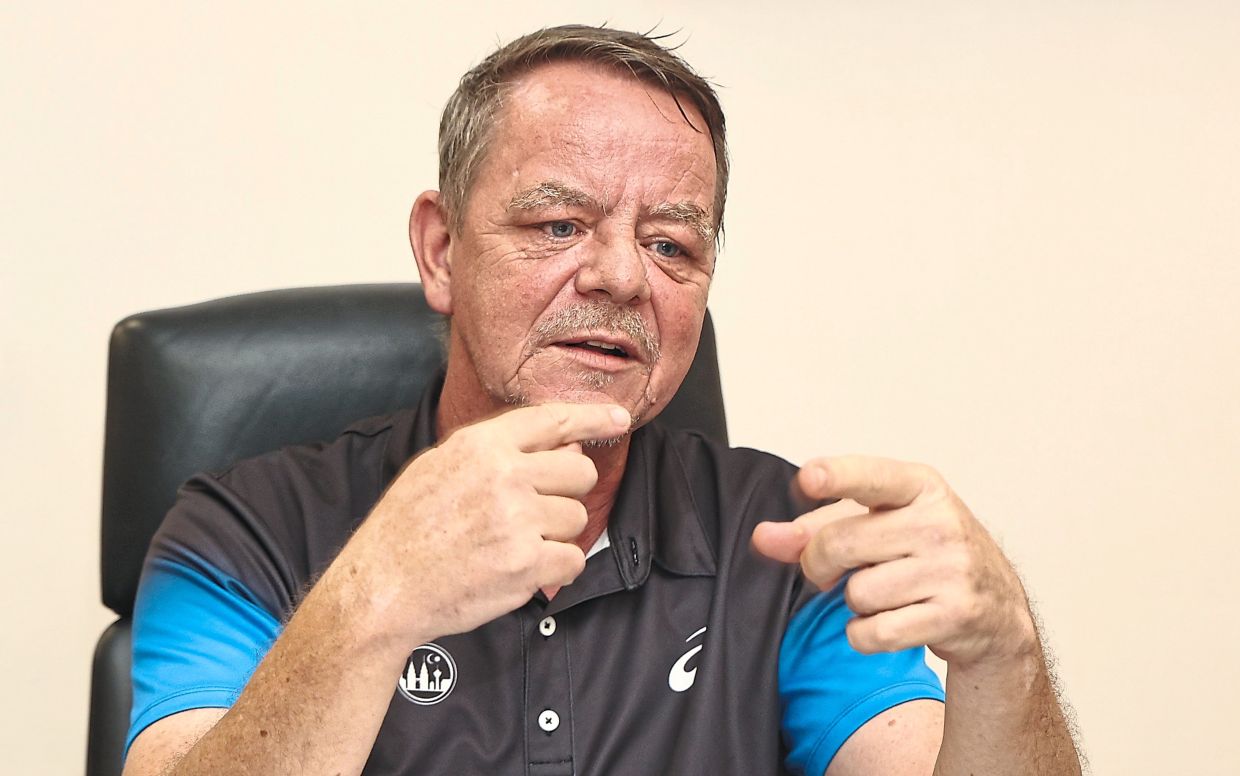
“It’s quite a popular programme, with over 1,300 runners joining for five charities. Runners like it because it gives meaning to running and they are quite keen to raise funds for their preferred organisation. We want runners who rally for the cause and stand behind it,” says Dirigo Events director Rainer Biemans.
The programme has raised RM700,000 this year and Biemans hopes to cross the RM1mil mark soon.
Since it was introduced in 2009, 19 charities have benefitted from the programme.
“We prefer charities that are active and those who communicate and work with runners to achieve their goal.”
For Dr Hamdan, more funds means more kids can benefit. The foundation operates a central fund for heart surgeries of CHD patients from underprivileged families throughout Malaysia. It also collaborates with all congenital heart care centres in Malaysia to facilitate congenital heart surgeries
“These kids lead hard lives. As a paediatric surgeon, I don’t know of a more satisfying feeling than to do something for them and give them a chance at living a normal life, just like other children,” he concludes.