
A pharmacist and researcher based in Kota Baru, Kelantan, Nur Hafizah Annezah Utuh, 26, is working at the intersection of genetics and medicine – a field known as pharmacogenomics.
Her goal? To ensure every patient receives the right medicine at the right dose, based on their DNA.
“To put it simply, I’m trying to match the right medicine to the right person.”
Pharmacogenomics combines pharmacology – the study of how medicines work – with genomics, the study of our genes. It looks at how our genetic makeup influences the way we respond to drugs.
In everyday life, we already understand that people are different. One person’s skincare routine may cause irritation for another. A workout plan that works for one friend might not work for you. Yet in medicine, patients are often prescribed the same standard treatment.
“Precision medicine moves away from a one-size-fits-all approach,” she explains. “Instead of giving everyone the same treatment, we tailor it to each person’s individual characteristics, including their genetics.”
The result? Treatments that are more effective, safer and better suited to the patient.
In celebration of International Women’s Day 2026 with its theme Give to Gain, Nur Hafizah’s effort speaks about the power of contribution to drive shared progress.
By applying DNA-guided prescription tailoring to transform patient care, her work embodies the spirit of giving to improve health outcomes through science and innovation.
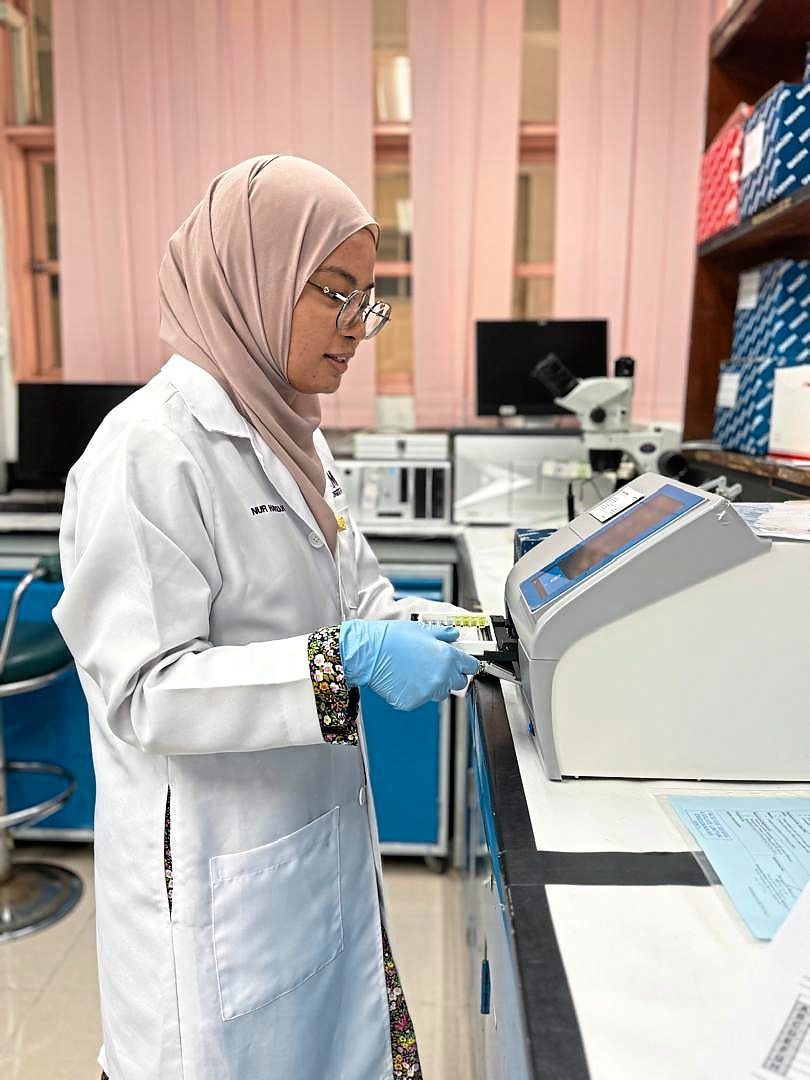
Like many children, she remembers asking her parents why she did not look like her friends, or why she could not run as fast as a classmate. The answer was always the same: genetics.
“We’re all built differently,” she says, recalling the answer that grew into curiosity.
She began to understand DNA as an instruction book inside the body – influencing not just appearance, but how we function and even how we respond to medication.
Her calling became clearer while working closely with patients. Seeing firsthand how treatments affected real lives made her knowledge purposeful.
“When I saw how genetic-guided treatment could help patients receive safer and more effective care, it was deeply fulfilling,” she says.
“That’s when I knew this was the path I wanted to pursue.”
One of Nur Hafizah’s key research areas focuses on heart disease, a major health concern in Malaysia.
Patients who survive heart attacks are often prescribed blood thinners to prevent future clots. But here’s the catch: the medicine must be “activated” by an enzyme in the body called CYP2C19.
“You can think of it like a key and a lock,” Hafizah explains. “The medicine is locked and needs the right key inside the body to unlock its full effect.”
Because of natural genetic differences, some people carry variants of the CYP2C19 gene that reduce the enzyme’s function.
So even if they take the medication correctly, their bodies may not activate it properly – leaving them at higher risk of another heart attack.
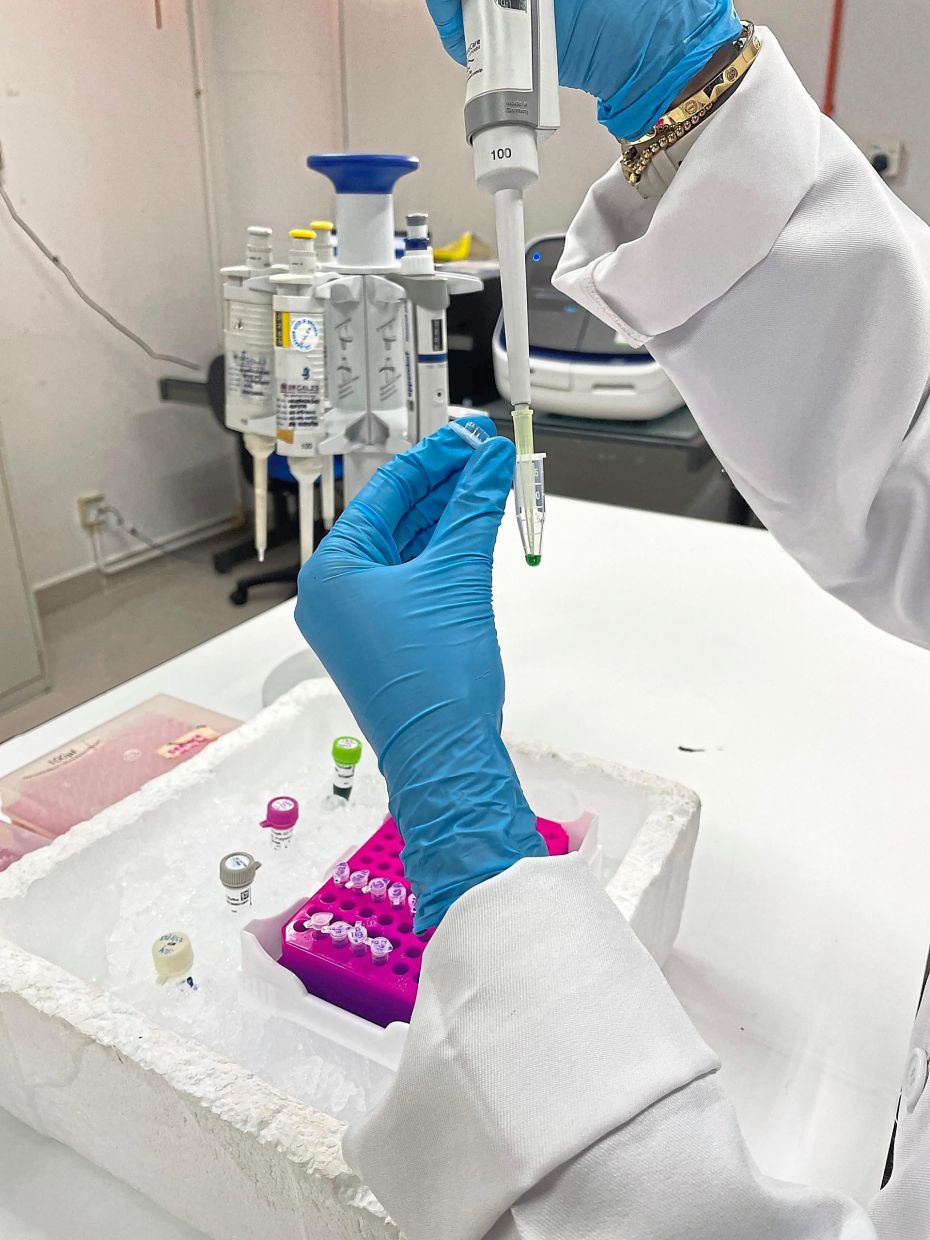
By integrating genotype-guided therapy into cardiology practice, Nur Hafizah hopes to reduce hospital readmissions caused by complications like heart attacks or strokes. For patients and families, that means not only better health outcomes, but peace of mind.
As a postgraduate researcher at Universiti Sains Malaysia, Nur Hafizah works closely with clinicians at Hospital Pakar USM to implement genetic-guided prescribing in real-world settings.
One of her biggest challenges has not been scientific discovery – but system design.
“Introducing genotype-guided therapy into an established healthcare system is never easy,” she says. “In heart disease management, every decision can have life-changing consequences. There is naturally caution and scepticism.”
To overcome this, she adopted a step-by-step pilot approach, working collaboratively with nurses, pharmacists, physicians, cardiologists and medical assistants. Her work also considers health economics – ensuring personalised therapy is not only clinically effective, but scalable and cost-effective within Malaysia’s public healthcare system.
Her efforts have been recognised through the Merdeka Award Grant for International Attachment, which will take her to University of Groningen, Netherlands, and Mahidol University, Thailand.
At these institutions, she will study how genetic testing is embedded into routine care – and how those frameworks can be adapted for Malaysia.
“Ultimately, it’s about turning research into impactful practice,” she says.
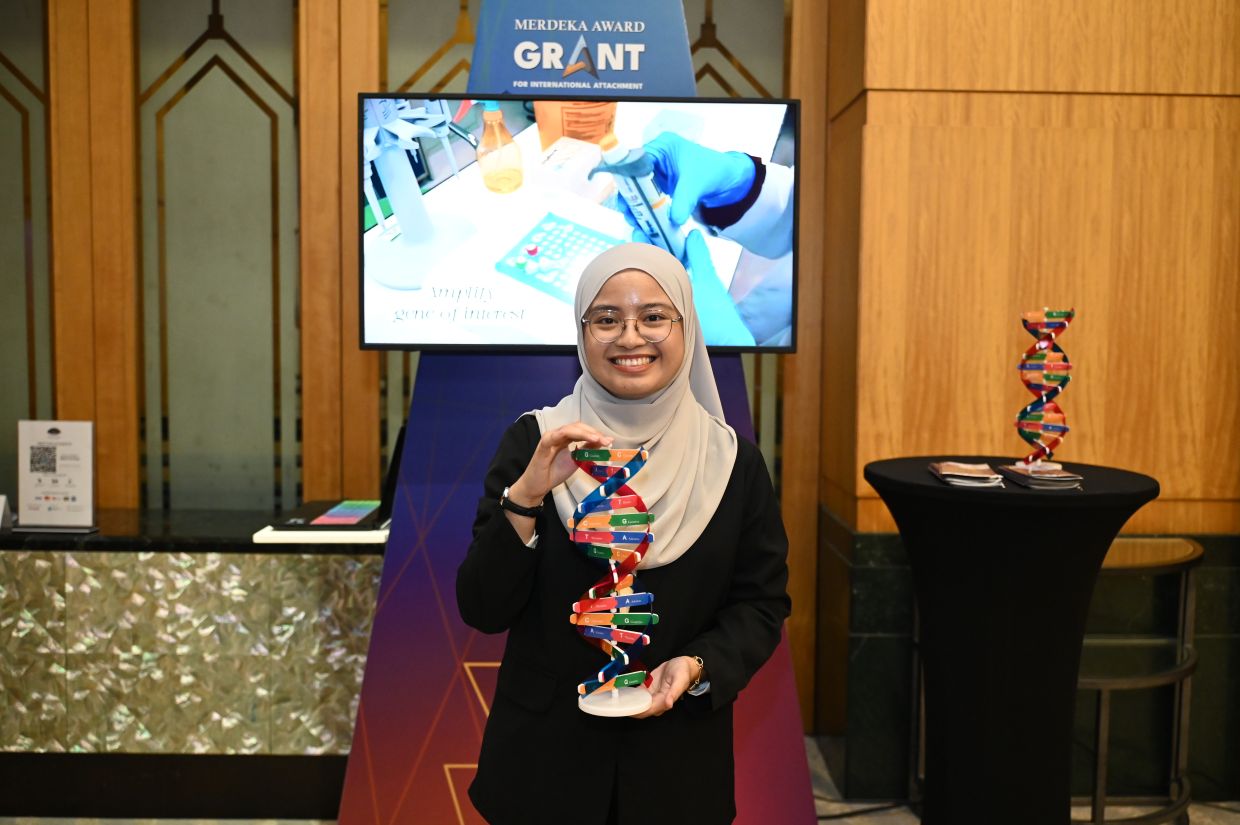
Malaysia’s multiracial population brings rich cultural diversity – and equally rich genetic diversity.
By studying how Malaysians of different backgrounds respond to medication, Nur Hafizah believes the country can build its own genetic reference data. In doing so, Malaysia could potentially become a regional hub for precision medicine in Asia.
Matching medication to DNA offers clear benefits. Patients avoid the frustration and risks of trial-and-error prescribing, side effects can be reduced and recovery may be faster. And while genetic testing has upfront costs, it can lead to long-term savings by preventing complications and hospitalisation.
“If I could change one thing, it would be moving from a reactive system – where we treat complications after they occur – to a proactive and more personalised approach where we prevent complications before they happen,” she says.
Nur Hafizah encourages young women ‘to take up space and follow your own path, even when it feels uncertain’.
“Life won’t always be easy, and there will be moments of doubt. But staying true to your values matters.”
Growing up with parents who were both teachers, she was inspired by their dedication to learning and sharing knowledge.
Today, she blends that inspiration with pharmacy practice, research and mentoring.
Sometimes, the future of medicine begins with a simple belief: that every patient is unique to their genes. And their treatment should be tailored accordingly, she concludes.