In Malaysia, animal cruelty stories have become painfully familiar: A video circulates online. A dog beaten. A cat abandoned. A shelter pleading for help. Public outrage rises and fades just as fast. Statements are issued, investigations promised, yet the cycle repeats.
For some Malaysians, that is no longer acceptable. A national movement called #ExecuteAWA believes the country has reached a tipping point and compassion alone isn't enough.
"We've seen cruelty after cruelty surface for decades," says founder Sue Ann Kong. "Each case sparks heartbreak and anger, but the system hasn't changed."
Launched in May 2025, #ExecuteAWA positions itself as Malaysia's first national humanity movement dedicated to improving animal welfare governance. Its goal is to turn public frustration into coordinated action that drives policy reform, accountability and humane solutions for the country’s stray animal crisis.
Under every viral cruelty case, Kong says, lies a deeper systemic problem. Solving it, therefore, requires far more than reacting to tragedy. It involves preventing it from happening in the first place.
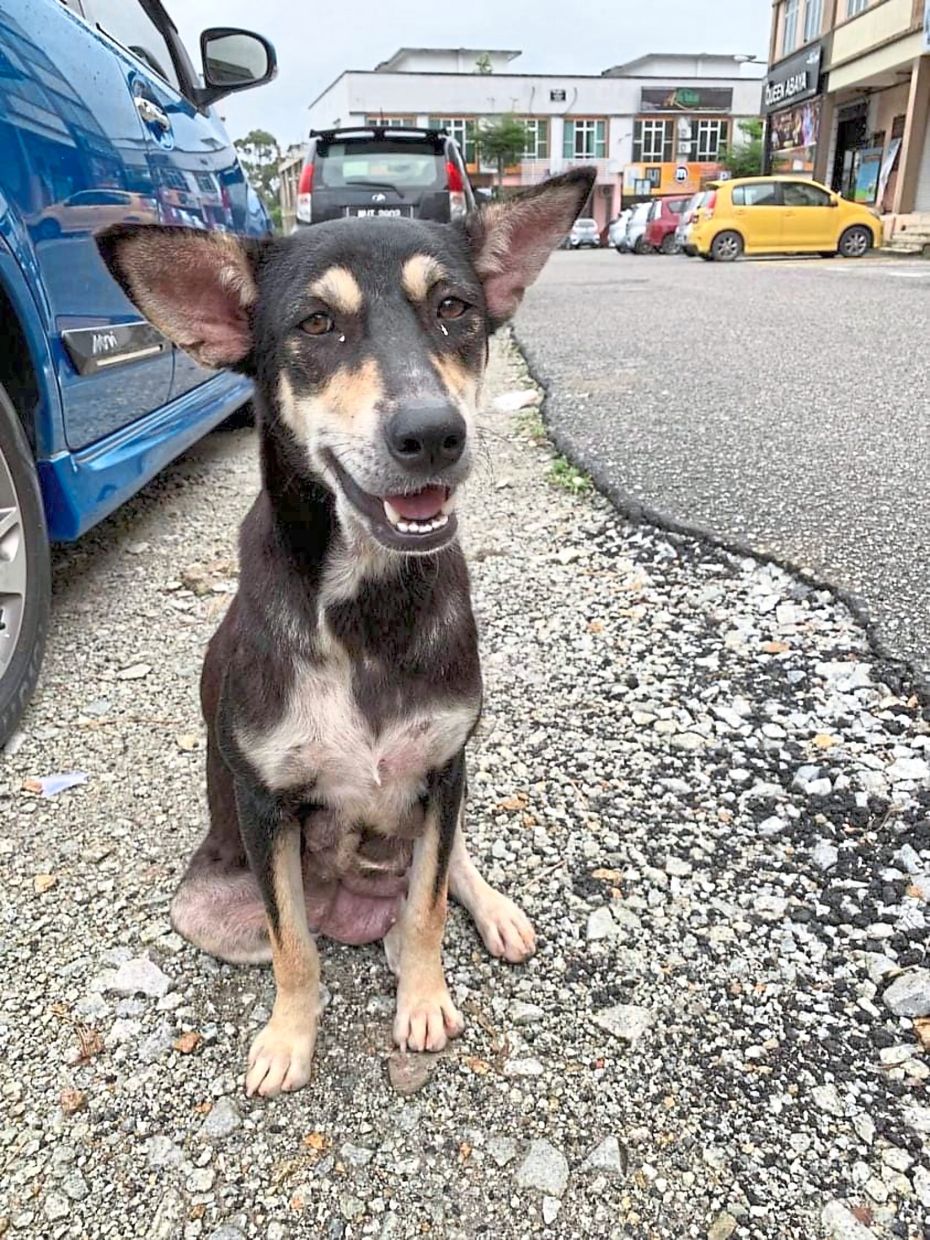
Kong felt it too.
"Kopi's case broke my heart," she says. "But it also woke me up."
What struck her most was not just the cruelty itself, but the pattern surrounding it.
Every new case seemed to follow the same arc: shock, anger, temporary attention, and then silence. Meanwhile, rescuers, feeders and NGOs continue doing exhausting work on the ground with little systemic support.
Kong says the issue could not be solved case by case.
"If we keep reacting emotionally to individual cases, nothing fundamentally changes," she says. "The problem has to be addressed strategically at a macro level."
So she began reaching out to people across Malaysia's animal welfare ecosystem – veterinarians, rescuers, NGOs, community feeders, legal advocates and concerned citizens.
What she found surprised her: Concern was everywhere, but coordination was not.
#ExecuteAWA was created to bridge that gap. Rather than operating as a traditional charity, the movement functions more like a national platform – gathering data, connecting stakeholders and advocating for evidence-based solutions.
At the heart of the initiative is a belief that animal welfare reflects the broader integrity of a society.
"Animal welfare isn’t a fringe issue," Kong says. "It reflects governance, ethics and the values we claim to stand for."
That belief comes at a time when Malaysia’s animal welfare landscape is facing alarming trends. Reported cruelty cases rose by 2,035% between 2016 and 2025, yet only about 0.22% resulted in prosecution.
To Kong and many advocates, those numbers highlight serious gaps in enforcement, evidence gathering and institutional coordination.
But #ExecuteAWA is not only about pointing out problems. It also proposes concrete solutions. One of the most significant is a national programme called #ProjekTogetherBoleh, designed to address Malaysia’s stray animal population through prevention rather than reaction.
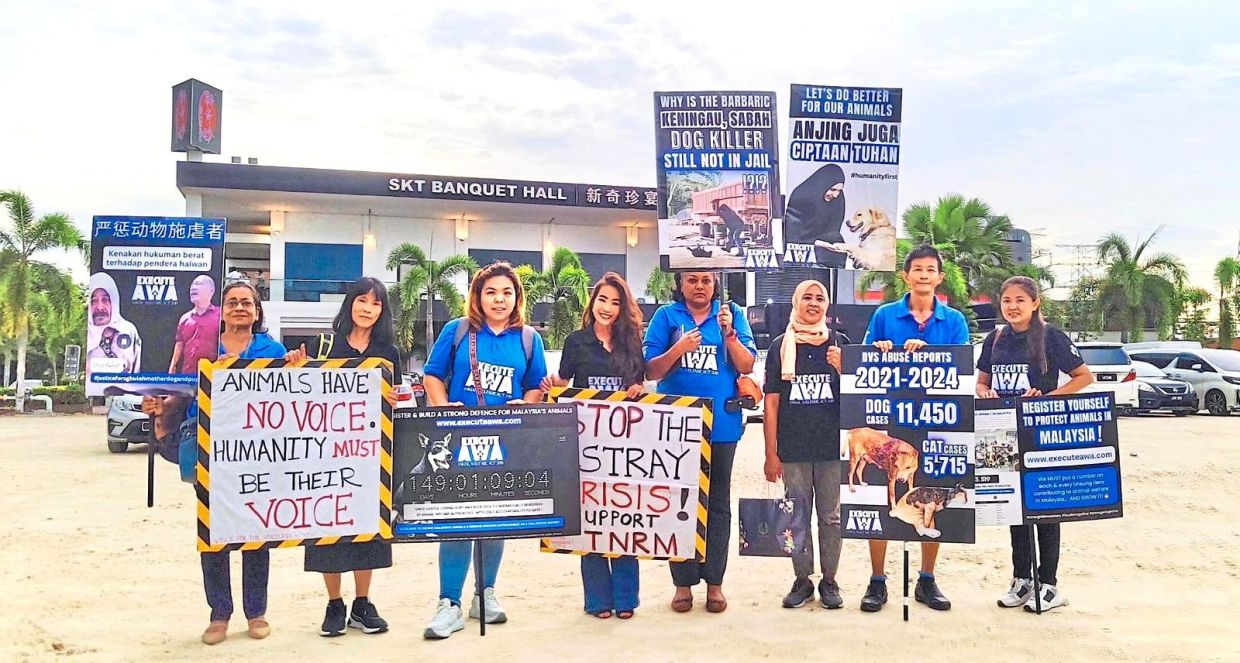
#ExecuteAWA promotes a strategy known as TNVRM – Trap, Neuter, Vaccinate, Reclaim or Return, Microchip and Manage through its #ProjekTogetherBoleh.
The idea is simple: sterilising animals reduces reproduction, stabilises stray populations and improves public health outcomes.
To strengthen this argument, the movement has developed its own population model integrating global research with Malaysian conditions. Using variables such as reproduction rates, mortality and sterilisation coverage, the model aims to help authorities make evidence-based decisions about stray management.
The model suggests sterilisation programmes could achieve up to 94% effectiveness when 70% of animals are neutered.
In other words, humane solutions may also be the most practical ones.
The movement also emphasises something simple – everyday responsibility.
"The first step is basic," Kong says. "Don’t look away."
Helping animals does not always require large gestures. Small actions matter: reporting cruelty, supporting shelters, volunteering time, sharing information, or practising responsible pet ownership through spaying, vaccination and licensing.
These actions, multiplied across communities, create a culture where compassion becomes the norm rather than the exception.
For Kong, the conversation ultimately goes beyond animals.
She believes how a society treats its most vulnerable reflects its moral foundation.
"Calling animal welfare 'secondary' already signals moral failure," she says. "A nation that excuses cruelty because it's inconvenient compromises everything else it claims to value."
Within its first year, the movement has connected NGOs across Peninsular Malaysia, Sabah and Sarawak, launched a national digital platform for reporting and data collection and mobilised collaborative initiatives with animal welfare groups and policymakers.
"What keeps me going is refusing to accept a Malaysia where cruelty is normal," she says. "Every animal that suffers reminds us the system has failed. But every citizen who steps up reminds us change is possible."
More info: ExecuteAWA