Innovations by Dr Temple Grandin have revolutionised the livestock industry, but she warns that the next Temple Grandin may never get her chance.
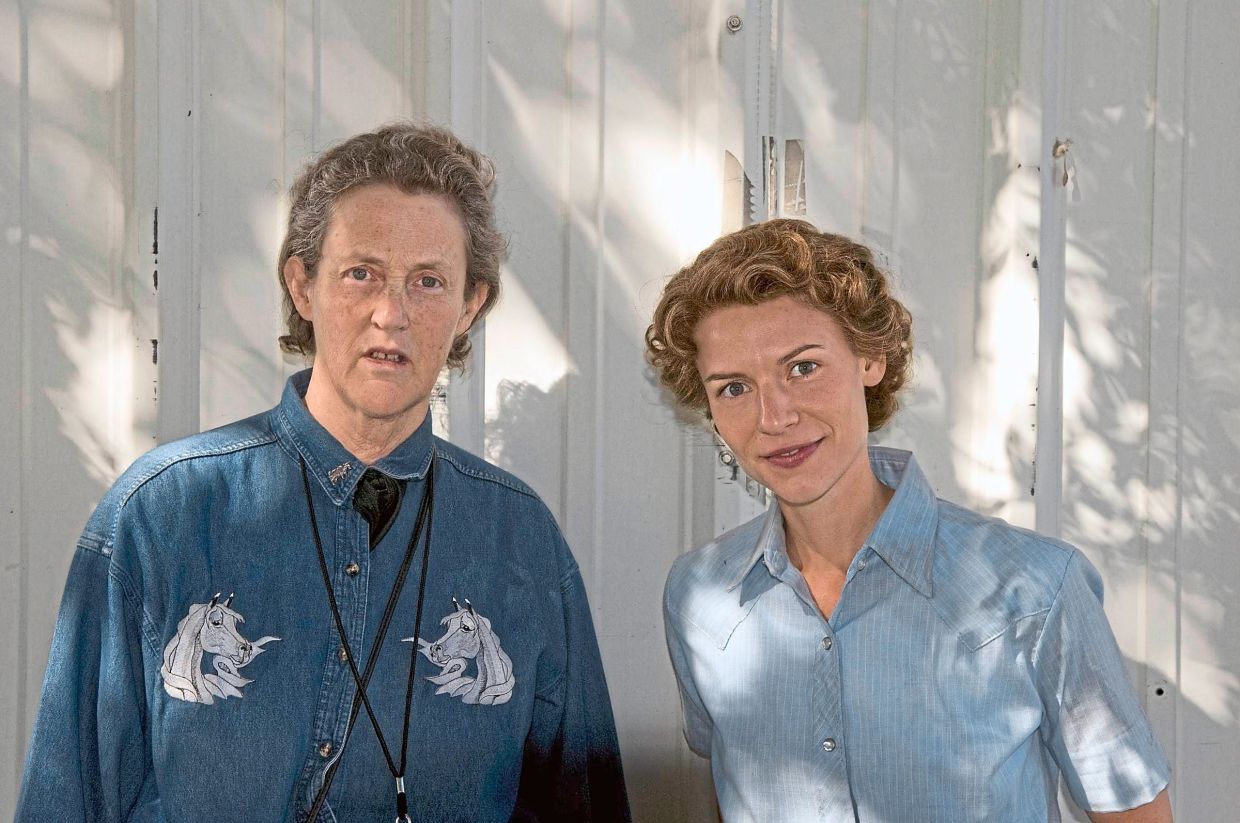
Grandin, 78, remains a professor at Colorado State University at Fort Collins, Colorado, the United States. She is a consultant on animal husbandry and an author. She came to national attention in 2010 with the Emmy and Golden Globe-winning film Temple Grandin that starred Claire Danes in the title role.
Grandin attributes much of her success to being a visual thinker, someone who thinks in pictures rather than words.
"I used to assume everybody thought in pictures," she said, before learning that more people think in words. Research identifies three types of thinkers: visual/photo, mathematical/linear, and word/verbal, she said.
Speaking at the Midwest Grazing & Soil Health Summit in Willmar, Minnesota, last month, Grandin said the US educational system and the requirements established for many career paths are shaped largely by those unlike her: the verbal thinkers and mathematical thinkers.
This bias can serve to screen out visual thinkers from opportunities, according to Grandin.
Prospective veterinarians must now master algebra and calculus, which makes it difficult for visual thinkers, or what researchers term "object visualisers," to advance. Algebra and its abstract concepts are especially difficult for object visualisers such as herself, she said.
And yet, research shows that object visualisers are especially well-suited to careers in animal husbandry and agriculture, she said. Visual thinkers are also talented when it comes to putting together complex mechanical systems.
Many of the complicated systems running the large meat processing facilities she helped design were developed by fellow visual thinkers, according to Grandin. They are people who love to tinker and many operate their own machine shops, she said, adding that some of them failed in high school.
"I am worried that we are screening out our object visualisers," said Grandin.
It's more than just the standards for admission to different career paths that screen out some. It's the educational system itself. More needs to be done to let young people tinker and work with tools, she said.
"We've paid the price for taking out hands-on classes," she said.
As an example, she pointed out that some of the most innovative machinery used in many of the US facilities is imported, including equipment for making high-tech computer chips and for meat processing.
The machinery is not imported from China, but from Europe. In most European countries, youths are tracked either for vocational and technical careers or for college when they reach what would be ninth grade here.
The visual thinkers are given the opportunity to use their thinking skills in technical programs, and are responsible for developing much of the innovative equipment the US imports, she said.
She also advocated providing young people with more work opportunities in different places, so they can be exposed to new ones.
"What worries me is we have too many people growing up today totally removed from the world of practical," she said.
She did not grow up on a farm, but found her calling in livestock when given the chance to work on a ranch owned by her aunt, she said.
Grandin is known for her struggles as an autistic child in a world that didn't understand autism.
During her visit to Willmar, she hosted a book–signing event the night before her conference presentations. Attendees at the Brau Performing Arts Center viewed a screening of a new documentary, that focused on her work in the livestock industry and for promoting autism rights.
There is a lot of research today that shows people do think differently. All of them are needed, and especially so when they work collaboratively, Grandin emphasised in her presentation.
She hosted a second presentation later in the day that focused on her insights into animal husbandry. She applauded her hosts for promoting grazing and its value to the environment, soil health and food production. – West Central Tribune/Tribune News Service