
There is something about the letter A that just makes someone, or something, feel more important.
It’s the first letter a toddler learns in the alphabet song, as well as proof of a job well done from a teacher. It’s also a pretty important vowel that’s necessary for the pronunciation of countless words and sentence construction.
A also marks the beginning of something. In the vegetable world in spring, that means one thing: those long, green spears with the grassy flavor we know as asparagus.
Sorry artichokes, aubergines and other veggies at the head of the line in an alphabetical list. We know you’re great, too, but asparagus rules supreme when winter melts into spring, the sky is finally blue and all we want on the dinner table is something that tastes fresh and earthy and super-seasonal.
Whether or not its consumption causes a stink (if you know, you know!), we love this nutrient-rich member of the lily family for so many reasons. Not only is it extremely versatile – it can be steamed, grilled, roasted or be eaten raw – but the veggie plays nice with just about every protein, grain, eggs and dairy. That makes it easy to tuck into your favourite dish to give it a bright, spring flavor, be it pasta or a stir-fry, a pan bake or skillet dish, or a soup or chowder.
It’s also pretty nutritious for something that has just three calories per spear. A good source of antioxidants, a serving of asparagus also provides vitamins and minerals like vitamins A, C, E, K and B6, along with folate, iron, copper, calcium, protein and gut-friendly soluble and insoluble fiber so long as you don’t cook the heck out of it.
Its only drawback – and this is a minor concern that’s easily corrected by fast eating – is that it’s a delicate, highly perishable vegetable that should be used within a day or two or purchase.
How to choose the best bunches? Look for strong spears that have closed, compact, tight heads. If a stalk snaps instead of flopping when it’s bent in half, it’s fresh! The base should also look juicy and freshly cut instead of dried out, and your eyes should be dazzled by its vibrant green color (unless you’re buying purple or white asparagus, which also should be vibrant). And if it’s slimy or withered? Wait for the next crop to come in.
Whether you choose pencil-thin stalks or opt for ones that are thicker is a matter of preference; if they’re young, they’ll be equally tender. (Rather than a sign of freshness, thickness is just a sign of the age of the root bed.)
To prep your asparagus for whatever you’re cooking, trim the bottom ends first, and then wash the spears thoroughly. If you simply must wait a day or two to use them, stand the stalks upright in two inches of cold water or wrap them in a damp paper towel. – Pittsburgh Post-Gazette/ Tribune News Service
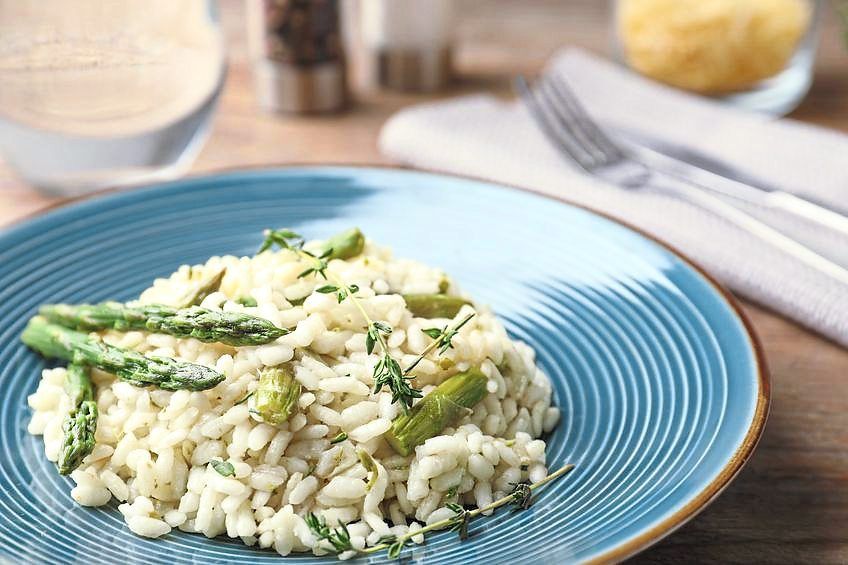
Serves 6
Risotto takes a little time, but it’s fairly easy to prepare if you’re patient – just stir, stir and stir some more.
I added asparagus and arugula microgreens for color, but you could substitute peas or use no vegetables at all.
Be sure to use Arborio rice, a starchy short-grain rice that cooks to a creamy consistency.
- 6-7 cups chicken, vegetable or garlic broth or stock, as needed
- Salt and freshly ground pepper
- 2 tbsp extra virgin olive oil
- 2 shallots, minced
- 200g cremini (baby bella) mushrooms, sliced
- 2 garlic cloves, minced
- 1½ cups Arborio rice
- ½ cup dry white wine
- 1 cup of asparagus slices
- 2 tbsp chopped fresh parsley
- ½ cup grated Parmesan cheese
- Handful arugula microgreens for garnish
In a large stockpot, bring stock or broth to simmer. Season to taste with additional salt and pepper, if necessary, and keep it simmering on the stove.
Heat oil in a wide, heavy nonstick skillet over medium heat. Add shallots and cook, stirring often, until softened and aromatic, three to five minutes.
Turn up heat and add sliced mushrooms. Cook, stirring frequently, until they begin to sweat, about three minutes, then add garlic.
Cook, stirring, until fragrant, about 30 seconds. Season with salt and pepper and continue to cook over medium heat until. Taste and adjust seasoning.
Add rice and stir until grains are evenly coated in oil and toasted but not browned, three to four minutes. Add wine and cook, stirring, until wine has almost evaporated.
Add enough simmering stock to just cover the rice. The stock should bubble slowly. Cook, stirring often and vigorously, until stock is just about absorbed.
Add another ladle or two of stock and continue cooking, stirring often and adding more stock when rice is almost dry, for 15 minutes.
Add asparagus and continue adding stock and stirring for another 10 minutes. Rice should be tender all the way through but still al dente. Taste and adjust seasoning.
Add another ladle or two of stock to rice. Stir in chopped parsley and grated Parmesan, and remove from heat.
Season with a little more pepper, if desired, and garnish with arugula microgreens, if using.
Serve right away in wide bowls or on plates.