
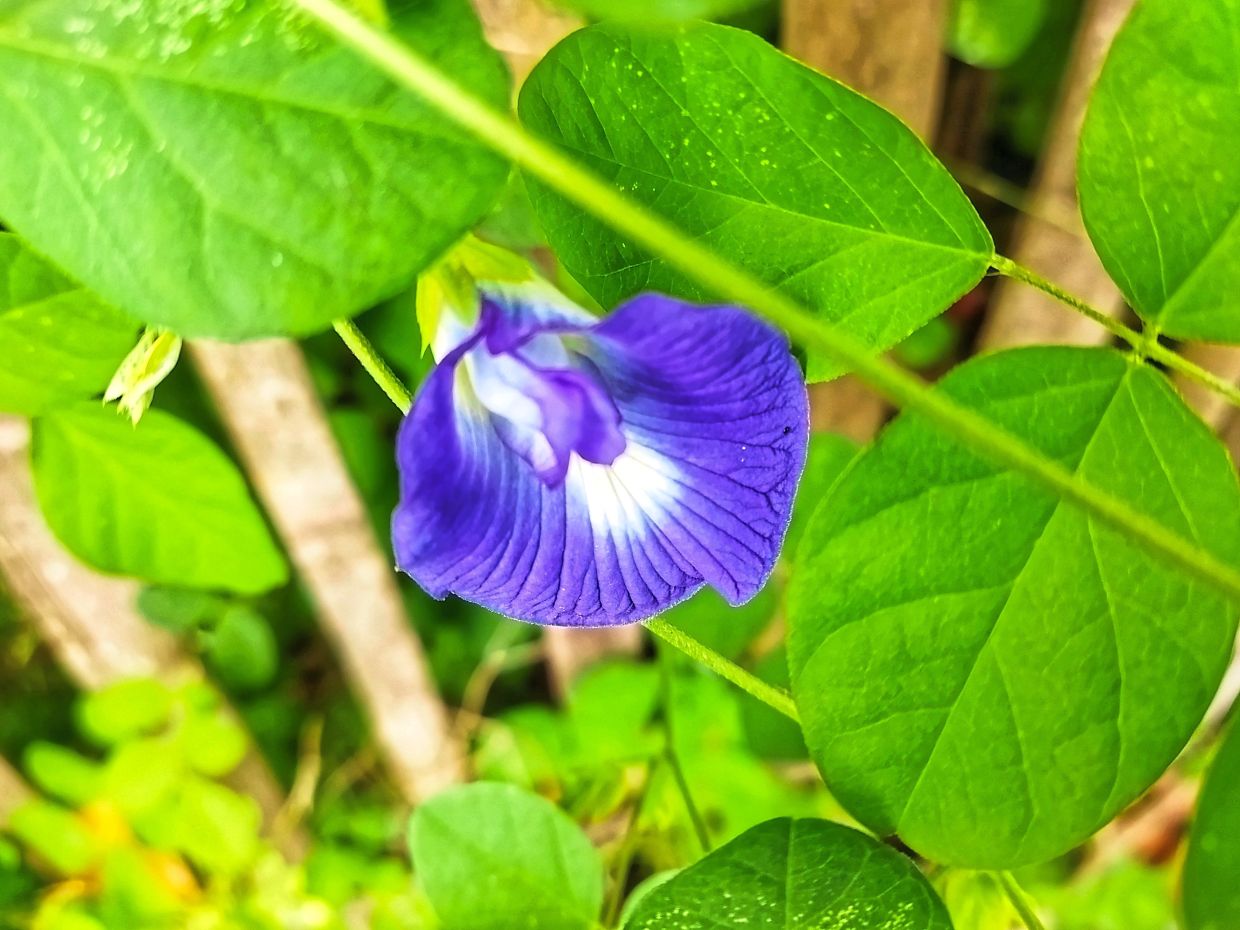
At first glance, Keisheni Ganeson’s work sounds almost poetic: she develops biodegradable microneedle patches infused with the butterfly pea flower, or bunga telang.
But behind the poetry is science, and a powerful belief that innovation can be both cutting- edge and rooted in nature.
“If I had to explain it to a child,” the 31-year-old Penang-born biotechnologist says, “I would say I’m making a plaster – kind of like a Band-Aid – that already contains medicine.”
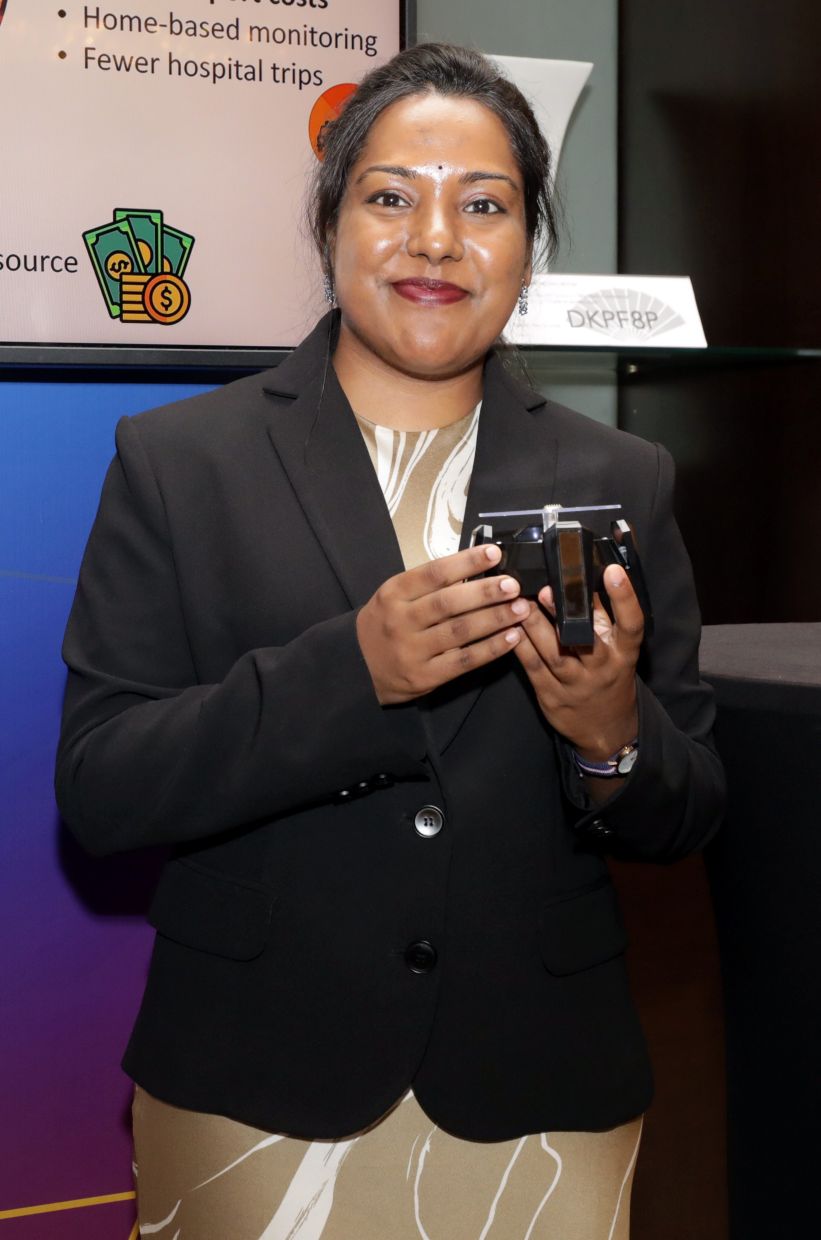
Her microneedle patches are covered with tiny, almost painless needles made from biodegradable materials. Once applied to the skin, they dissolve safely, releasing the medication without the discomfort of traditional injections.
“I’m trying to make healthcare kinder and easier – especially for people who are afraid of injections and needles, or who live far from hospitals,” she explains.
But the innovation goes further. By incorporating extracts from butterfly pea flower – known not just for its vibrant blue hue but also natural healing properties – the patch can potentially respond to changes in the body’s pH levels.
Because the flower changes colour depending on whether its environment is acidic or alkaline, it opens up possibilities for smart, colour-sensitive wound monitoring.
The theme for International Women’s Day this year calls for momentum, visibility and meaningful progress for women in every field. In laboratories and lecture halls, that momentum is carried forward by women like Keisheni who are reshaping what healthcare could look like for Malaysians.
Keisheni recently completed her PhD at Universiti Malaysia Terengganu, where she designed dissolvable microneedles for breast cancer treatment using biodegradable materials derived from Malaysian-isolated bacteria.
Her journey, she says, began much earlier, and closer to nature.
During her Master’s degree research, she worked on edible food packaging films made from aloe vera and cinnamon oil, offering alternatives to plastic.
As an undergraduate, she studied ethnobotany and explored how traditional plant knowledge intersects with modern science.
Spending her academic years in Pahang and Terengganu – regions rich in biodiversity – shaped her outlook.
Hiking, snorkelling and living close to Malaysia’s marine and natural environments reinforced a simple but powerful idea: the resources we need are often already around us.
“I wish more Malaysians understand the science behind the natural ingredients we use every day,” she says. “Turmeric, pandan leaves, even bunga telang. There’s so much potential there.”
During the Covid-19 pandemic, there were long queues for vaccinations, and Keisheni envisions a future where certain treatments – from vaccines to chronic disease management – could be administered safely at home using dissolvable patches.
For rural communities, the elderly or persons with disabilities, this could mean fewer trips to clinics, lower travel costs and reduced stress. For hospitals, this could ease overcrowding, enabling doctors to focus on critical cases, she explains.
Her current project, supported by the Merdeka Award Grant under the category Outstanding Contribution to Science, Technology & Innovation 2025, explores smart microneedles embedded with butterfly pea- derived nanoparticles for combined therapy and pH sensing.
She will be doing her attachments at the University of Toronto, Canada; Imperial College London, Britain; and Swiss Federal Institute of Technology in Lausanne, Switzerland.
There, she hopes to deepen her expertise in biosensing and biomaterials.
“Many Western countries have advanced technology,” Keisheni says. “But Malaysia has rich natural resources. I want to learn how to combine both in a way that can benefit the society.”
Keisheni’s work has also gained international recognition, including the Merck Young Scientist Award and Toray Science Foundation Grant.
One of her most uplifting moments did not happen in the lab but outside her dorm room after a particularly discouraging day.
An elderly Malay woman noticed her exhaustion and offered her a piece of kuih.
“She didn’t know anything about my research,” Keisheni recalls. “But her kindness made me feel less alone.”
That small gesture became symbolic. Science, she realised, is not just about data and discovery. It is about people.
“Many people see the final invention. But they don’t see the failures before achieving the results.”
For IWD 2026, Keisheni’s message to young girls is to “believe in yourself”.
She believes Malaysia needs more women in science and innovation – not only for representation, but because women bring distinct perspectives shaped by lived experiences.
“Research related to women’s health is still limited,” she notes. “When more women are involved, science becomes more inclusive and more human.”
Her own role models are her mother and sister, teachers who nurtured her curiosity and supervisors who guided her through challenging seasons.
Their encouragement has allowed her to pursue science without shedding her creative self.
Outside the lab, she paints, writes poetry, cooks experimental recipes and watches foreign films including Russian, Iranian and Japanese movies.
She describes herself as a “jack of all trades” – a reminder that scientists need not fit a single mould.
“I believe a woman can be all and do it all,” she concludes. “A scientist, a dreamer, a changemaker – and still be deeply rooted in who she is.”