Dear Thelma: My abusive parents are tearing our family apart


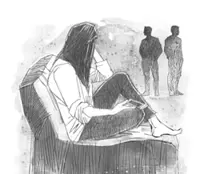
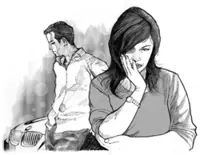
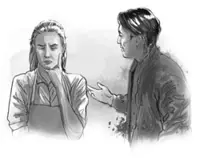
Growing up in a family where both parents are abusive has taken its toll on the children, especially the eldest one.

I am a 28-year-old woman, and devastated by my family’s issues. I am the eldest child. My three younger brothers are 26, 24 and 18 years old.

My father, being the eldest son in his family, has had to bear a lot of responsibilities. My mother is almost 14 years younger than him.

My parents have the worst relationship anyone could have. My father was strict, as well as emotionally, mentally and physically abusive towards my mother and us children throughout our childhood. This, in turn, made our mother abusive – emotionally and physically – towards us. But she was a little better than our father, so we siblings turned to her for protection from our father. However, this has made my mother very controlling of our lives.

She’s a housewife with zero interest and no life other than the home.

Although we are now all grown up, she still tries to control our lives. She screams when we don’t listen to her, and she keeps complaining about my father and in-laws’ attitude. It seems that she’s taking out her stress and anxiety on us.

My father isn’t physically abusive anymore although he remains emotionally abusive at times.

Being the eldest and only daughter, I’ve had to suffer a lot. All this has made me extremely mentally ill and depressed, for I don’t know how to handle the situation.

At Wits’ End


Dear At Wits' End

I’m so sorry to hear this. Growing up with two abusive parents is extremely difficult.

Let me start by pointing out some very positive points. You see very clearly that your father was violent and remains an emotional abuser. Also, you understand that your mother was suppressed, and has reacted by learning and copying the same awful behaviour.

The fact that you see this clearly is a huge advantage. It means you have excellent insight.

However, the situation has left you depressed and with mental illness. As you haven’t described the mental illness you have or suspect you have, I’m afraid I can only speak generally.

Depression presents in various different ways. Some people are sad and hopeless, others are angry. Some don’t sleep well, others sleep too much, and some have no sleep issues at all. Other indicators include anxiety, repeating bothersome thoughts, awful concentration, disturbed eating patterns, and more.

So the first step is to speak to a mental health professional and sort out exactly how your depression is presenting. Work directly on the symptoms in therapy sessions, but also have a chat to see if perhaps you might benefit from temporary medication.

Note: For medication, you will need to see a psychiatrist, a doctor specialising in mental health issues but, for therapy, you can see a psychologist or counsellor.

Next, consider how living with violent and abusive parents has affected you in terms of emotion and behaviour.

For this, start by understanding the mechanics of abuse by Googling the Wheel of Power and Control that was originally developed by Domestic Abuse Intervention Programmes in Duluth, in the United States.

As the wheel shows, abusive control can manifest in different ways: Intimidation, emotional abuse, isolation, gaslighting, economic abuse, coercion, using children and power privilege.

These last two may not be immediately obvious, so I’ll explain.

Abusers use kids as pawns to get their own way. It may be as straightforward as, “If you don’t do what I say, I will take the children and leave you” or it may be manipulative as in having the kids call you in tears if you go out or hitting them if you stand up for yourself.

Privilege is where abusers claim that the power structure gives them the right to be abusive. It’s bosses yelling and insulting you because, “I pay your wages” and men saying, “Housework is women’s work” and women saying, “You’re not a real man because you don’t earn enough”.

Now, not all abusers use all the methods described, but you’ll probably recognise a lot of it. Look at what happened in your family and then ask yourself how the dynamics affected you.

Typically, kids who grow up under these conditions suffer from low self-esteem because of the emotional abuse, from anxiety because of the intimidation, and from uncertainty because of the gaslighting.

Also, they may be sensitive to stress and prone to reactions like anger – a wicked combination that comes from years of anxiety and then copying their parents’ behaviour.

Then Google the Equality Wheel, and have a look at how healthy relationships work. Consider it and see what you want from it in your relationships.

When you’ve had a good think, have a chat with a therapist who specialises in abuse. They will help you chart a path that will help you heal and become the person you want to be.

I understand that it may look a bit daunting but please know that abuse is extremely common, endemic in some cultures, but there are people every day who escape and who go on to live happy and fulfilling lives. You can do it too.


Is something bothering you? Do you need a listening ear or a shoulder to lean on? Thelma is here to help. Email lifestyle@thestar.com.my or write to Dear Thelma, c/o StarLifestyle, Menara Star, 15, Jalan 16/11,46350 Petaling Jaya, Selangor. Please include your full name, address and a pseudonym. No private correspondence will be entertained. The Star does not give any warranty on accuracy, completeness, usefulness, fitness for any particular purpose or other assurances as to the opinions and views expressed in this column. The Star disclaims all responsibility for any losses suffered directly or indirectly arising from reliance on such opinions and views.

Get 20% OFF The Star Digital Access

Monthly Plan

RM 13.90/month

RM 11.12/month

Billed as RM 11.12 for the 1st month, RM 13.90 thereafter.

Best Value

Annual Plan

RM 12.33/month

RM 9.87/month

Billed as RM 118.40 for the 1st year, RM 148 thereafter.

Follow us on our official WhatsApp channel for breaking news alerts and key updates!

Next In Family

How this retired Malaysian transformed his grief into an adventure for good
These dads are experiencing a shift in fatherhood as new norms take place
Study suggests women who do strength training will live a longer, healthier life
Are we failing neglected seniors in Malaysia?
It's time for parents to adopt these Japanese child upbringing approaches
Families in Sri Lanka are bearing the cost of the Middle East conflict
Why parents should step back and allow kids learn on their own
Helping single mothers get back on their feet
Helping single mothers build financial resilience and community
A platform for women entrepreneurs to lead and give back

Others Also Read