
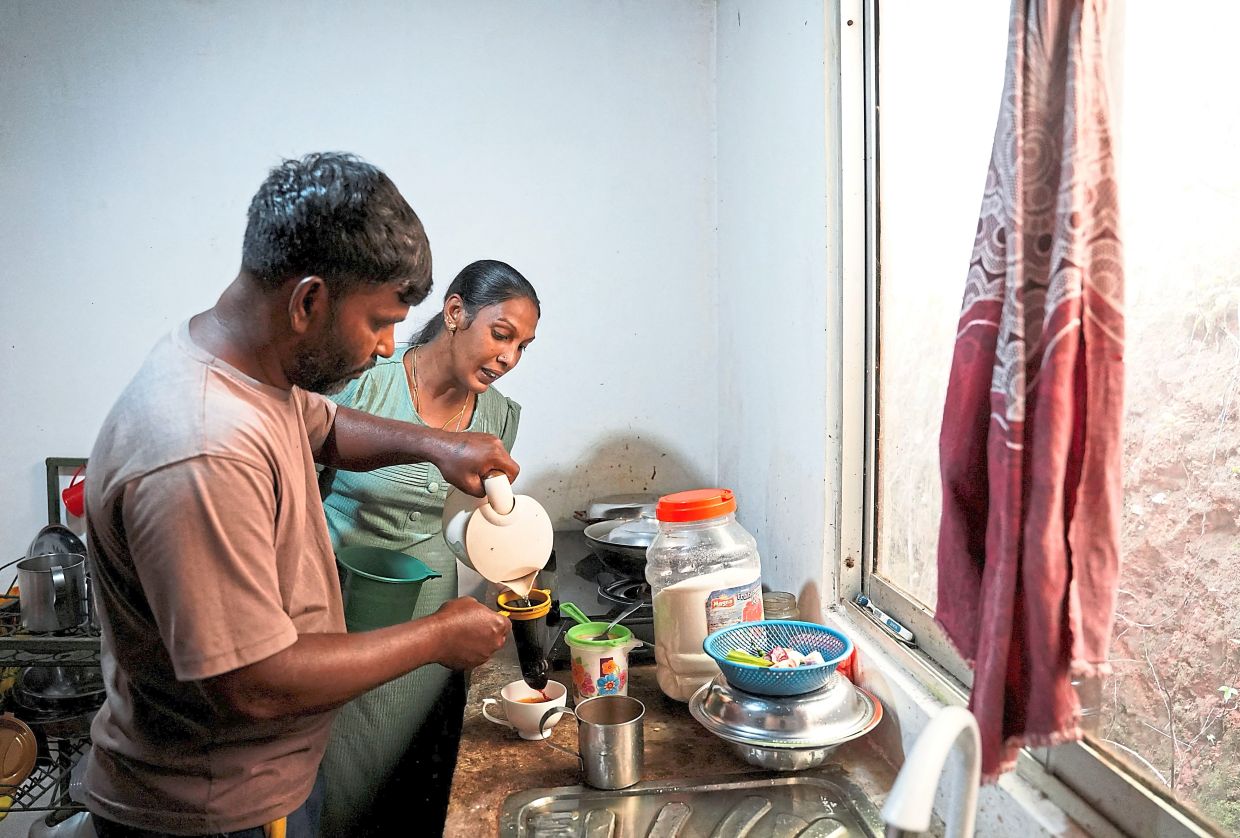
Tea factory worker Jacintha Malar once relied on cooking gas to prepare meals for her family, but has switched to firewood after the Middle East conflict pushed up energy costs and battered the country's tea industry.
Malar and her husband, a tea plucker in Sri Lanka's central hills, are among those dependent on Sri Lanka's $US1.5bil (RM5.95bil) tea industry, which employs about 2.4 million people.
Workers like Malar are increasingly vulnerable to the fallout from the Middle East conflict, with nearly half of the country's Ceylon Tea exports, worth about $US680mil (RM2.7bil) annually, going to the region.
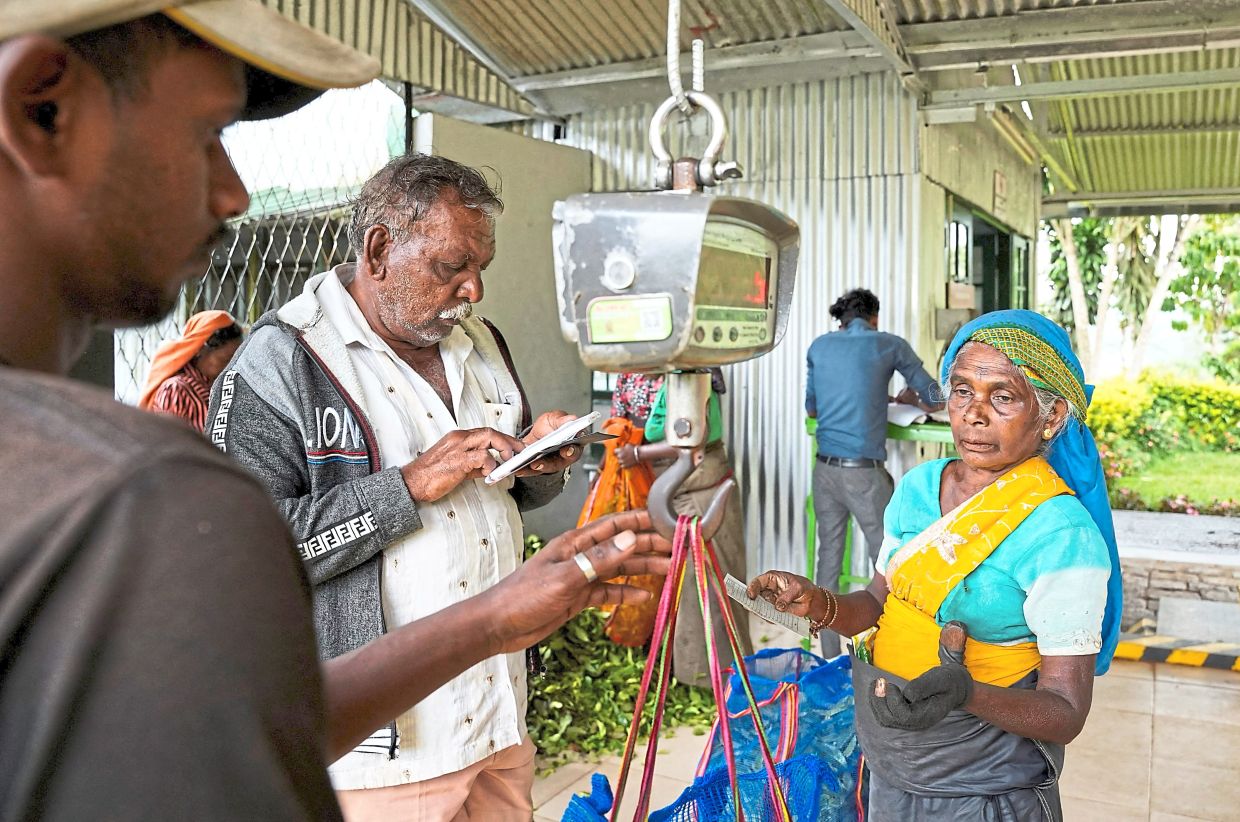
Tea plantation workers usually make a daily wage between 1,350-1,750 rupees (RM15-RM20), little above the national daily minimum wage of 1,200 rupees (RM14).
More than half of plantation workers live below the World Bank's international lower-middle-income poverty line of $US3.65 (RM14.5) a day.
"Plantation workers are facing crisis after crisis," said Thangawel Ganeshalingam, convener for the Movement for Plantation People's Land Rights. The organisation works with about 200 plantations.
"Due to higher costs, school absenteeism is on the rise, people are cutting down on meals and some are leaving the plantations looking for better jobs in cities."
Falling earnings
Tea export earnings fell 17.3% year-on-year in March to $US114.75mil (RM574mil), according to the state-run Export Development Board (EDB).
Exports to Iraq, the largest buyer, dropped 38%, while shipments to the United Arab Emirates plunged 93%, EDB data showed. Iran imports eight million to 10 million kg of premium Sri Lankan tea annually.
Dilmah, whose Ceylon tea brand is present in 108 countries and derives about 30% of its business from the Middle East, is facing logistics and shipping disruptions, accelerating its push into Canada, South America and the United States.
"We have absorbed the costs for a while, but fuel costs and knock-on effects on logistics, whether between Perth and Melbourne or Colombo and Dubai, are fuelling inflation everywhere," said Dilhan Fernando, chairman and chief executive of Dilmah Ceylon Tea Company PLC.
The blow to the tea industry could further imperil Sri Lanka's economy, already reeling from the conflict's fallout. The government has raised fuel prices by 40%, rationed supplies and declared Wednesdays a public holiday to conserve energy.
For Malar, already struggling to make ends meet, a prolonged Middle East conflict is worrying.
"We don't know whether we can cope. If this war continues, many people will face hardship," she said. – Reuters