
Women are often the ones making sure everyone else is well – taking children to school, caring for ageing parents, supporting their partners and keeping the household running. Amidst these responsibilities, their own health checks can easily fall to the bottom of the list, highlights Mandy Thoo, deputy director of Community Engagement at the National Cancer Society Malaysia (NCSM).
Thoo was speaking at the launch of The Pink Hour, a month-long initiative dedicated to raising awareness and supporting individuals and families affected by breast cancer, held in conjunction with Breast Cancer Awareness Month.
"Yet breast cancer does not wait for life to become less busy. Early detection offers women a better chance of receiving treatment before the disease advances and prompt medical attention is important even when they feel perfectly healthy.
"Amidst all our busy schedules, I think maybe we can spare two minutes to think about our health as well," she says.
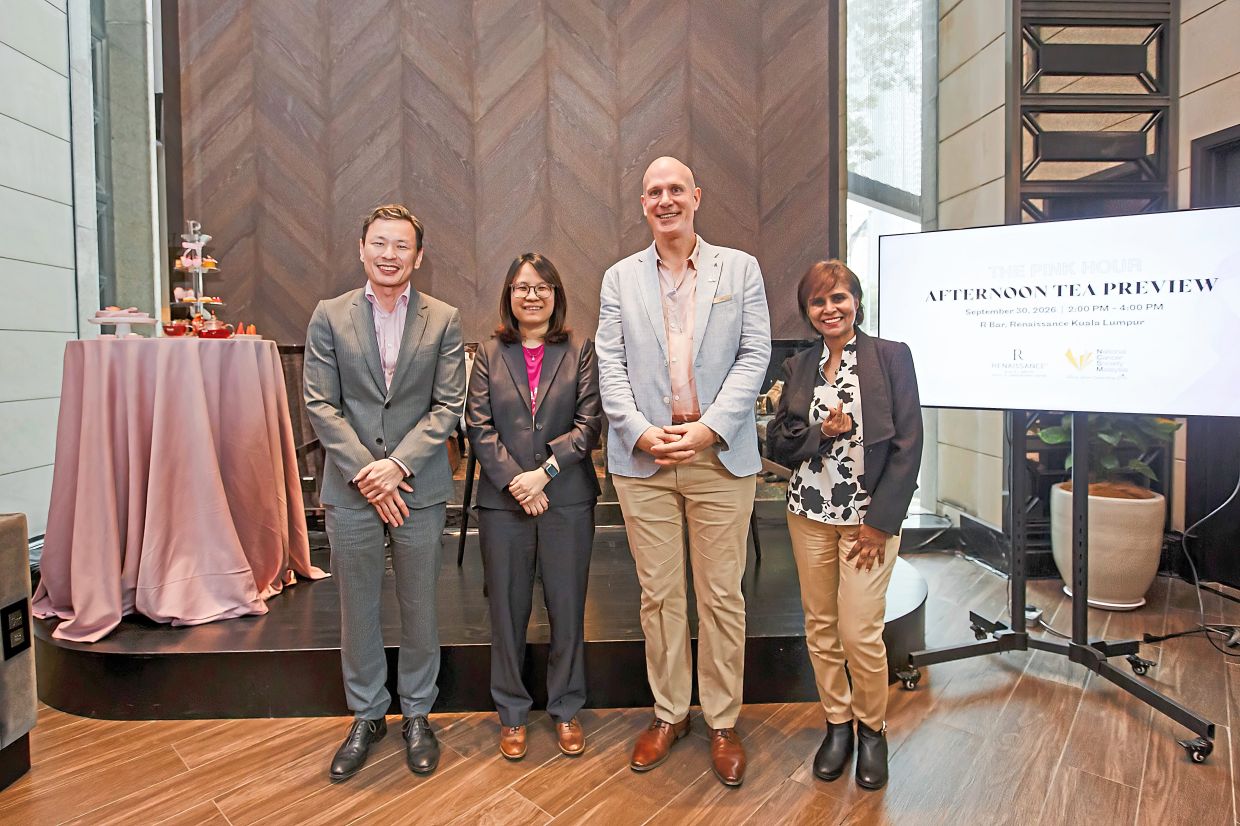
The challenge is not simply a lack of awareness, but also the tendency to put other priorities first.
Pink October, observed annually to raise breast cancer awareness, serves as a reminder for women to make time for themselves, Thoo says.
Due to financial constraints, travel distances and limited access to healthcare, it is even more challenging for women from underserved communities to get screening, she adds.
NCSM conducts community outreach, bringing mobile screening services closer to those who need them, including women from lower income groups. The organisation also offers subsidised or complimentary screening to eligible individuals.
Such initiatives help address practical barriers, allowing women to access services without having to spend additional time and money travelling to healthcare facilities.

Another misconception that can delay detection is the belief that breast cancer is unlikely to happen without a family history of the disease.
Consultant breast specialist and surgeon Dr Ng Char Hong stresses that this assumption can be dangerous.
He explains that about 90% of breast cancer patients have no family history of the disease. While family history and inherited genetic factors can increase risk, their absence does not mean a woman is immune.

Her story is a reminder that the absence of a known family history should never be treated as reassurance that breast cancer will not develop.
Dr Ng notes that early detection can influence treatment options.
"When cancer is diagnosed at an earlier stage, some women may be candidates for breast-conserving surgery rather than removal of the entire breast. Treatment plans depend on the individual diagnosis and cancer subtype."
He also highlights the need to act promptly when changes are noticed. A breast lump doesn't have to be painful to be concerning. Other warning signs include thickening in the breast or armpit, changes in breast size or shape, skin dimpling, persistent swelling, nipple changes or unexpected bloody discharge.
Women should become familiar with what is normal for their breasts and seek medical assessment if they notice new or persistent changes. A previous normal mammogram should not deter them from getting a new symptom checked.
"Ensure you make time for yourself and get it checked," Dr Ng advises, acknowledging how easily women postpone appointments because of family and other commitments.
Breast awareness and professional screening serve different purposes. Self-checks help women notice changes, while a screening mammogram can detect abnormalities before a lump becomes noticeable. Women should discuss their individual risk and appropriate screening schedule with a healthcare professional.

In conjunction with Breast Cancer Awareness Month, Renaissance Kuala Lumpur Hotel & Convention Centre has partnered with NCSM for The Pink Hour initiative where 10% of proceeds from its Pink Hour Afternoon Tea Set will go towards NCSM’s work, while eligible Marriott Bonvoy members can receive a RM30 subsidy voucher for a mammogram at NCSM. More info: @nationalcancersocietymy (Instagram).