Can a few lines of verse, make commuting less worse?
That, in essence, is the question asked four decades ago by Judith Chernaik, an American writer in London who wondered whether posting poems inside subway cars might enlighten, amuse and inspire riders.
The result was Poems on the Underground, a project that turns 40 this year and has been copied in cities around the world. Since 1986, many millions of London Underground passengers have seen posters adorned with poems nestled among the advertisements on their daily journeys.
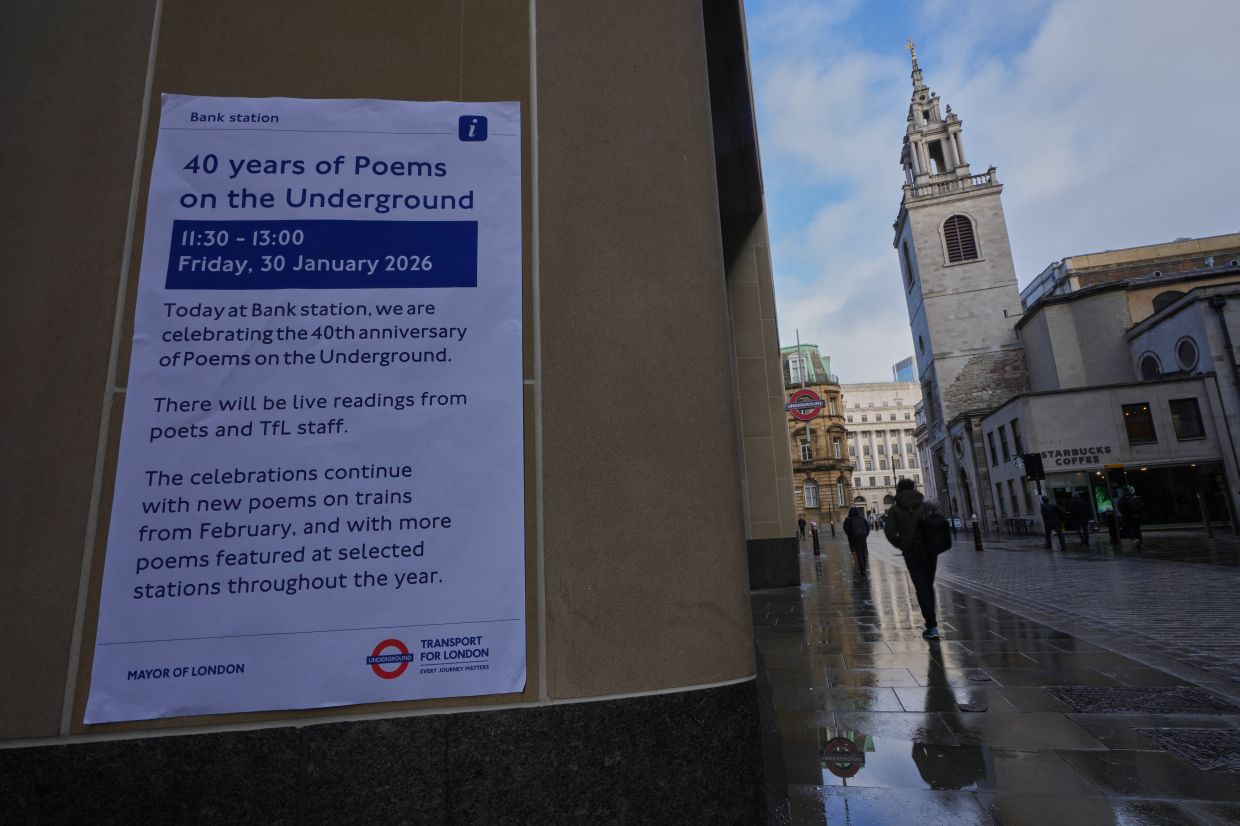
More than a dozen poets whose work has featured in the project gathered on Friday in - where else? - a subway station to celebrate the milestone and pay tribute to Chernaik, who started it all.
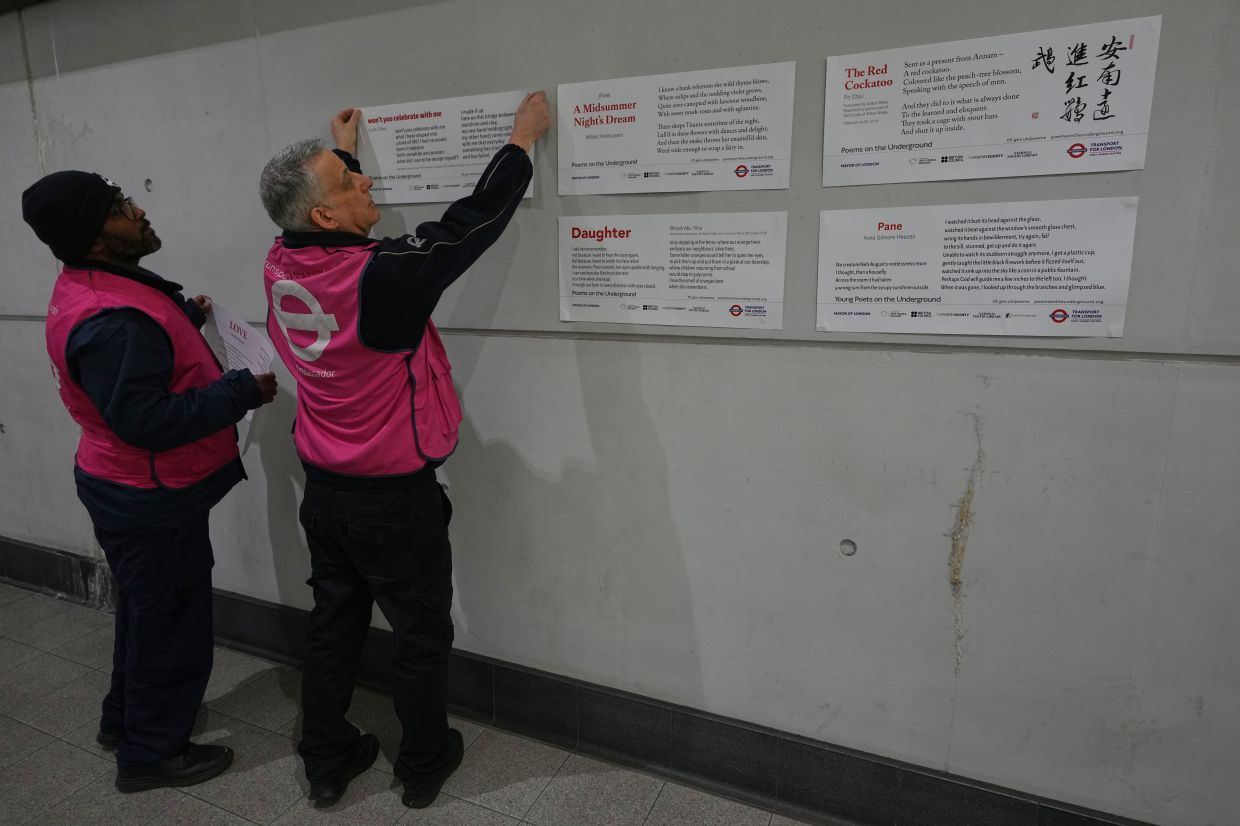
The New York native moved to London in the 1970s and fell "absolutely in love with the city - including its transport system,” which she found compared favorably to her home city’s subway.
"I used the subway all the time in New York,” she said. "It was not one of my pleasurable activities.”
Chernaik, a novelist and essayist, also reveled in London's rich literary culture and history.
"Poetry,” she said, "is part of the heritage of every Londoner.”
Along with two poet friends, Gerard Benson and Cecily Herbert, she hatched a plan to combine literature and transit. The subway operator was supportive, and the first poems went up in January 1986.
"Somehow the idea of it worked, and here we are, 40 years on,” said Chernaik, now 91.
The first year’s poems included works by William Shakespeare, Robert Burns, W.B. Yeats, Percy Bysshe Shelley - Ozymandias, a reflection on the transience of power - and William Carlos Williams’ imagist poem This IsJust to Say, with its famous opening: "I have eaten the plums that were in the icebox”.
The choice soon expanded to include poems from around the world, by Wole Soyinka, Pablo Neruda, Derek Walcott, Anna Akhmatova and many more.
The selection is changed three times a year, and Chernaik is still on the panel that chooses the poems, alongside poets George Szirtes and Imtiaz Dharker.
The offerings mix modern verses with centuries-old classics - from "Shakespeare and Sappho to poets that are really contemporary,” said Ann Gavaghan, who oversees cultural projects at Transport for London.
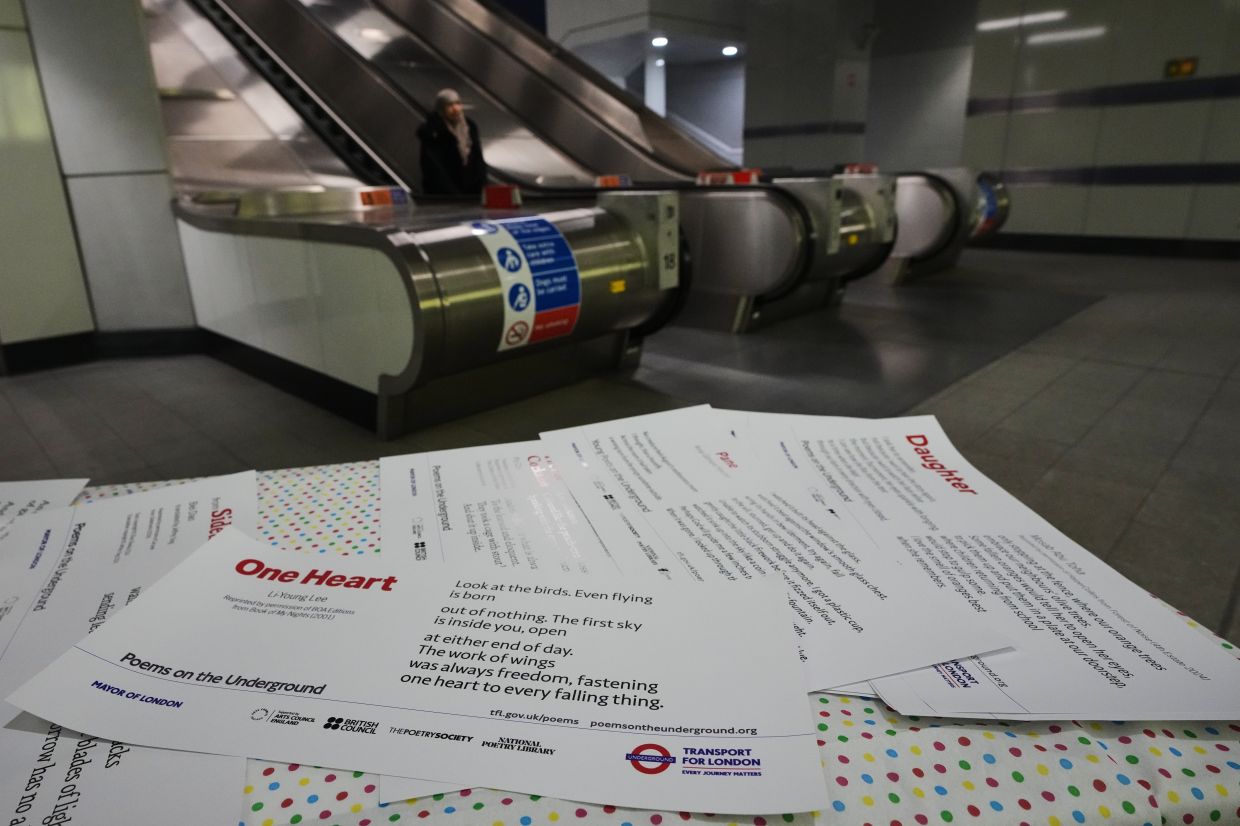
There have been sonnets and haikus, love poems, tragic poems, funny poems, and highly relatable-to-commuters poems such as Hungarian poet Katalin Szlukovényi’s Overcrowding.
Nick Makoha, whose poem BOM - the airport code for Mumbai - featured on the Underground in 2020, said the programme drags poetry into the everyday world.
"Poetry can often be taught as if it's this thing that you need to have high intellect, but we’re normal people,” he said. "Poets are normal people, writing about sometimes normal things, sometimes amazing things.
"Poetry belongs to the community,” Makoha said. "It should be part of our daily lives, and the Underground is part of daily life. So, as it connects us to places, it also connects us to people. You could be sitting at Turnpike Lane (Tube station), and all of a sudden I’ve taken you to Bombay.”
London's transit network is far from perfect - commuters often gripe about delays, overcrowding and dirty trains - but it has long been recognised for its artistic flair. Its map is considered a design classic, and for a century it has enlisted top artist to design its posters.
Poems on the Underground is now a much-loved fixture of the system that has produced several books and inspired similar projects in cities including New York, Dublin, Oslo and Shanghai.
Gavaghan said the key to its success is giving travelers something that "jogs them out of their commute.”
"If you’ve had a hard day and you’re wrapped up in your own worries and cares, being able to see something on the Underground that makes you think, that kind of shocks you out of that, is a real nice thing to have," she said. "And it could make you laugh, it could make you think. It really makes you empathise.
"That’s really powerful. And it’s important to have, and that’s why it’s still going after 40 years.” - AP