In a world where most mosques and surau now rely entirely on modern loudspeakers to signal prayer times, Surau An-Nur Parit 3 Tengah Alor Setanggok in Bagan Serai, Perak stands out for keeping a nearly 70-year-old tradition alive: the rhythmic beating of the beduk drum.
Five times a day in Kampung Parit 3, the deep thump of the beduk drum breaks the village’s quiet, whether during Ramadan or Syawal. The tradition continues as a symbol of local identity, even as it becomes increasingly rare elsewhere.
The surau’s chairman Muhammad Sarif Wageman said keeping the tradition is not just about nostalgia but a way to preserve the community’s heritage and history.
He explained that the beduk, called keluntung or kelentong in the Banjar dialect, is maintained to accompany the call to prayer.
"Beating the beduk at every prayer time helps preserve local identity and history, even as the practice fades and grows rare in other surau and mosques across the state," said Muhammad Sarif.
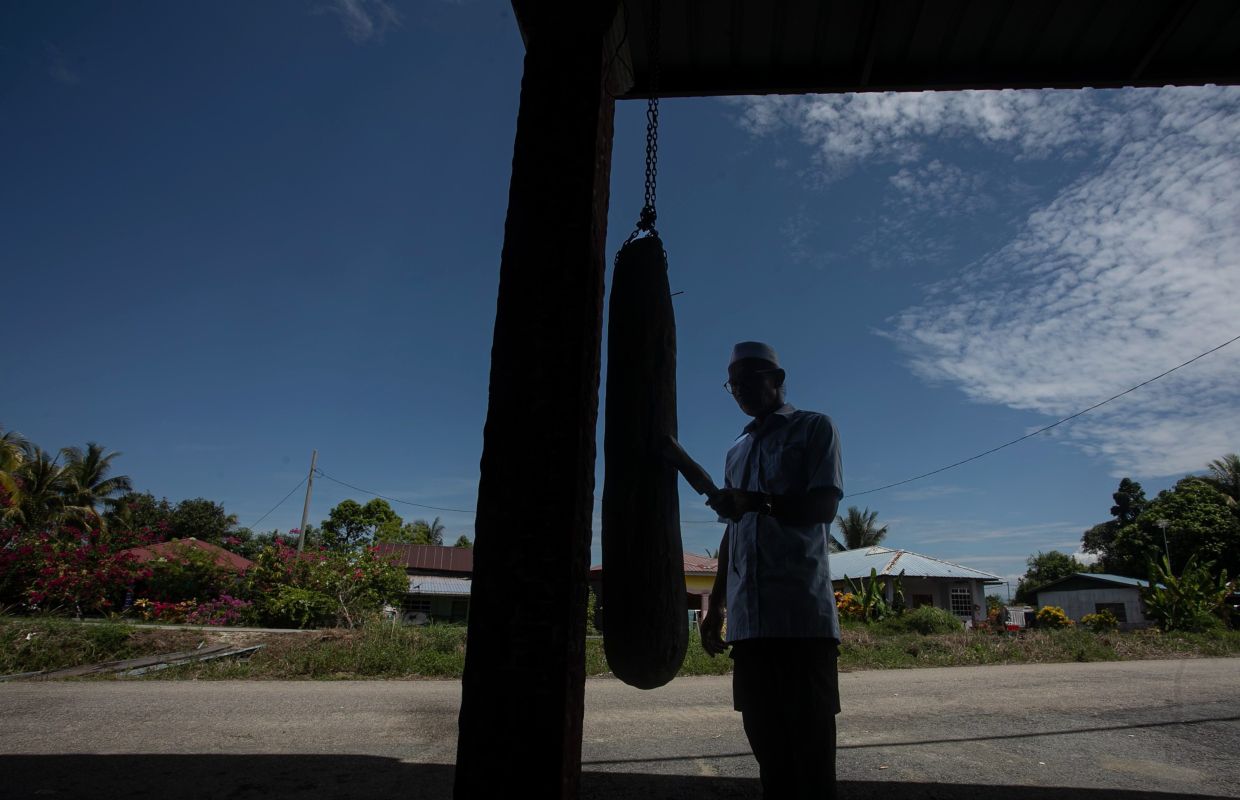
"Once, each section of Kampung Parit, Parit 3 Atas, Tengah, and Bawah, had its own beduk. Today, only Parit 3 Tengah keeps the tradition alive for the younger generation,” he added.
The 61-year-old villager said the beduk is more than a signal for prayer times; it also serves as a way for the community to share information.
He said that in the event of a death or other emergency, the beduk is beaten in a specific rhythm to alert villagers immediately.
"Back then, the beduk was more than a call to prayer. It signalled to villagers that they should come together for emergencies, communal work, or religious lessons, reflecting their sense of unity.
"Today, however, the beduk is only beaten at prayer times by the appointed siak (surau keeper) or staff,” he said.
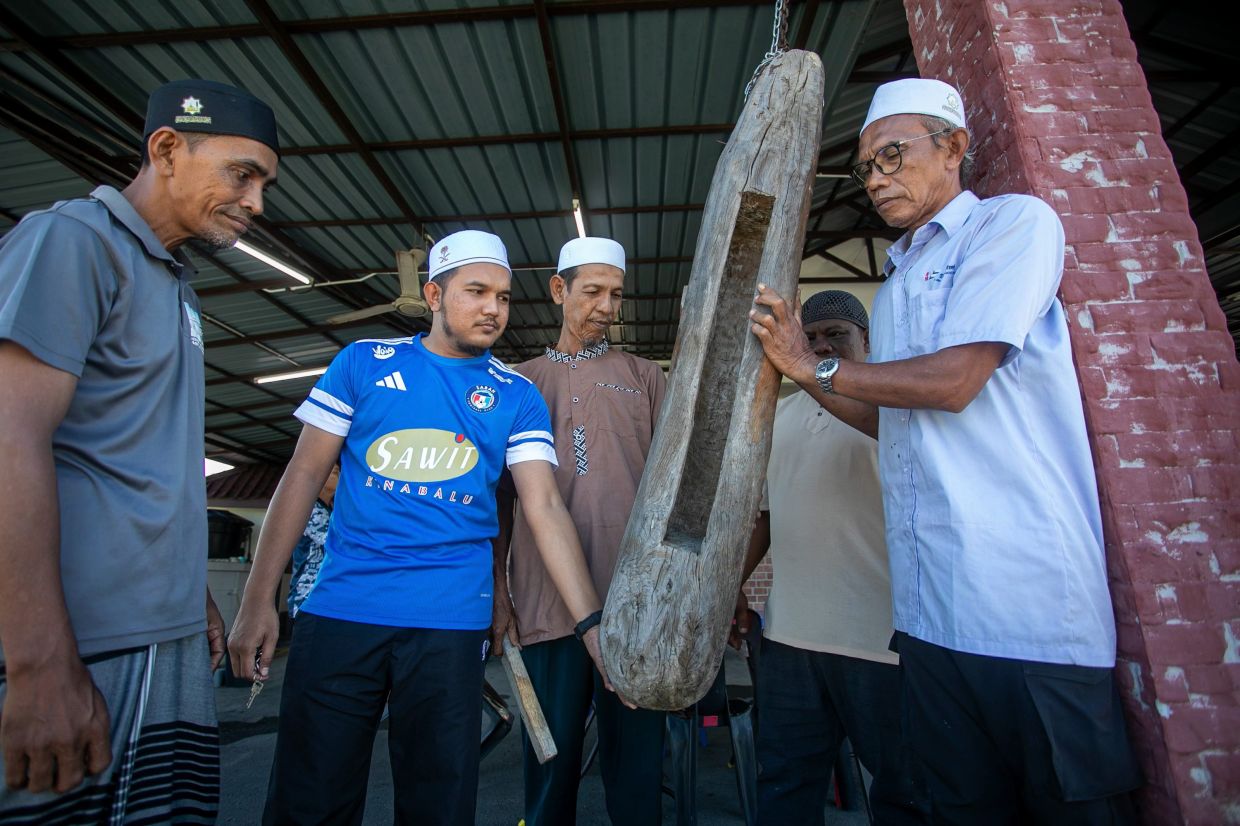
He said children are taught the proper drumming technique to preserve the tradition, with each beat lasting 10 to 15 seconds before the call to prayer.
Muhammad Sarif said the first 10 seconds of the beat signal prayer time, with the final strikes slowed as an additional signal, timed to the number of rakaat (cycles of prayer movements and recitations).
The beduk can be heard up to half a kilometre away, covering all 64 houses and 221 residents, most of whom are of Banjar heritage.
On the beduk’s uniqueness, Muhammad Sarif said that while drums are usually made of animal skin and large in size, the surau’s beduk has distinct features that set it apart from ordinary drums.
"Some say it’s made from jackfruit, tempinis, or other hardwoods, but I’m not certain of the original wood. It’s quite heavy, and the sound can change with the wind,” he said, expressing hope that the tradition will be preserved for future generations. - Bernama