Standing at the edge of the main motorway that terminates southwards at Kelantan’s Sungai Golok border immigration complex, Emsophian Benjametha traces the movements of several workers with long rakes as they head towards the nearby sweet salt fields.
Quietly, the local artisan beams with pride as his beloved Panarae district in Pattani has been one of Thailand’s main producers of the indispensable table condiment for centuries.
Unexpected discovery
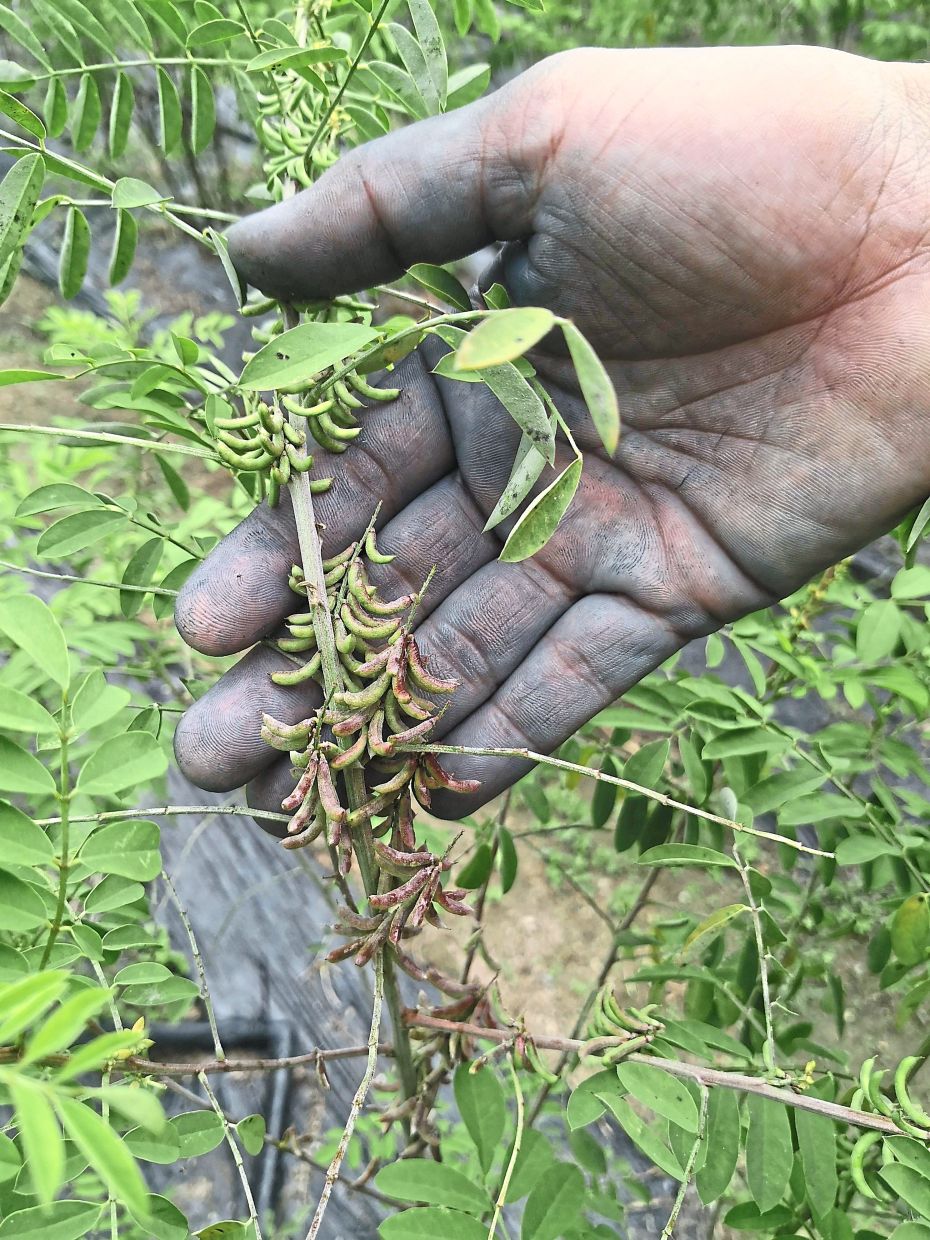
A while later, however, that proud feeling gives way to an utter sense of surprise after he shifts focus from the sun-baked rectangular seawater-filled ponds to the mangrove swamps fringing the surrounding tidal channels. Moving closer to have a better look, his initial suspicion is confirmed when the plants that look rather similar in appearance to basil shrubs turn out to be Indigofera plants.
This unexpected discovery is immensely significant as these plants, from which the prized indigo dye is derived, have not been seen growing in the wild ever since the region was inundated by devastating floods more than a decade ago.
Leaving nothing to chance, Emsophian proceeds to collect a few to grow them in his garden while leaving the rest undisturbed.
Intending to keep the opportune find secret at least until the planned propagation bears fruit, he silently expresses gratitude as the serendipitous encounter has provided the rare second chance to preserve the local Indigofera plant gene pool that many had thought was already lost for good.
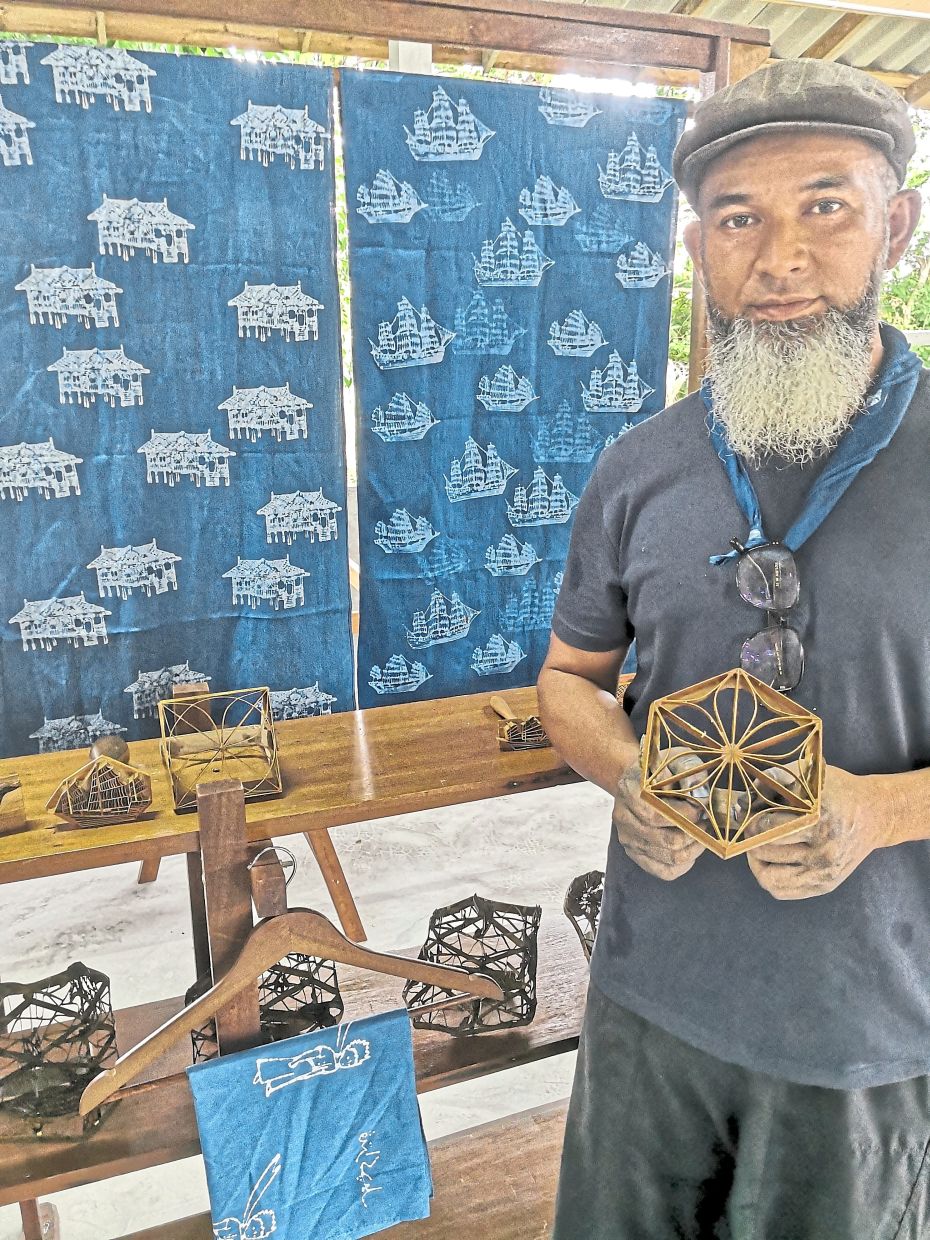
Despite having taken place more than five years ago, that crucial occurrence remains fresh in Emsophian’s mind as he soldiers on unwaveringly to revive Thai-Malay craftsmanship through age-old indigo production and dyeing techniques as well as transforming local clay into intricate ceramics.
Within his expansive workshop compound in Panarae’s tranquil Khuan subdistrict, Emsophian tirelessly works alongside disadvantaged youths who hail from surrounding impoverished villages.
Their varied creations, however, share a general commonality. They are all inspired by Pattani’s rich cultural heritage.
Historical links
Drawing particular attention to several pieces of attractive blue fabric with freshly imprinted ship designs, Emsophian shares recollections of a time when Pattani was the global epicentre of the flourishing indigo industry. Much older than Pattani’s sweet sea salt’s long and proud history that predates the invention of refrigerators, cross-border indigo commerce was said to have taken root when the Portuguese, not long after capturing Melaka in 1511, dispatched envoys to the ancient Siamese capital of Ayutthaya to strengthen regional relations.
The friendly overtures eventually resulted in the appointment of Portuguese trade representatives in Pattani and Nakhon Sri Thammarat.
The two prosperous and highly autonomous southern tributary states of the vast Ayutthaya Kingdom became central to the trading networks that linked the productive hinterland to Europe with much sought after rice, tin, ivory, gum benjamin, sappanwood and indigo shipments using formidable ocean-worthy carracks.
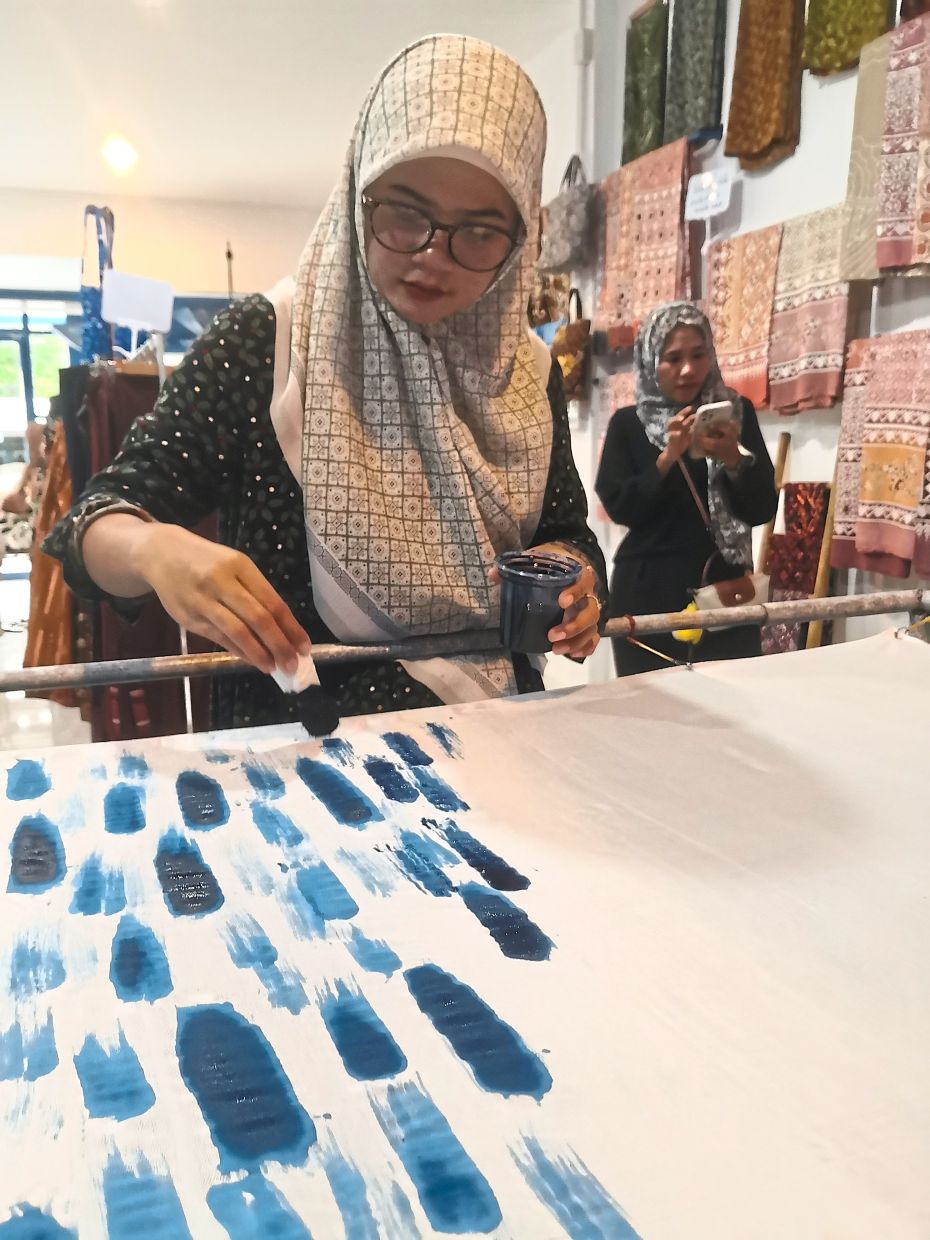
Today, this fascinating past lives on through ceramic plates bearing ancient maritime trading routes recreated from antiquated nautical charts while the blue indigo dyed fabrics provide the perfect background for graphic representations of the mighty Portuguese galleons that once ruled the waters of what is known today as South-East Asia.
Unlike the rather straight forward processes involved in ceramic production, stunning naturally dyed textiles fluttering in the afternoon breeze at a nearby drying area belie the labour-intensive and complicated processes required to produce such stunning works of art.
Laborious process
A typical work day for Emsophian starts at the crack of dawn. After a simple breakfast, he heads to the garden to check on the chest-high plants that are directly descended from those transplanted from the mangrove area years ago.
The plants must be harvested before their pink flowers start to bloom. With a lot of ground to cover, Emsophian has to work fast as the leaves must be processed within three hours to obtain the best quality indigo. Then, the leaves are weighed down with wood in large earthen jars filled with water and left to ferment.
“Sizeable receptacles are necessary as 500kg of leaves only yield about 1 kg of pure indigo. Although the recovery percentage is considered very low but the century-old lye fermentation technique allows us to remain true to tradition,” says Emsophian before declaring his deep admiration for the industry’s enduring ability to interconnect nature and people.
The magic happens overnight as the water gradually loses its clarity and begins to acquire a greenish-blue hue as the fermentation process activates naturally occurring bacteria that extracts liquid indigo dye from the leaves.
After that, the spent leaves are removed and the water is carefully scooped into another jar. The transfer process serves an added purpose of providing aeration to help speed up the oxidation and sedimentation processes.
Over the next few days, Emsophian and his charges boost oxygen supply by emulating the age-old process of repeatedly scooping the inky blue liquid and pouring it back from a height.
For them, staying true to tradition is vital as it maintains the original quality of the dye. Visible success from their persistence comes in the form of thick froth developing on the surface.
Fermentation comes to an end once the liquid turns brilliant blue.
After being allowed to settle for more than a day, the jar is drained and the remaining semi-liquid sediment is boiled and poured into moulds. Completely dry after five days, the indigo cubes are ready for subsequent processes that will transfer their rich hues onto waiting bales of cotton cloth.
Embracing sustainability
Although having successfully produced innumerable indigo batches over the years, Emsophian remains intrigued by the fact that the end products are never exactly identical.
“Indigo production is more of an art than science. Each batch is unique due to the variables involved during the natural fermentation and extraction processes. Furthermore, the shades also depend on the fabric type used and dipping frequency,” he adds before saying that multiple rounds of dyeing are needed to achieve the desired colour intensity.
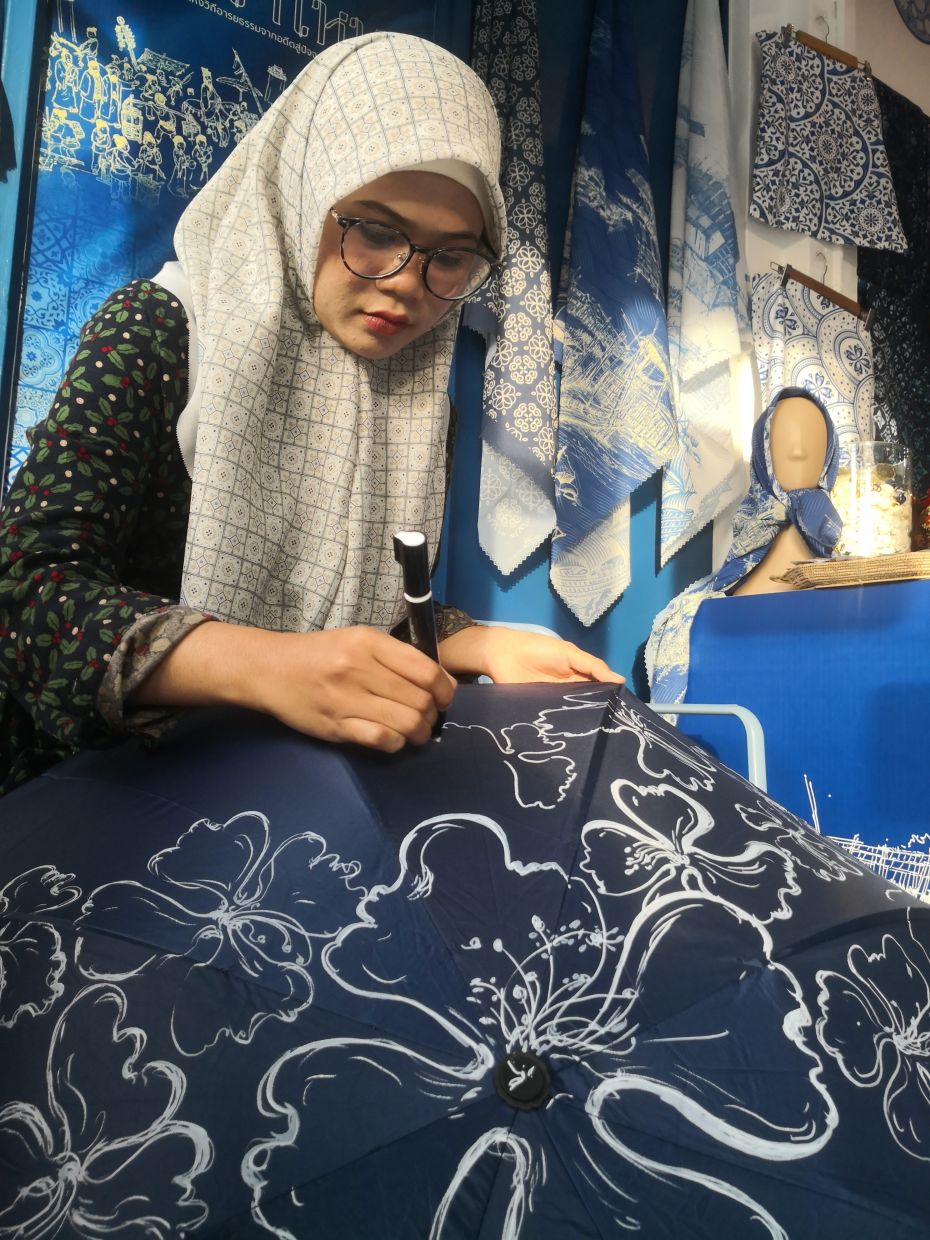
Despite the complicated processes involved, nothing is left to waste. A firm believer in sustainability, Emsophian adheres to a zero-waste policy by reusing spent indigo leaves as compost to nourish his prolific Indigofera plot while wastewater is used for irrigation.
While pointing out fact that the global fashion industry is the second largest polluter of the environment, Emsophian feels that more emphasis should be placed on using natural indigo dye as a more sustainable colouring medium compared to chemical alternatives. “Indigo is a more ecologically friendly option for the textile industry as this versatile natural dye uses less water, less energy and is a definite renewable resource,” he explains.
Despite having his palm, hands and nails almost constantly stained inky blue as a result of immersion in vats of dye during the textile colouring process, Emsophian sees this as a fundamental trade-off in his relentless pursuit in reviving artisanal indigo craftmanship for the benefit of future generations.
It is his dream to push the boundaries of indigo textile usage through various event participation within Thailand as well as abroad. At the same time, he harbours hope for Pattani to once again regain its rightful standing on the global indigo map.
“This precious commodity has the potential to bring prosperity to this amazing region and provide employment for our talented local youths,” he concludes.