
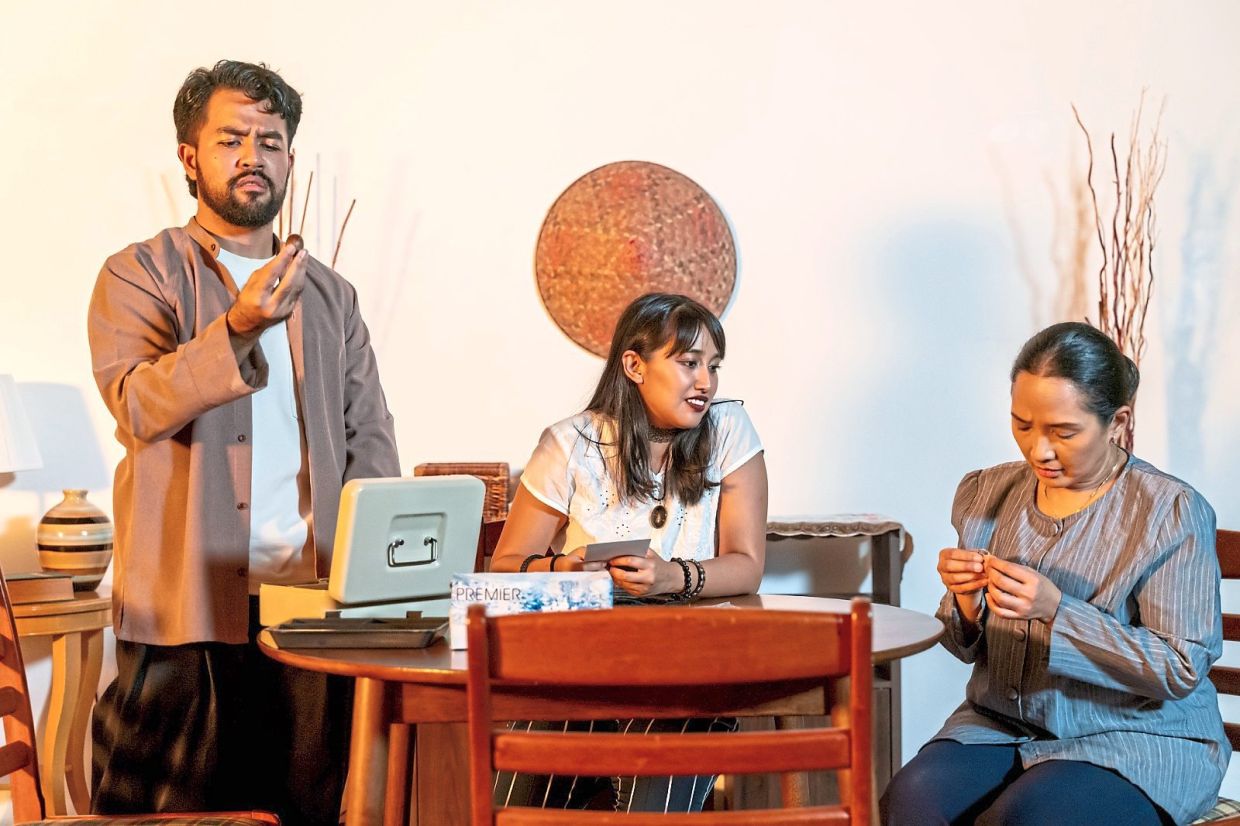
A family’s signature dendeng recipe comes under threat in the new theatre production Pewaris, as a woman begins to lose her memory and her ability to cook after the death of her husband. As her two children try to support her and keep the (traditional beef dish) recipe alive, family tensions rise and the uncomfortable question of inheritance slowly comes to the surface.
After a sold-out opening week, the show at Temu House, Petaling Jaya continues its run through May 3, with limited tickets remaining.
Written by Honey Ahmad and directed by Gavin Yap, and featuring a cast including Vanidah Imran, Putrina Rafie, Haiccal Hazim and Muhammad Ibrahim, Pewaris speaks to a clear appetite for theatre staged in unconventional venues.
Yap, 48, who has his hands full working across a range of theatre projects, also starred in KLPac’s hostage drama Someone Who Would Watch Over Me last year and contributed creatively to God’s Waiting Room at KLPac earlier this year, while his versatile one-man show Fork It remains ready for club runs.
With Pewaris, his latest theatre production (with Superbear Productions) transforms a 1960s-era Petaling Jaya bungalow into an intimate, site-specific journey exploring memory, heritage and the sensory pull of food. Each show accommodates up to 30 audience members.
“We deliberately avoided traditional theatre spaces to create this fly-on-the-wall, voyeuristic experience. We are allowing the audience to sit at the table of this family’s life, exploring how time acts as an invisible but essential ingredient in everything we pass down,” says Yap, also a filmmaker, in a recent interview.
Food is a familiar theme in Yap’s repertoire – his first film Take Me To Dinner (2014) centres on a hitman’s final meal, while KL24 Zombies (2017) imagines an outbreak sparked by a tainted batch of barbecued meat. Though not a motif he consciously inserts into every work, he has a deep fascination with our relationship with food.
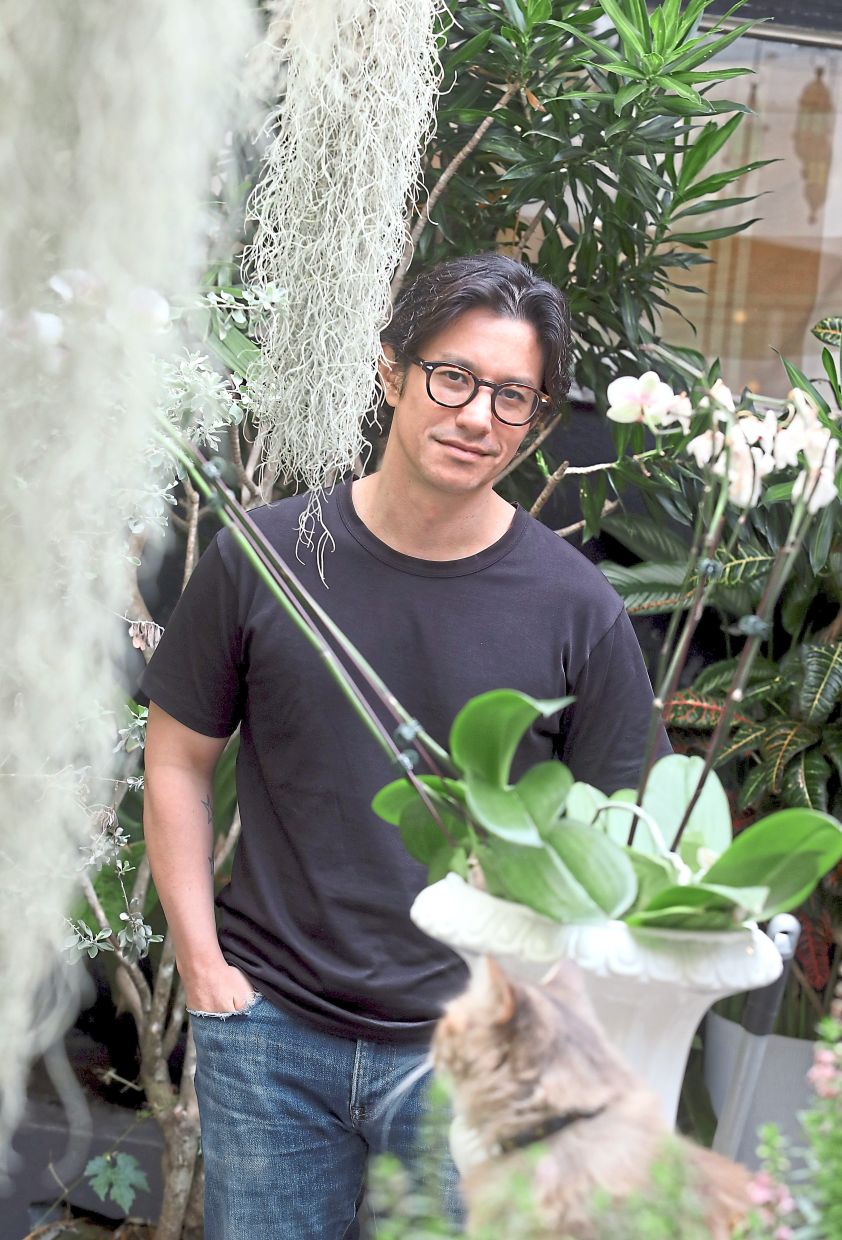
“Food has always been an anchor for me to talk about identity as a mixed-race Malaysian, and who I am as a creative person,” says Yap.
“For Pewaris, I also wanted to highlight the concept of air tangan – a common Malay phrase, but one whose idea is universal. Everyone has someone in their life who made a signature dish they still remember fondly, and that carries all these emotions with it. Beyond that, what this play is trying to explore is the different things we inherit,” he adds.
Familial bonds
The last time actress, model and TV personality Vanidah appeared in an English theatre production was the late Jit Murad's Visits in 2003, more than two decades ago. While she remains active in film and television, she could not pass up the opportunity to step into the emotionally charged role of the mother in Pewaris.
“My character Ainun is going through a period of life where she is living alone after her husband’s passing. Living alone, staying in grief, and being separated from her children can lead someone down a very dangerous path. Beyond forgetting recipes, talking to oneself, and losing both physical and mental vitality, it’s a character with many layers – one I find myself enjoying as I continue to grow into her through the shows,” says Vanidah, 53.
As a mother to a son and daughter herself, the story strikes close to home, reinforcing Vanidah's desire to pass down the recipes she grew up with and keep them alive through her children.
“It is not always pointed out how mothers treat their daughters compared to their sons – perhaps because they hold their daughters in higher regard and want them to be better than themselves. This is reflected in the play, where the children are competitive yet still show up for one another when it matters most. Anyone watching Pewaris will likely recognise fragments of their own lives, past or present,” she says.
While Ainun is not resistant to passing down her recipes, it underscores a familiar cultural reality – inheritance is often assumed rather than spoken about and can be easily lost in the wake of grief.
For Putrina Rafie, 34, who plays Ainun’s daughter Asma, the play brings an essential multi-generational lens to the story. She notes that cooking in Malaysia is rarely learned formally.
“I believe it’s a Malaysian rite of passage where you learn to cook simply by being in the kitchen with your grandma or an uncle who likes to cook. That’s why there’s no habit of precise measurements or written notes – it’s about being present, observing, and listening,” says Putrina.
With food delivery and instant meals catering to fast-paced careers, the space for slow, deliberate cooking has become increasingly fleeting and her young character finds herself trying to navigate both worlds.
“The character goes through a journey of acceptance as a modern-age woman dealing with the nuances of an Asian household. There’s this complex but familiar relationship between mothers and daughters – the tension of not wanting to lose what they grew up with, while also needing to question and confront certain things. In the end, both characters speak to what it means to be a strong woman today,” she adds.
Under Yap’s direction, it all returns to air tangan – connections formed through time, experience and emotion flowing through the hands of the cook.
“It’s definitely something most Malaysians will relate to. When it comes to family recipes, even if you follow every measurement exactly, you can never recreate the dish of someone who loves you,” concludes Yap.