From the distant days of Malayan plantations to the art galleries of Paris, lost and forgotten Tamil folk melodies travel once more, carrying traces of long hours of toil, endurance and longing, and reaching new audiences in France.
The Coolies’ Chorus, a video installation by Gogularaajan Rajendran, first presented as part of Ilham Gallery’s The Plantation Plot exhibition in Kuala Lumpur last year, is among three Malaysian works featured in the second edition of Plantation Plot at Kadist gallery in Paris.
The new presentation, which opened last Saturday and runs through July 11 in Paris, revisits selected works from the inaugural edition alongside additions shaped by ongoing research into plantation histories and their cultural afterlives.
The Plantation Plot is a collaboration between Ilham Gallery and Kadist, a non-profit contemporary art organisation with hubs in Paris and San Francisco, extending its global network. Curated by US-based Lim Sheau Yun, it also marks Ilham Gallery’s first overseas presentation since its establishment in Kuala Lumpur in 2015.
"Coolies’ Chorus is being shown in Paris without any changes. I’m also very happy to share that Kadist has acquired an edition of Coolies’ Chorus, and it means a lot to have the work become part of their collection," says Gogularaajan, a KL-based filmmaker working across cinema, art and research.
For the Paris presentation, Kadist has provided French subtitles for the video, opening the work to a broader audience.
"I’m really curious to see how these very intimate confessions of labourers will resonate with European viewers. In many ways, the histories we are speaking about are not separate. Europe has its own deep entanglement in these stories. Just as these songs help me understand my own ancestors, I feel they might also invite European audiences to reflect on theirs," says Gogularaajan.
In Malaysia, the Coolies’ Chorus video also helped build wider awareness of the Araro Ariraro documentary project, tracing the stories, contexts and lineages behind a rediscovered songbook of Tamil folk songs from the plantation era in Malaya.
"The collaboration with Sheau (across the Plantation Plot exhibition series) has been incredibly meaningful from the start. Exhibiting at Ilham Gallery has already brought valuable visibility to the project, and I hope the presentation in Paris will continue to build that momentum," says Gogularaajan.
"We are currently in the editing process for Araro Ariraro, and we are hoping to share it in (local) cinemas next year," he adds.
For Ilham Gallery, a contemporary art centre that has grown in stature through international collaborations, this Paris exhibition marks a significant milestone, particularly through the visibility of its Malaysian contributions.
“We are delighted that the new iteration of The Plantation Plot is showing in Paris this year, as part of our collaboration with Kadist. We are particularly pleased that the exhibition is curated by Malaysian curator Lim Sheau Yun. It will be showcasing the work of three Malaysian artists – Gogularajaan, Izat Arif and Minstrel Kuik, further extending the connections between the Malaysian and international art scenes,” said Rahel Joseph, gallery director of Ilham.
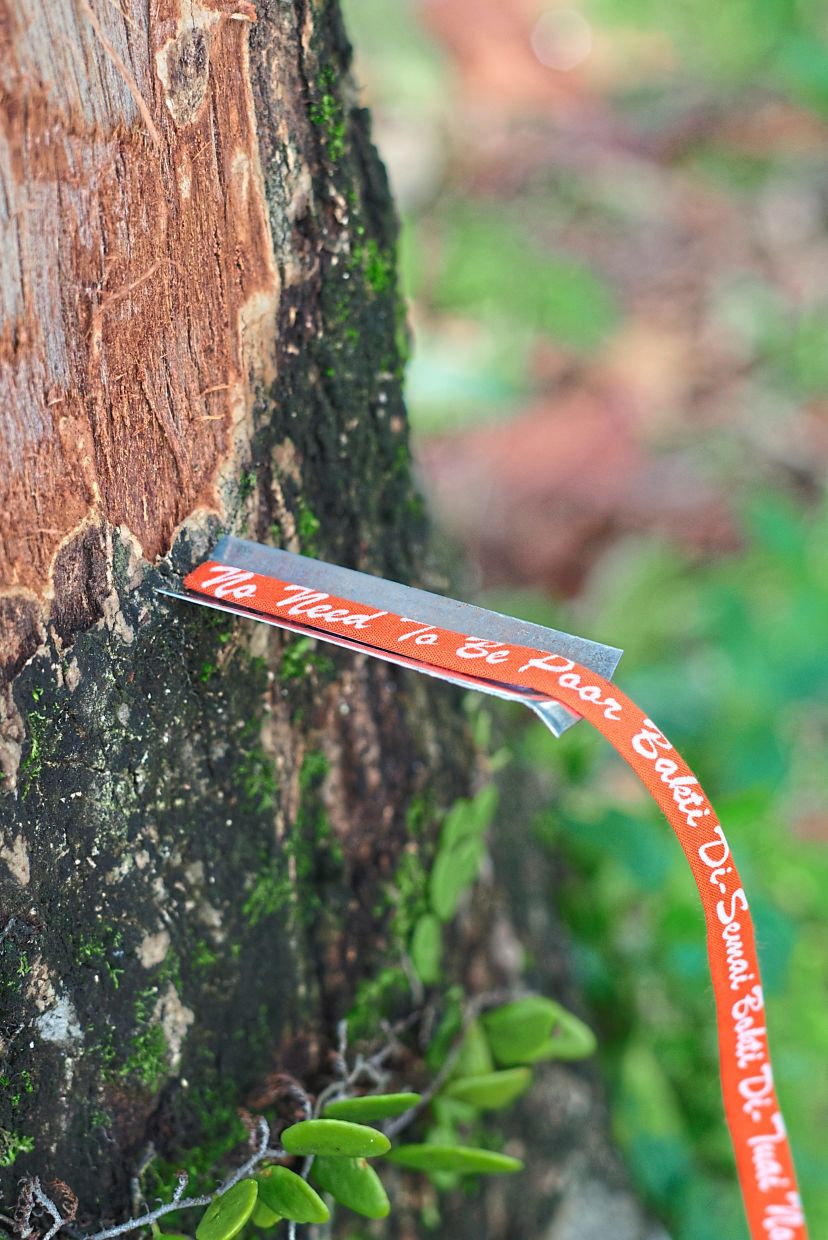
Izat, a Kuala Lumpur-based artist whose practice spans drawing, installation, video and object-based work, has already drawn critical attention for his participation at the recent eighth Singapore Biennale. For the Paris show, he extends his earlier Tuan Tanah (Land Lord) video installation into a new series, Lidah Tuan Tanah and Buku Lidah Tuan Tanah, using silkscreened cotton and steel plates to reflect on the speeches, texts and slogans employed by Felda (Malaysia’s Federal Land Development Authority) over the years.
“The Tuan Tanah series had its beginnings in my Taman Kenangan works, and the video installations shown last year at Ilham in KL were - unfortunately - too large to travel to Paris. Sheau and I decided to work on an extension of the series, still returning to the Felda narrative, which I approached from an outsider’s perspective. Lidah Tuan Tanah examines the language, often strongly ideological in tone, and how Felda was not merely a land programme, but also a biopolitical one,” says Izat.
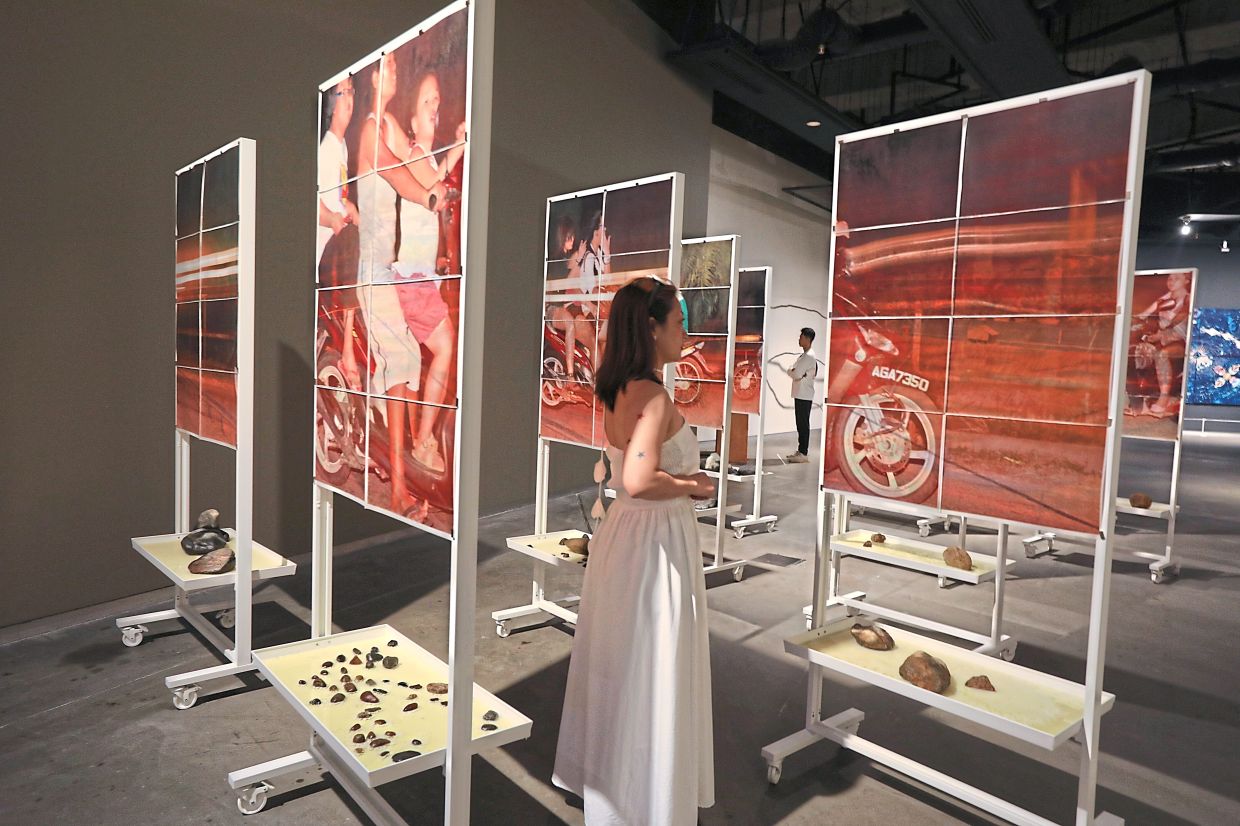
Artist-photographer Kuik rounds off the Malaysian participants, extending her Residence Time series well beyond its origins in the coastal town of Pantai Remis in Perak.
Drawn from her own photographic archive, the works in Paris comprise six pairs of oiled photographic prints that reflect on community life and love within the fraught realities of oil palm plantation landscapes.
Through film, installation, photography and more, other international artists in The Plantation Plot show including CATPC (Cercle d’art des travailleurs de plantation congolaise), Kelly Sinnapah Mary, Thu-Van Tran, Basma al-Sharif, and Diane Severin Nguyen examine how colonial extraction, migration, and labour continue to shape contemporary realities, while articulating an alternative imaginary of resistance to these same power structures.