The long-haul stretch – and the jet lag that comes with it – between London and Kuala Lumpur is one multidisciplinary artist Alya Hatta has come to know intimately, a route traced over years of study and, later, the start of her art career in the British capital.
As she began building a network and exhibiting her work in London, Berlin (Germany) and beyond, travels to Malaysia were largely reserved for Hari Raya, weddings, birthdays and other special occasions – moments that felt all the more meaningful for being so fleeting.
It has been nine years since the Selangor-born artist first left to pursue a foundation in art and design – a path that led to a Bachelor’s degree in Fine Art from Goldsmiths, University of London in 2021 and later a Master’s in Painting from the Royal College of Art in 2023.
Last year, when Alya, 27, visited her family in Petaling Jaya as she had often done before, she realised the importance of documenting and valuing otherwise “ordinary” moments.
The result is a new body of work that processes these reflections through family photographs, floral motifs, and personal objects.
Her solo exhibition The Afterlife Of Ordinary Things, currently on view at Galeri Sasha in KL through May 3, marks a quiet inward shift for the Malaysian diaspora artist.
“I realised I had lived in London longer than anywhere else in my life – nine years and counting – and each time I came back to KL, I felt less and less connected to this part of my life,” says Alya in a recent interview at the gallery.
“Naturally, I began to question my identity. Looking at how the works have turned out for the exhibition, I can say this is the closest, and most at ease, I have ever felt with my art,” she adds.
To her credit, she has actively maintained a career-building presence in the local art scene, through pandemic-era digital outreach and long-distance series such as Anthology Of Metaverses 1.0, as well as a place in Wei-Ling Gallery’s WLG Incubator Young Artists programme in late 2021, under the mentorship of Anurendra Jegadeva.
On the exhibition front, a duo show Sweet And Sour with fellow London-based artist Leily Moghtader Mojdehi at Zhan Art Space in Petaling Jaya in October 2022, followed by an art fair spotlight series Garden Of Us in KL in 2023 – also with Zhan Art Space – has helped place Alya on the radar of art collectors.
In the global landscape of young contemporary art, Alya is among the more visible Malaysian artists based abroad – much like Marcos Kueh in the Netherlands – while still maintaining strong ties to the KL scene.
"Alya’s practice introduces a unique visual language shaped by her practice in Europe, yet grounded by her Malaysian identity. In doing so, her work helps bridge Malaysia with the broader international art world - pushing boundaries, opening new perspectives and contributing to a more connected contemporary art landscape. As a gallery, we hope to continue working with Alya as well as other diaspora artists," says Suleyman Azhari, Galeri Sasha founder and director.
A family affair
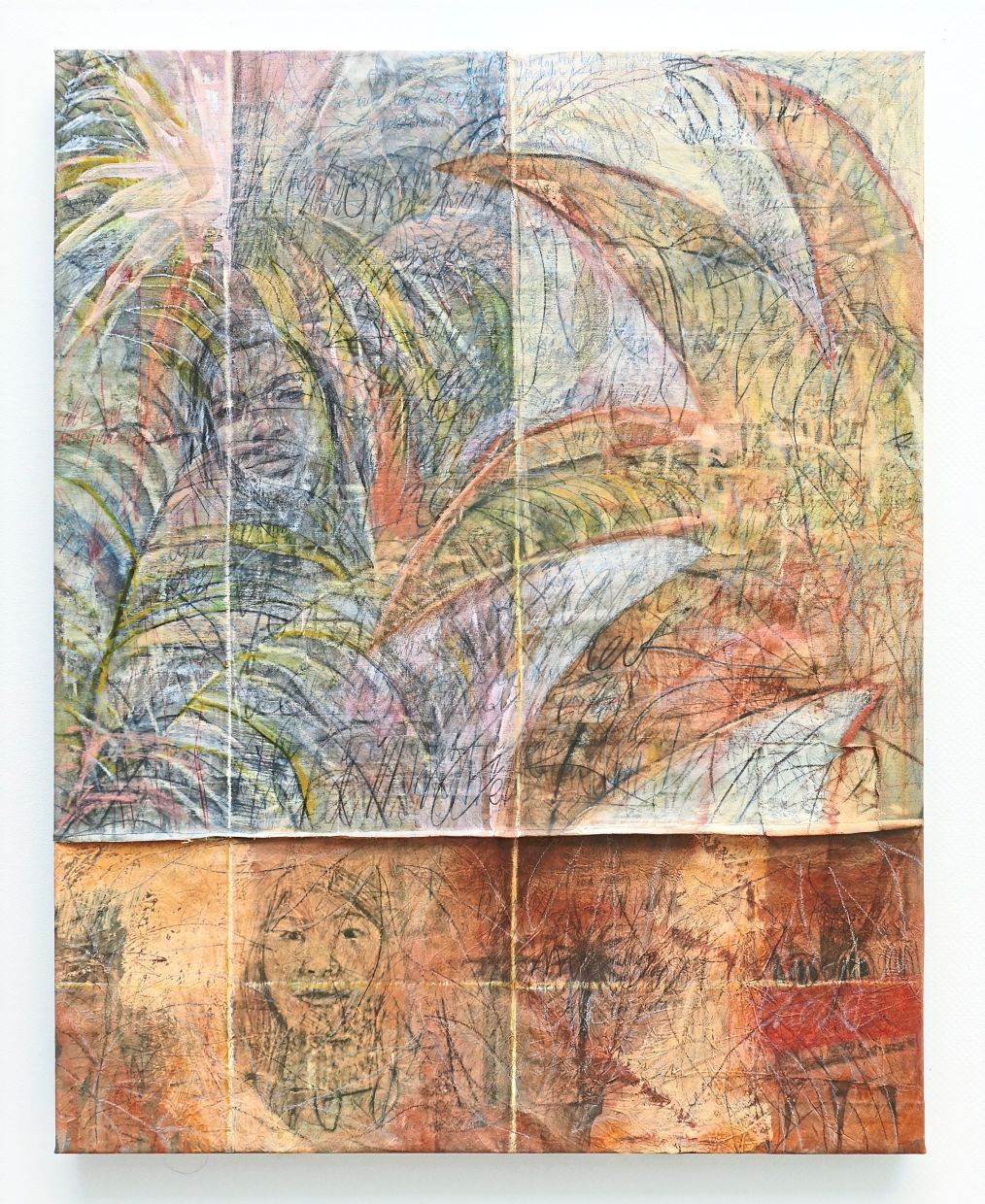
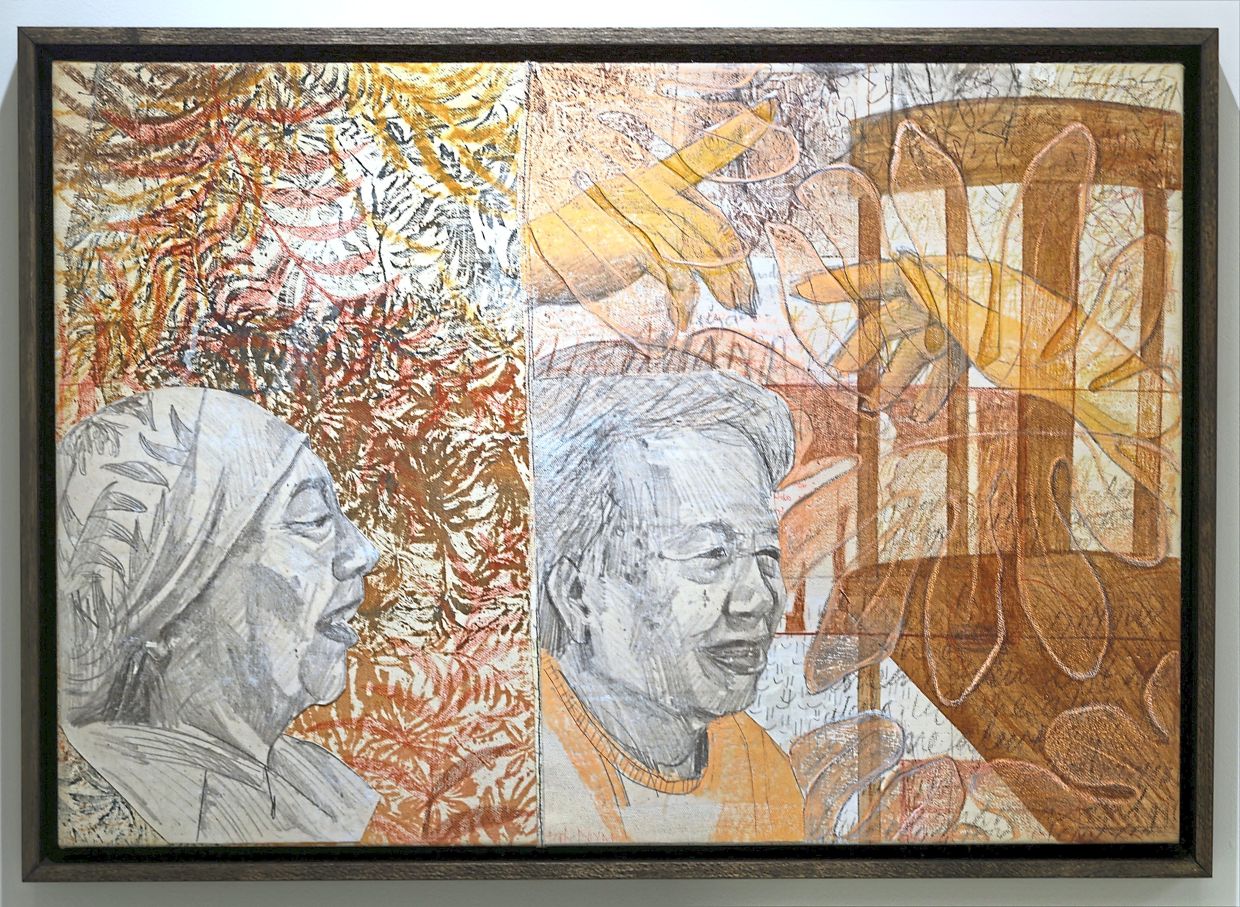
In The Afterlife Of Ordinary Things exhibition, featuring 13 earthy works in acrylic, oil pastel, graphite and image transfer on canvas, her exploration of belonging arrives with a sense of timing that feels almost like a homecoming, offering glimpses of what she holds closest – familial faces, captured memories and familiar experiences.
“My Malaysian identity is deeply rooted in my family, and I felt it was important to centre this in the work. Growing up abroad has also meant noticing how relationships with parents and relatives shift over time, and beginning to understand their circumstances – and what they themselves went through at my age,” says Alya.
At Galeri Sasha’s compact space, Alya’s exhibition has drawn a keen young following – reflected in her strong, clued-in Malaysian Instagram audience – attracted to her warm, tropical palette and canvases that evoke a distinctly Malaysian sensibility.
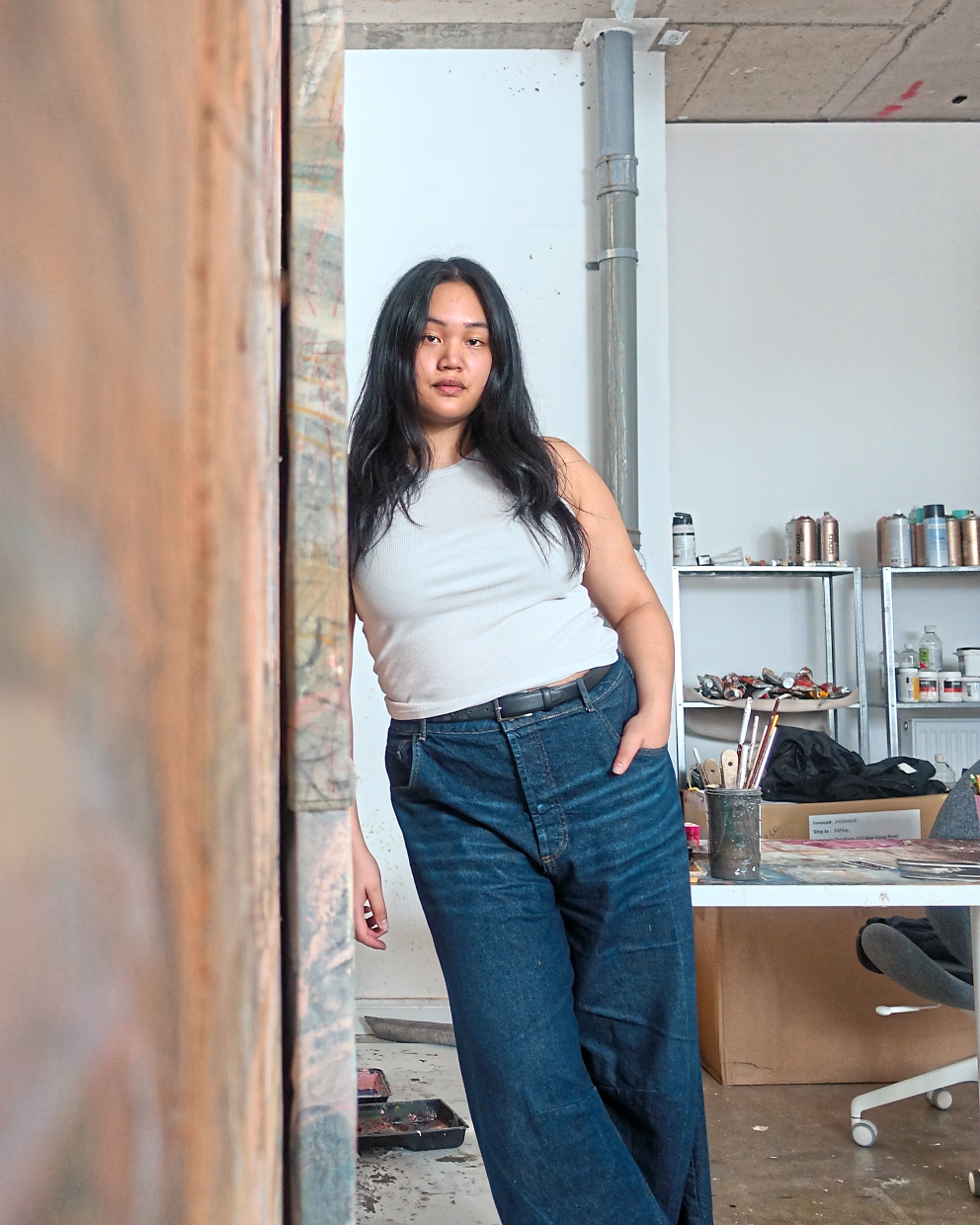
“For these (new) works, I don’t really think about the aesthetic outcome. I treat them instead as a visual diary, layered again and again until it feels right,” says Alya.
“It’s been a major shift in how I begin creating – it no longer feels forced. It feels like the way I want to be introduced ... authentic, where the labour itself is exciting, without expectation, and entirely natural,” she adds.
Interestingly, The Afterlife Of Ordinary Things originates from a single moment – a family barbecue last December, captured in photographs. The series marks a return to canvas, her familiar medium, despite her forays into sculpture and digital art.
“It began with a 3m roll of canvas stapled across the wall. I would transfer images, write, draw, or paint on it, then cut it into sections, sew them back together, and build from there,” says Alya, recalling how the series came together.
“It mirrors how my identity is formed – a whole that is then fragmented. Working from an initial body is rewarding because the foundation is already there, so you don’t have to overthink individual outcomes,” she adds.
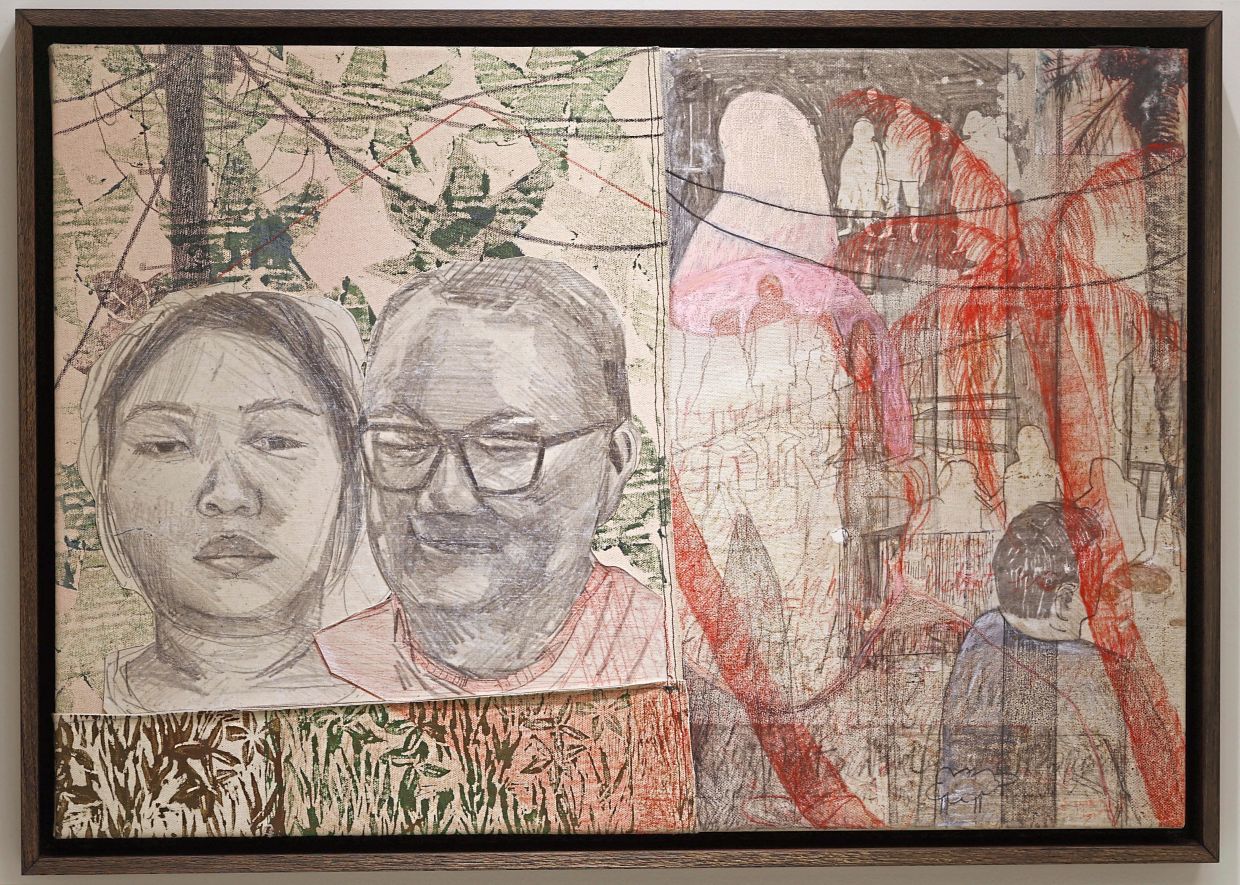
Alongside references from London museums, nature, and her own sketchbook, Alya’s image transfer technique also incorporates raw drawings from her nieces and nephews, as well as lyrics from artists such as SZA, Mitski, and BTS – reflecting how pieces of adolescence carry into adulthood.
“It also references bus stops and advertising walls layered with posters pasted over one another, which, over time, decay and transform into something else.
“Ultimately, that’s what I hoped to create – a year’s worth of emotion and memory, captured and constantly shifting with time. If I could, I would keep adding more and more to the work,” she says.
Faces, furniture and hand gestures also appear distorted, as the friendly artist believes both the camera lens and memory itself never fully capture things in their true form.
A cultural launchpad
While Alya’s current exhibition in KL reads as a compilation of her multifaceted self, her career in London also brings glimpses of Malaysia onto an international stage.
In February, her installation Family Tree – a hybrid plant form made from leaves native to both London and KL – was shown at the Victoria and Albert Museum (V&A) as part of the Friday Late: To Ebb Is To Flow exhibition, which explored how South-East Asian artists draw on local communities and the natural world to rethink identity.
“The installation reflected how I would communicate with my family across that distance. The tree, fitted with motion sensors, would trigger WhatsApp voice recordings of my family saying things like ‘Makan time’ or ‘Goodnight’. Combined with organic matter from both homes, it became a way of describing life abroad – a hybrid diasporic plant,” says Alya.
Now back in London, she plans to expand the work further, introducing new plant variations and interviewing others with similar experiences.
Moving beyond introspection, the piece begins to trace wider patterns of migration, echoing Commonwealth movement into Britain.
“I feel very lucky to have had this dual experience – going to the right schools and connecting with the right people. I never really felt ‘at home’ in either place, but more so when I’m with relatives scattered across both countries. Home, for me, is in the people,” she concludes.
Alya Hatta's The Afterlife Of Ordinary Things is showing at Galeri Sasha in Kuala Lumpur unti May 3. More info here.