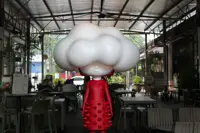
Watercolour artist Ryzalman Misran probably expected people to look at fish. He did not expect his giant patin publicity poster to spark confusion with an aquaculture fisheries seminar instead of an art exhibition.
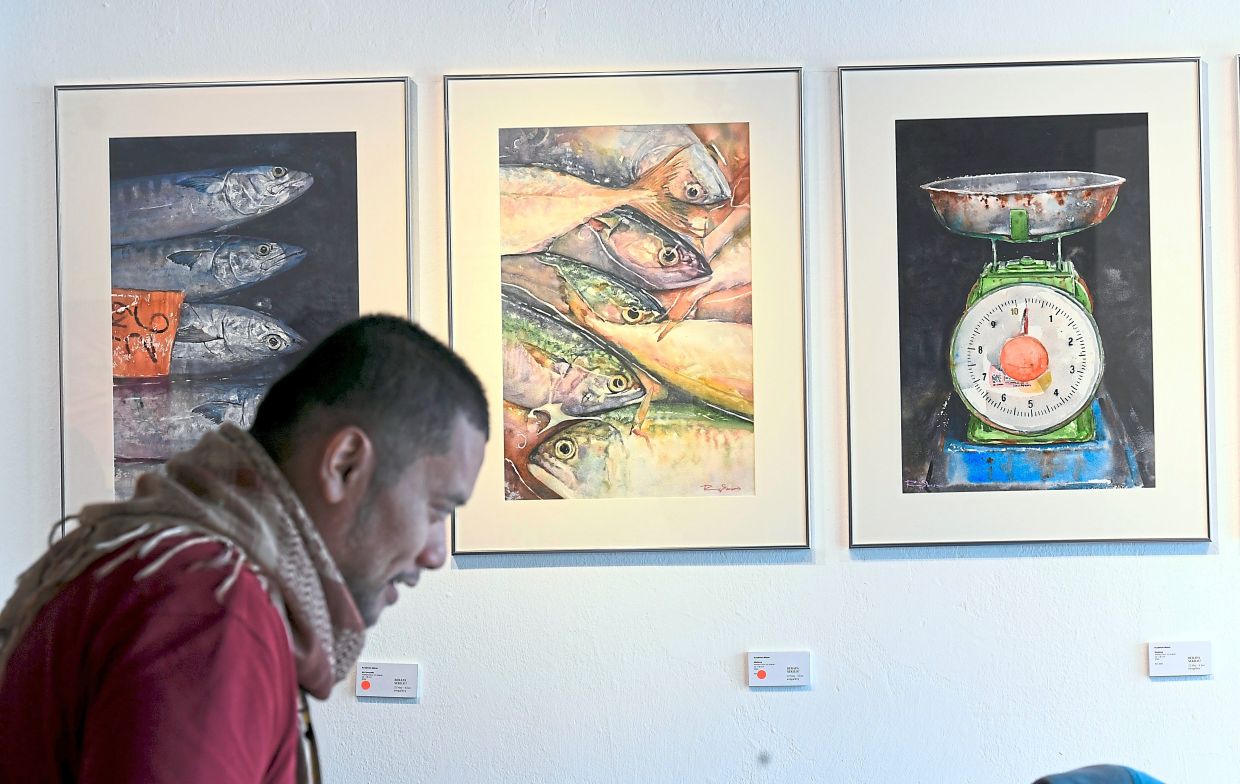
And he certainly didn’t anticipate visitors suddenly channelling their inner fishmonger and turning into seafood experts, studying the price stickers in his paintings with the kind of seriousness usually reserved for wet market haggling.
From admiring pale pink prawn shades, they moved into mental calculations of value per kilo, comparing instincts and debating whether the seafood on canvas was “market rate.”
For the softly-spoken Ryzalman, the reception to his solo debut Berapa Sekilo? Rhythm Of The Wet Market – featuring 30 works and on view at Awegallery in Petaling Jaya through June 8 – has been humbling, amusing, and largely affirming.
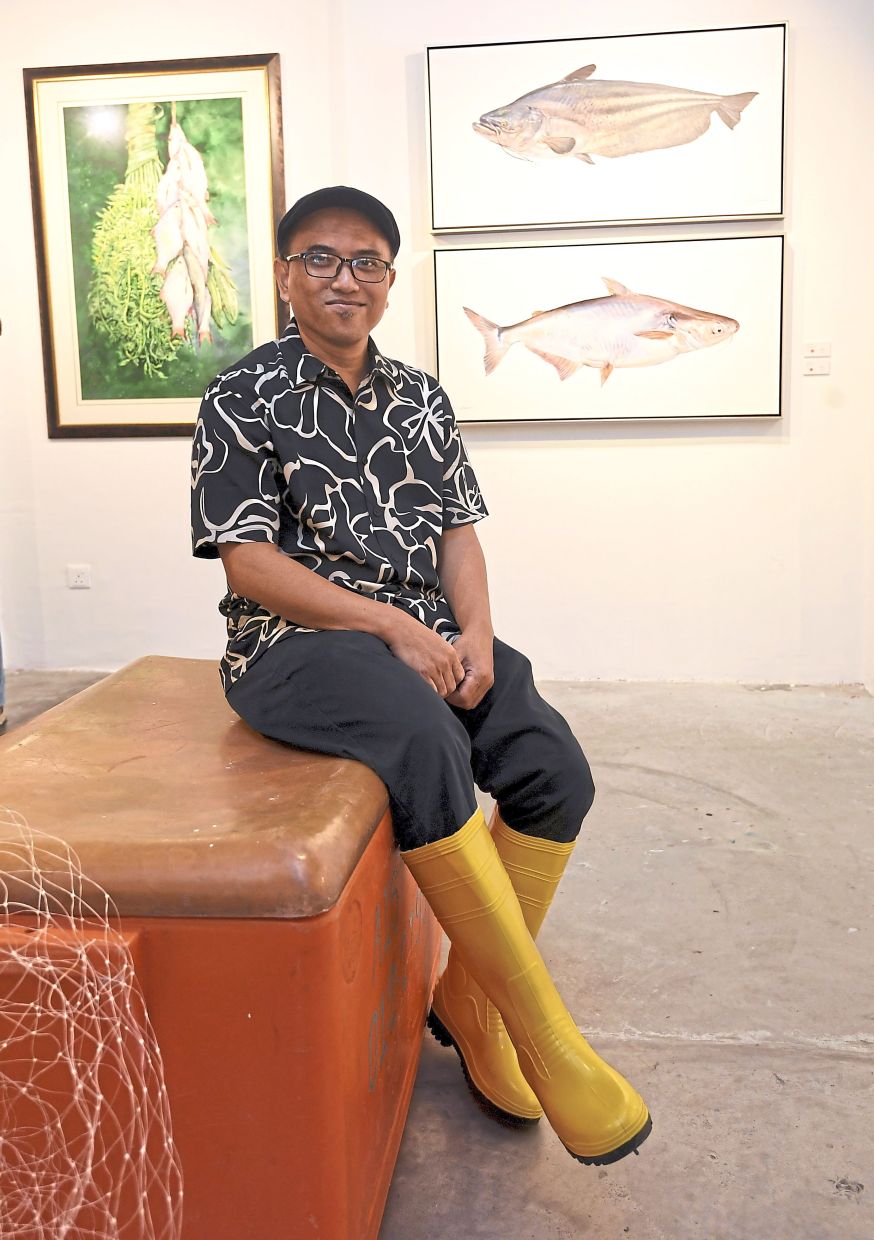
“It has taken many years for me to get to a solo exhibition. I knew I had to be ready, with a series that not only featured artworks, but also carried a story that people could relate to,” says Ryzalman, who began his seafood series in 2019 and spent years slowly filling a sketchbook with finfish, crustaceans and molluscs – one studied, painted and returned to again and again until the market theme became a world of its own.
“In many ways, the title of the exhibition is something any Malaysian can understand if you’ve been to a market. It took me quite a while to come up with it, but I think it has struck a chord,” he adds.
The Awegallery walls are brought to life through his watercolours, where familiar catches – bawal hitam, tenggiri, senangin and kembong – emerge in deep, soulful tones that seem to carry weight with every kilo. Squid, prawns and cockles are expressed with translucent intensity, their forms built through layered pigment and fluid colour.
The Kluang, Johor-born Ryzalman, who works as an illustrator and graphic designer by day, has been exhibiting since 1992 and is a seasoned hand in watercolours, with a repertoire spanning landscapes, portraits, still-life studies and observational scenes of everyday life.
“However, I was worried about how the show would translate – seafood done in watercolours. We could fill the entire gallery, but would people come through the door?” he says.
Ryzalman didn’t want a quiet show – and he’s glad that didn’t happen. In the last two weekends, Berapa Sekilo? has found its own gallery rhythm, with cute, curious and surprisingly opinionated responses from visitors.
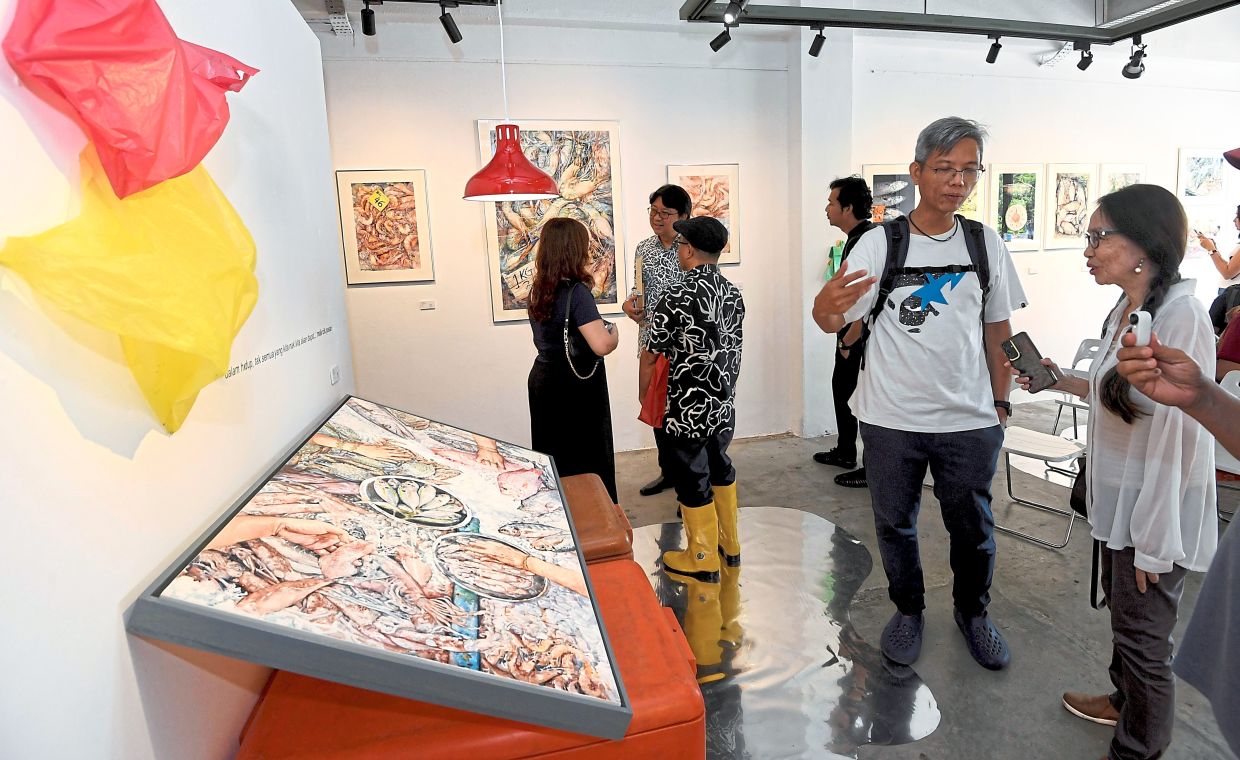
The exhibition props – large ice boxes, rubber boots, fishing nets and old weighing scales – extend the wet market into the gallery.
“The conversations in the gallery, admittedly, have gone beyond watercolours,” says Ryzalman, noting how visitors often drift into sharing their favourite fish recipes when looking at a particular painting, while others debate whether local fish offer equal or better omega-3 fatty acids and vitamins compared to imported varieties.
“They were glad to know that I only painted local fish in this series – there’s no salmon, cod or imported cold-water fish,” he says.
His field research was as grounded and local as it gets.
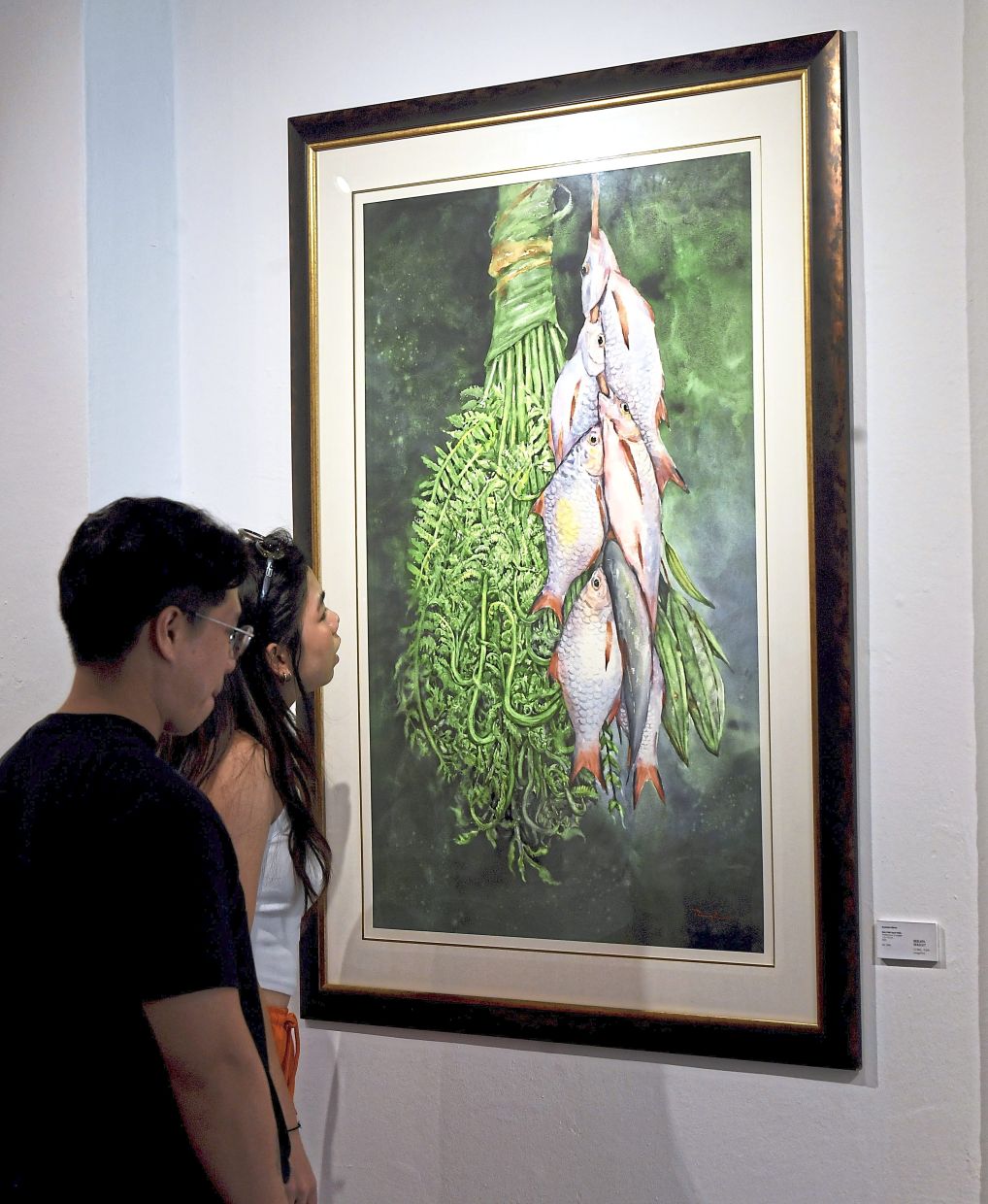
The 50-year-old artist, who lives in Sungai Buloh, Selangor, and often spends time at Pasar Pasir Penambang in Kuala Selangor, would move between buying seafood, absorbing the noise of the wet market and taking photographs for studio reference.
His wife would accompany him on these market visits, offering her own insights into the freshness of the seafood and the subtle cues that distinguish a good catch from the rest.
Beyond the wet market
Like any other art exhibition, there are the familiar faces from the art scene and the occasional collector offering sharp – often critical – comments, “but that’s part of it,” says Ryzalman with a laugh.
“My watercolour mentors in my art community group would always say, ‘Don’t paint fishing boats,’” he adds.
“And I remember what (Malaysian artist) Chang Fee Ming told me at a workshop in Terengganu years ago – he said, find the story you can fill.”
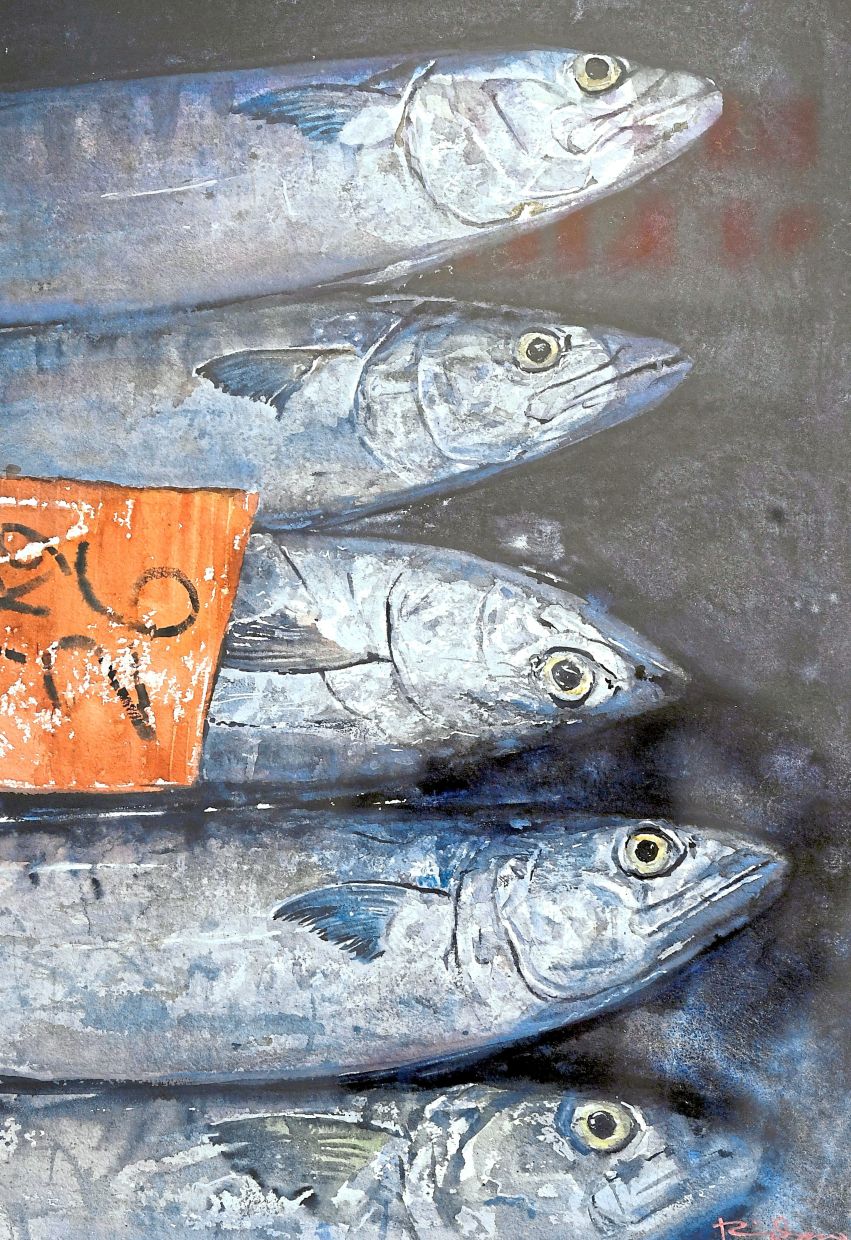
Berapa Sekilo? didn’t come together overnight, but it draws from Ryzalman’s past growing up in small-town Johor in the 1980s, where he would go fishing for ikan putih with friends at a local river and pick wild sayur pakis along the way.
He points proudly to Ikan Putih, Sayur Pakis, a watercolour on paper placed at the centre of the gallery, describing it as a work that takes him back to his kampung youth – and to a memory that, in different ways, many others also share.
“If you had a kampung childhood, you would recognise this catch – fish and greens, a balanced meal,” he says with a smile.
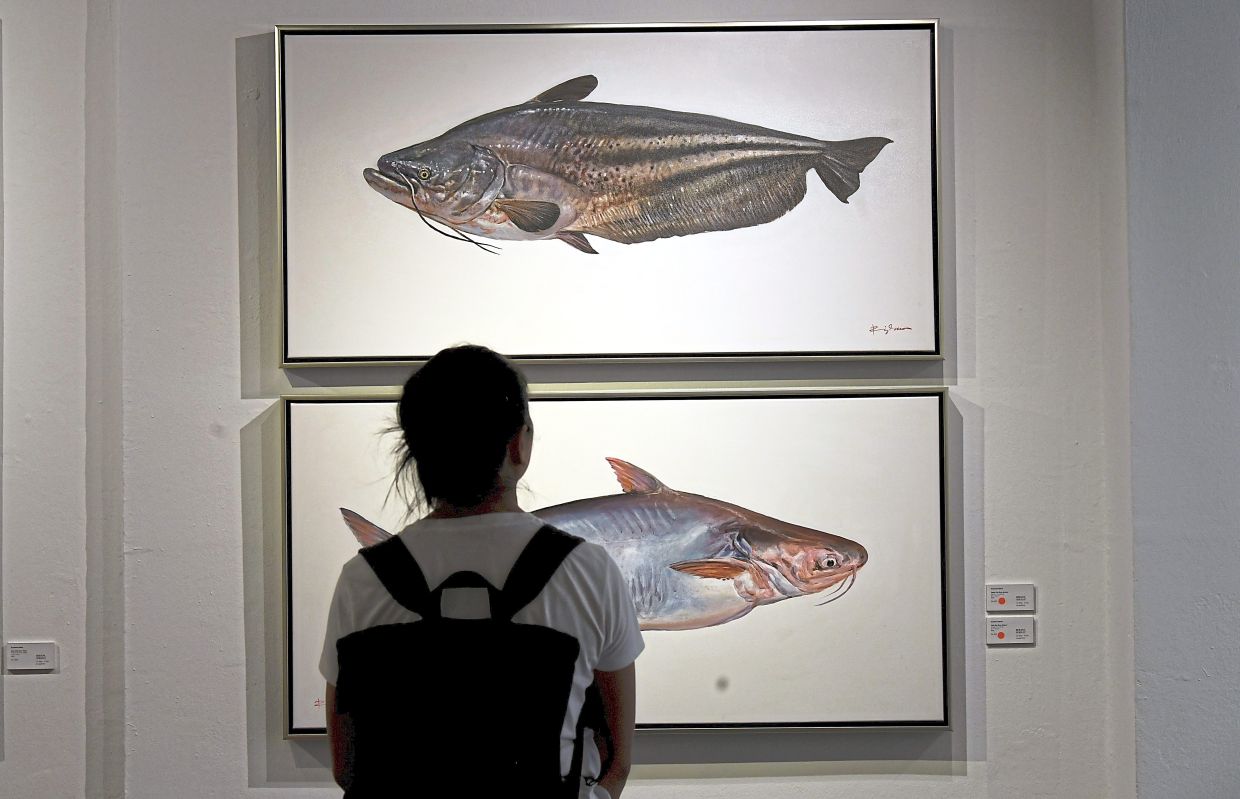
Realising a solo show has taken years, but Ryzalman has gradually warmed up to it, and with Berapa Sekilo?, he has found his footing.
The artist, who previously took part in a group show at Awegallery, was invited for a solo exhibition, but spent two years shaping this new series. Most of the works came together this year, with nearly 20 new pieces and fresh themes – from wet market plastic bags bulging with seafood to oversized freshwater fish and larger, more expansive paintings.
Ong Jian Yang, in-house curator and artist at Awegallery, worked with Ryzalman to layer the works with added narratives and everyday observations.
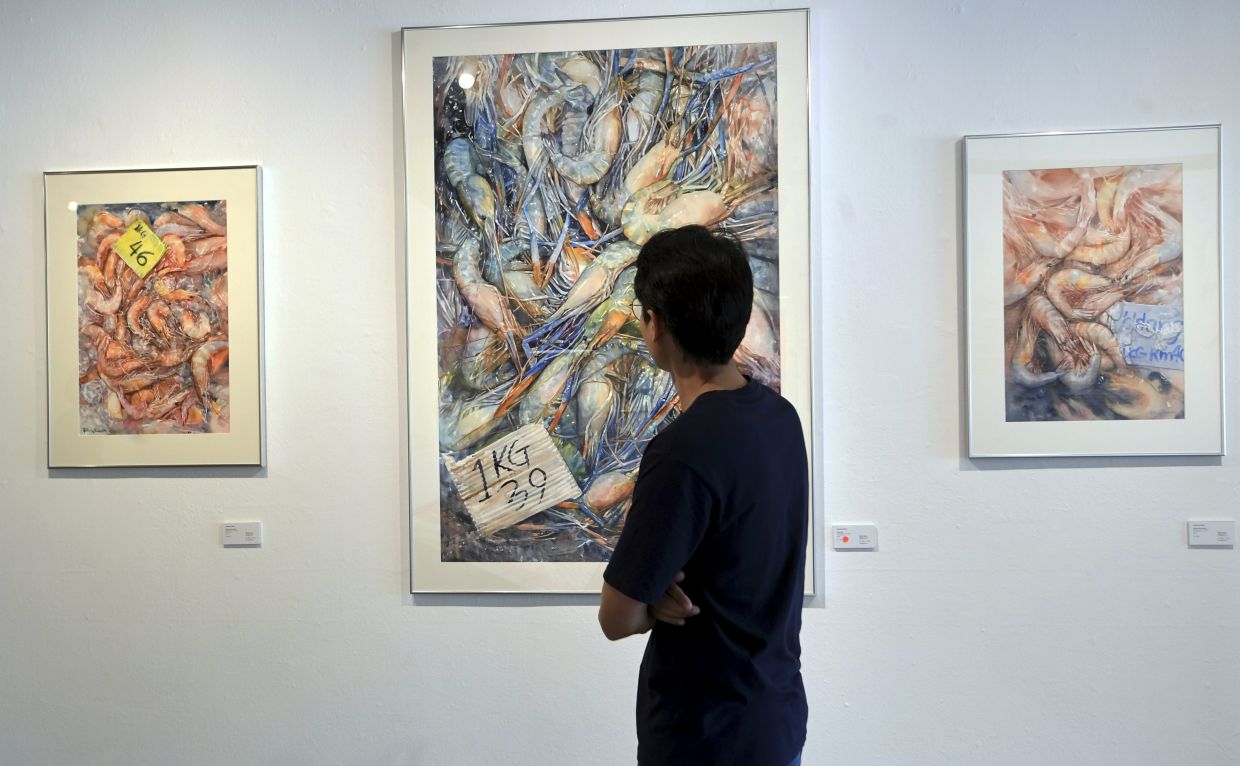
“The discussions we had centred on the ‘life’ of the wet market, since subjects like udang, ikan, sotong and kerang – which I spent many hours experimenting with in watercolour – were, technically, already ready,” says Ryzalman.
The colourful plastic bags – which Ryzalman admits may draw the ire of environmental activists – are tied closely to real life conditions in places where communities still rely on single- use plastic at the wet market and do not have the luxury of reusable shopping bags.
“This series didn’t emerge from your neighbourhood urban grocer – it is a world away from that. I’m tapping into the rhythm of the local wet market, where some seafood may also be disappearing.
"The plastic bags, in time, will also become a thing of the past, as broader awareness continues to shift everyday habits,” he concludes.
Berapa Sekilo? Rhythm Of The Wet Market exhibition is showing at Awegallery in Taman Paramount, Petaling Jaya until June 8.