When people think of arts festivals, they often picture packed theatres, striking performances and applause echoing into the night.
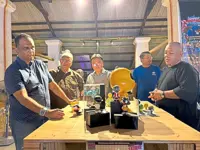
Yet some of the most important moments happen away from the spotlight – around meeting tables, over a teh tarik, in post-show discussions and during conversations between artists, producers, curators and cultural practitioners.
That was precisely the spirit behind Currents And Confluences, a full-day gathering held during the KL Festival 2026 in May that brought together international producers, curators and arts practitioners to discuss cross-cultural collaboration.
The gathering saw an international mix of practitioners including Kate Ben-Tovim, Michelle Rocha, Wen-Di Sia, Maznah Unyan, Leysha Al-Yahya, June Tan, Rebecca Kezia and Yoko Kawasaki, among others, representing perspectives from Malaysia, Australia, Indonesia, Japan and Britain.
Ben-Tovim, curator, executive producer and cultural diplomacy specialist from Australia, believes festivals have a role that extends far beyond attracting visitors or generating economic activity.
“Festivals play a critical role in showcasing the contemporary identity of a country or city to the world," she said.
"Cultural diplomacy works best when a nation’s values are demonstrated authentically by its people, and artists have a unique capacity to do this.”
Her observation is particularly relevant for Kuala Lumpur, where cultural expression often serves as a window into the city's diverse communities, histories and aspirations. In that sense, festivals become not only platforms for artistic presentation, but also opportunities for cities to tell their stories on their own terms.
As Kuala Lumpur seeks to strengthen its place within the regional and international arts landscape, another question naturally follows: what makes a city an attractive collaborator? The answer lies not in scale or prestige, but in the strength of its artistic vision and its willingness to engage in genuine exchange.
Rocha, Head of Touring at Factory International, the organisation behind the acclaimed Manchester International Festival, believes successful international partnerships begin with clarity of purpose.
"Before thinking about international collaboration, I believe every city or festival should first be clear about why it wants to collaborate internationally," she said.
According to Rocha, attractive partners are not necessarily the biggest or most prestigious festivals, but those with a clear vision and an understanding of how collaboration can create mutual benefit.
In Kuala Lumpur, she sees considerable promise.
“It is an energetic, multicultural city with artists and practitioners who are deeply curious about the world and unafraid to explore ideas that transcend borders and language.”
Ben-Tovim, who was part of the founding team behind Asia-Pacific Triennial of Performing Arts (aka Asia TOPA) in Australia, emphasised that meaningful international collaboration depends on long-term relationships rather than one-off exchanges.
“Nurturing long-term relationships with international festivals and venues was critical from the very start of Asia TOPA,” she said.
“If you want commissioned work to have a life beyond its premiere season, you need a network of partners who can help support and present that work.”
Having experienced KL Festival firsthand, she sees similar potential in the Malaysian capital.
“I’ve always loved how Malaysia is a cultural melting pot and I felt that so strongly at KL Festival,” she said.
Building networks that matter
Yet international collaboration is not only about connecting cities. It is also about strengthening the often-invisible networks that support artists.
For Sasapin Siriwanij, Artistic Director of the Bangkok International Performing Arts Meeting (BIPAM), industry gatherings serve a critical function that audiences rarely see.
“While the arts are made by artists and for the public, there are many other practitioners behind and around performances and festivals who make them happen,” she said.
Those practitioners include producers, curators, communications teams, fundraisers, technicians and administrators – people responsible for everything from budgets and contracts to logistics and audience engagement.
Such networks are particularly important in South-East Asia, where arts infrastructure remains uneven and funding can be limited. Across the region, practitioners often rely on relationships and trust to create opportunities that formal systems cannot always provide.
Sasapin believes the region is currently experiencing a significant shift. “The excitement and curiosity to see, hear, learn and know from within the region, rather than always looking westward, is growing,” she said.
A decade ago, many artists viewed Europe and North America as the primary destinations for collaboration and recognition.
Today, connections between South-East Asian practitioners are becoming stronger and more frequent.
“We see each other much more now than a decade ago, and we are more connected than ever,” she says.
Regional partnerships, she argues, offer resilience in a landscape often marked by political uncertainty and fragile cultural infrastructure.
“The real foundation for growth comes from such partnerships, where we rely on trusted networks to drive things together rather than hoping to grow in isolation.”
Beyond one-off exchanges
Building international relationships should not be viewed as a one-off opportunity but as a gradual process developed over time through smaller initiatives and sustained engagement.
For Indonesian producer and curator Kezia, collaboration begins with two simple questions: why and how.
“Cross-cultural collaborations have taught me to continually reimagine both the why and the how of working together,” she said.
By repeatedly returning to those questions, collaborators become more attentive to different needs, working styles and cultural contexts. The objective is not merely to create successful artistic outcomes but also to nurture equitable relationships.
Such work requires navigating complex issues including power dynamics, appropriation and the often-invisible labour that sustains artistic projects.
“Above all,” she said, “it involves enriching conversations about art without losing a strong sense of ethics and responsibility.”
Kezia is particularly interested in artistic practices that draw upon forms of knowledge often marginalised by mainstream narratives – including folklore, indigenous beliefs, rituals and family histories. Rather than treating these elements as decorative references, she is interested in how they can fundamentally reshape storytelling itself.
"What interests me is seeing how artists push beyond conventional norms and familiar modes of creation by engaging with these specific knowledge systems on their own terms.”
Her observations feel especially relevant in Kuala Lumpur, where questions of identity, memory and belonging frequently emerge in artistic practice.
Rocha also encountered many of these themes during her visit to KL Festival 2026. One of her most significant takeaways was the ingenuity of Kuala Lumpur's arts community.
Coming from Manchester, where cultural infrastructure is relatively well-established, she was struck by how much experimental work in Kuala Lumpur is created and presented in adaptive spaces rather than purpose-built venues.
She visited venues ranging from schools and shopping malls to heritage buildings and industrial spaces. What might appear to be limitations, she observed, often become opportunities for experimentation.
“I saw how producers creatively respond to architectural and economic realities,” she said.
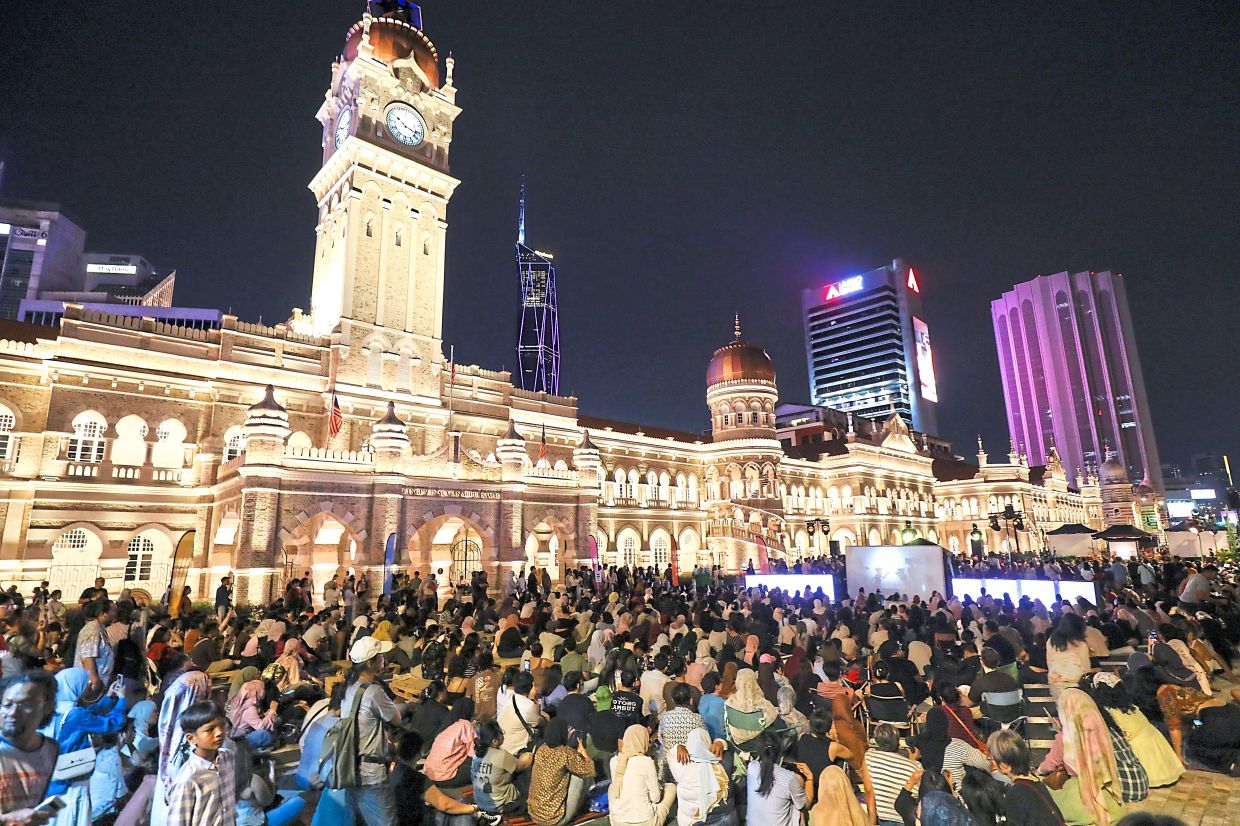
That sense of a city expressing itself through culture was also noted by Hiromi Maruoka of Tokyo Metropolitan Theatre and Tokyo Festival, who saw KL Festival as offering a distinctive model for contemporary festivals.
"KL Festival 2026 is an exciting new festival that successfully balances thoughtfully curated artistic programmes with large-scale events that engage a wide public," she said.
What impressed her most was the festival’s openness to different communities, including participatory activities and performances by artists with disabilities.
“By connecting art, public space and everyday life, the festival offers a unique way to experience Kuala Lumpur through its people, histories and cultures,” she said.
Maruoka believes the festival has the potential to become an important platform that presents a new festival model from Asia to the world – one that isrooted in its local context while remaining open, inclusive and internationally connected.
Perhaps most memorable was a post-show discussion following Fragments Of Tuah, when an audience member directly challenged the director.
For Rocha, the exchange demonstrated something festivals uniquely provide: the opportunity for public debate and unexpected dialogue. It also reinforced why live cultural experiences continue to matter in an increasingly digital world.
“Digital platforms are excellent for discovery and connection, but they also offer an easy exit,” she said.
Live events, by contrast, encourage people to stay, listen and engage with unfamiliar perspectives.
“At their best, festivals create opportunities for what I like to call everyday magic – moments of surprise, discovery and connection that can only happen when people gather together.”
As Kuala Lumpur continues to position itself as a regional cultural capital, that may be the lasting lesson of Currents And Confluences.
Festivals are not only about presenting finished works. They are also about creating the conditions for future ideas, partnerships and conversations to emerge.
In a city built from many histories and many voices, those conversations may prove to be among the most valuable cultural investments of all.
More info here.