Who is Emily Gan? Naive debutante, meddling mother, formidable matriarch? Fans of Singaporean playwright Stella Kon’s seminal Emily Of Emerald Hill will all have their own thoughts on the titular star of the one-woman show.
Veteran director Chin San Sooi, for example, reckons that Emily doesn’t have a personality.
“She has a poison-ality,” he says.
Chin returns to direct Emily Of Emerald Hill alongside Pearlly Chua – widely regarded as the definitive Emily Gan – at the Damansara Performing Arts Centre (DPAC) in Petaling Jaya from April 16-19.
Told in two acts over two hours (including a 15-minute intermission), the English-language play traces the life of a Peranakan matriarch as she cunningly outwits and manipulates her way to the top of the nyonya hierarchy.
This upcoming run invites a new generation to discover a piece of theatre history. Since its premiere at the Guthrie Chemara Club House in 1984, the award-winning monodrama has become one of South-East Asia’s longest-running plays – a staple for theatre lovers across the region and beyond.
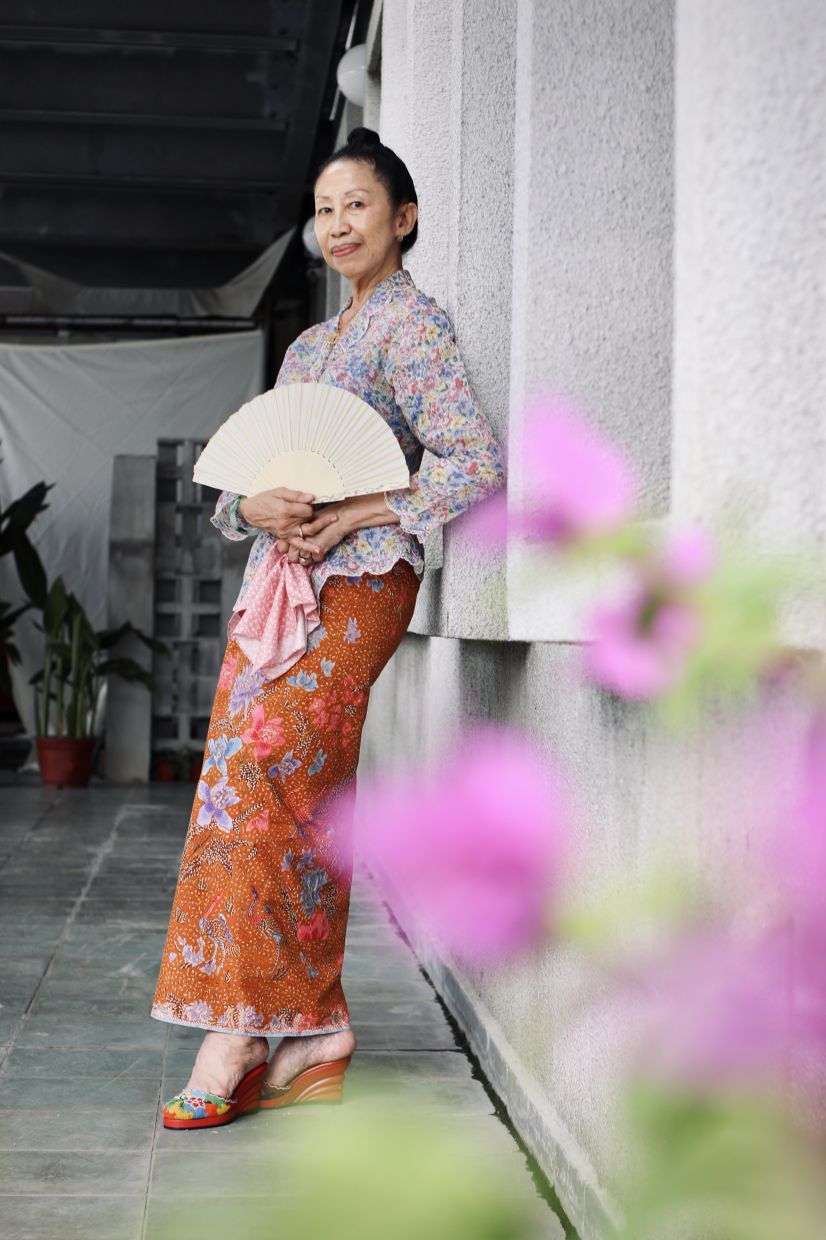
At DPAC, the six-show run will be presented as a full theatrical production, with Chua – a commanding presence on stage – wearing the traditional nyonya kebaya and handmade beaded shoes.
In the moment
While the role of Emily has been taken on by many actresses – and even a few actors – none have inhabited her as often as Chua. She first stepped into the role in 1990, and before this upcoming run, has performed Emily 241 times.
Yet no matter how many times she returns to the ever-scheming nyonya, each performance brings its own challenges – and its own rewards.
“Having done the play as many times as we have, a lot of people have said, ‘Oh, it must be easy, you must know the script like the back of your hand’. But of course it’s not, it’s not a matter of copy-pasting a performance," says Chua in a recent interview in Kuala Lumpur.
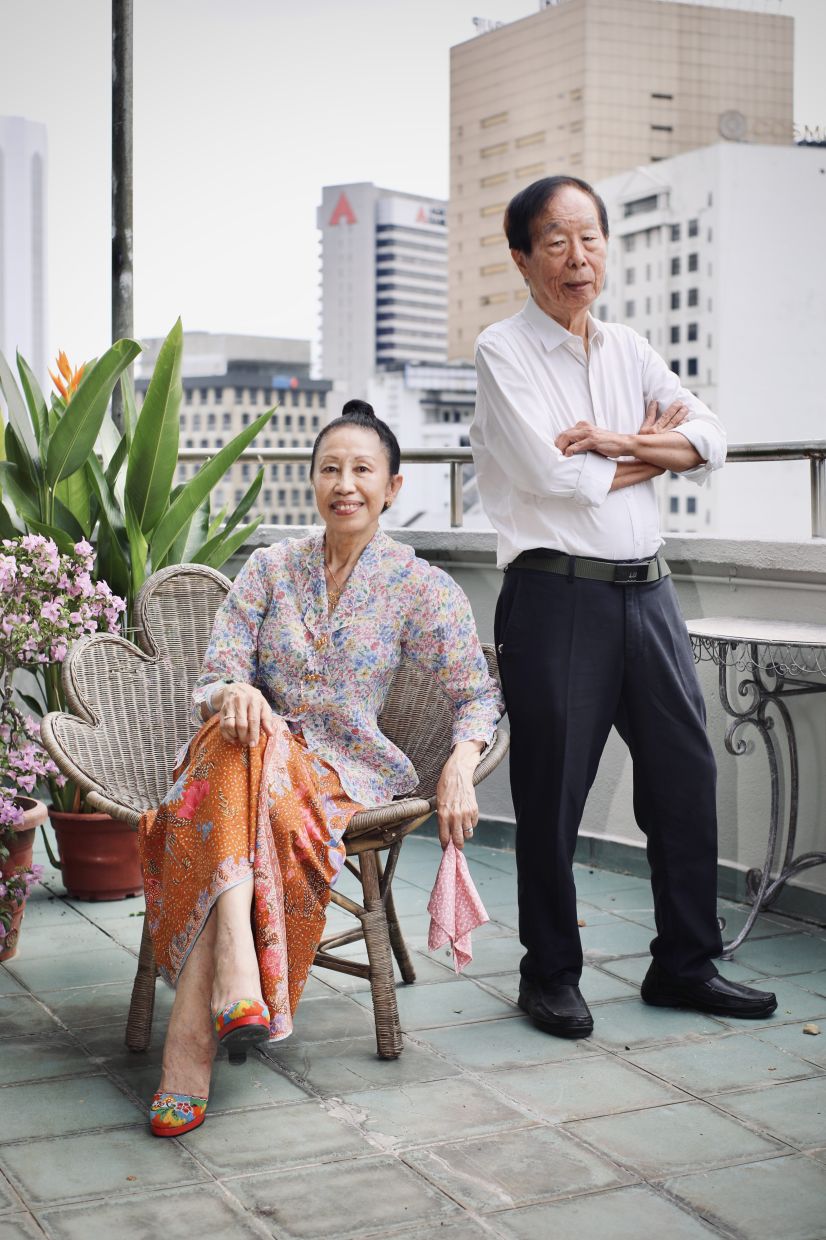
“The challenge is to make it sound fresh, like it’s the first time I'm doing it every single time. It’s up to me, as the actor, to find the impetus within myself. I think being in the moment helps a lot,” she adds.
Throughout the play, an older Emily reflects on her past, requiring Chua at times to portray a much younger version of the character.
“The first time I did the play was when I was 39. So I had to portray a nine-year-old child, a 14-year-old bride and a senior Emily. Back then, the challenge for me was portraying the elderly Emily," says Chua.
“But this year, I'm turning 70 and I’m better able to relate to the elderly Emily. Now I have to portray a nine-year-old child, make you believe I'm 14 years old, and flirt like a 30-something,” she adds with a laugh.
A finely tuned machine
Having collaborated with Chin on the same play for nearly four decades, Chua describes their partnership as a finely tuned machine – one forged through years of mutual understanding, unspoken cues, and a shared intuition that brings Emily to life night after night.
“We’re constantly bouncing ideas off each other, like ‘Shall we do this? Shall we do that?’ and if I do something a little different, San Sooi says ‘no’ or ‘yes’ and we move on to the next scene," says Chua.
“With each new season, we’re always experimenting,” she adds.
“No performance is ever exactly the same. Over the years, our own life experiences and evolving perspectives have shaped the nuances we emphasise and the shades of meaning we bring to the story.”
With countless performances under their belt – from grand stages to intimate halls – the duo has accumulated a treasure trove of unforgettable moments. One standout came when a missing prop forced Chua to improvise an entirely new character on the spot, a testament to her quick wit and deep understanding of Emily’s world.
“In Act Two, I come back from the market, all ready to prepare for Chinese New Year. I went to pick up the phone ... but there was no phone! I tell you, I broke out in a cold sweat and was racking my brain for what to do," recalls Chua.
“So I ad-libbed, ‘Ah Hoon, where is the phone? I cannot prepare for Chinese New Year without the phone!’ From the back of the hall, San Sooi calls out, ‘Coming, Nyonya, coming!’ and he comes running with the phone. Just as he makes it on stage, he trips and falls flat on his face. Stole my thunder. And that was the only non-one-woman show in the play’s history,” she adds.
A shared heritage
Though of Singaporean origin, Emily Of Emerald Hill draws on the life of Kon’s maternal grandmother and has been staged extensively in both Singapore and Malaysia. (Kon actually wrote the play while living in Malaysia, with its premiere directed by Chin himself.)
Over time, the work has become more than a national story – it exists as a shared cultural heritage, a bridge connecting the theatrical histories and sensibilities of both countries.
“Aiyoh, we're cousins, what is there to fight over, all one family,” says Chua with a wave of her hand.
“Whatever it is, whenever anybody talks to Stella Kon about staging the play, she will always say, ‘Have you spoken to Chin San Sooi?’” she adds.
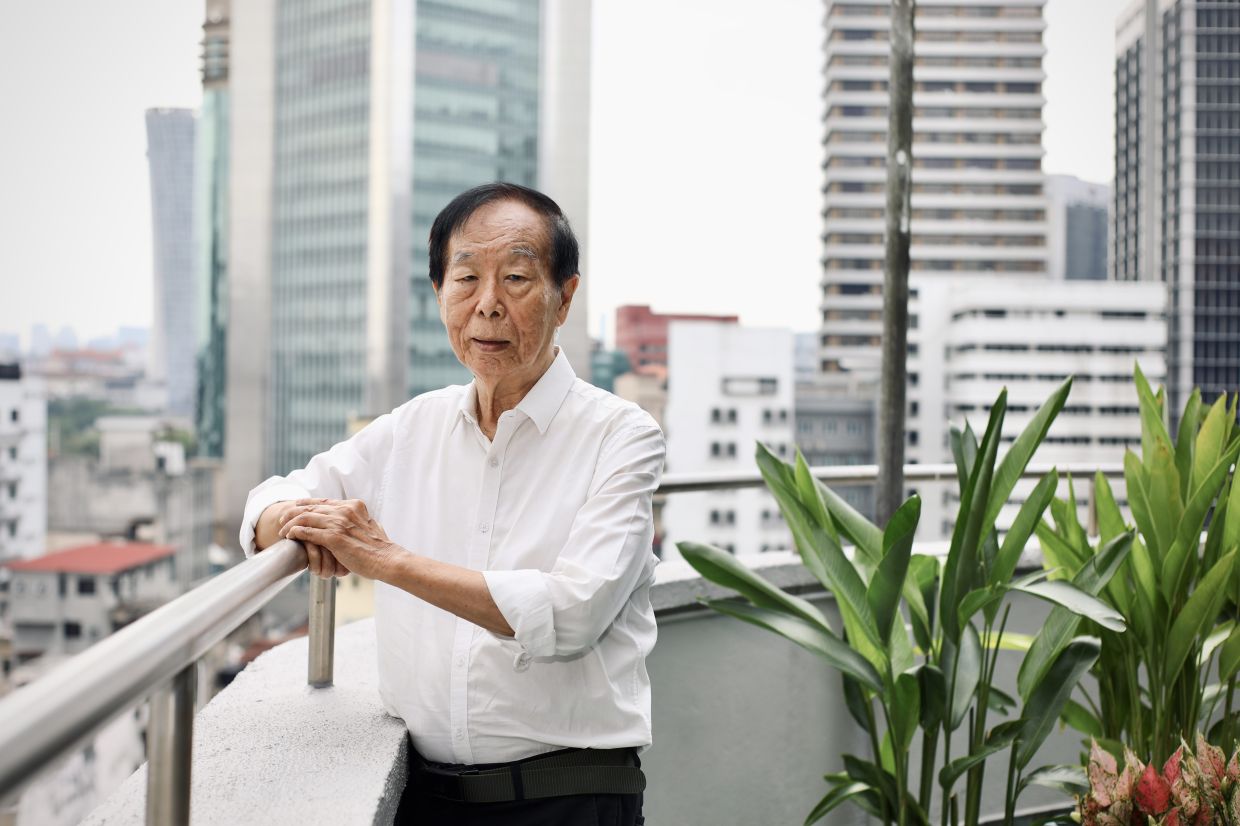
In his characteristically dignified and quiet manner, Chin, 86, visibly brightened when the topic arose, eager to share his reflections on the play during the interview.
“Stella has said of me that while she gave birth to Emily Of Emerald Hill, I am the godfather of Emily Of Emerald Hill,” says Chin.
Since its debut more than 40 years ago, Emily Of Emerald Hill has only grown in popularity. While some audience members are newcomers, many are returning fans who have seen the show multiple times.
What draws them back again and again? According to Chin, at its heart, Emily Of Emerald Hill is a profoundly human story.
“You see the characters of Shakespeare, most of them are kings, noblemen, and things like that. Aristocrats. Not a common person. But this play which Stella has written, is about a very common person, a housewife. Yet, within this housewife, you see the full range of characters and emotions that she goes through," says Chin.
“What makes the play so powerful is because anyone can relate to or empathise with her. We may wear different clothes, speak different languages, but the emotions are essentially the same,” adds Chua.
The appeal of Emily – a complex, multi-layered female character – transcends cultural boundaries, so you don’t need a nyonya background to connect with her story.
“Every time we do the play, we invariably have people of all ages coming up to us after the show to tell us, ‘Oh, she's like my grandmother’ or ‘She reminds me of my auntie’,” says Chua.
If anything, when Emily first appeared in the 1980s, she was a character with timeless resonance – and to show her adaptability, she would even find a place on TikTok today.
“So you see, for different reasons, people come and watch the show, because it's like a personality that you need to know,” she concludes.
Emily Of Emerald Hill will be staged at Damansara Performing Arts Centre, Empire Damansara, Petaling Jaya from April 16-19.