Everyone has a void within them. In many ways, it makes an evocative premise for an exhibition series, feeding off the emotional, psychological and spiritual spaces that shape the human condition.
“Life is like a kaleidoscope,” says artist Yau Bee Ling in a recent interview, choosing a colourful metaphor to start a conversation.
“When you shake it up and peer inside, the world is all pictured in broken pieces and empty spaces, which is the event of life. Everyone has those empty spaces inside that call out to them – and like it or not, they must answer that call,” she explains.
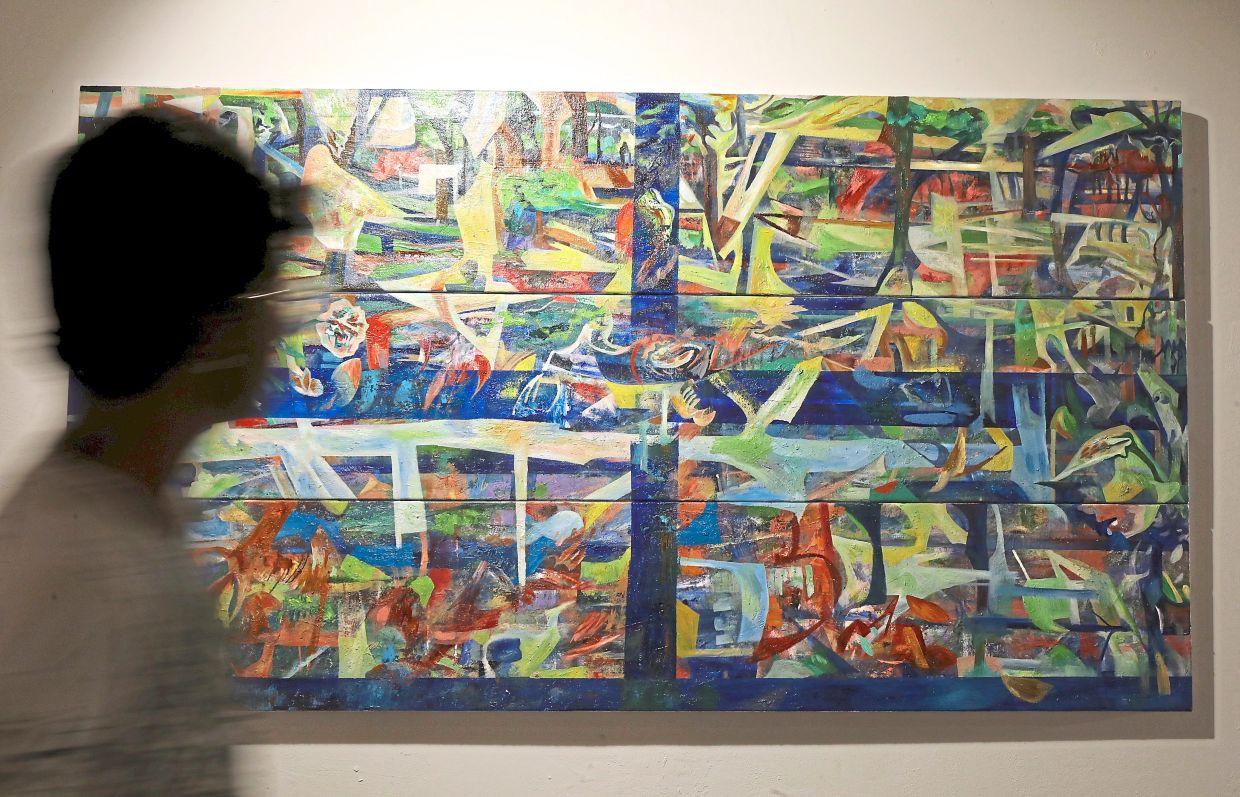
Yau’s eighth solo exhibition Structural Voids, showing at Wei-Ling Gallery in Brickfields through June 6, is her response to the void she senses within herself. The exhibition features six new works that continue her exploration of human relationships, both with others and within herself.
Through kaleidoscopic compositions, layered textures and bold colours, the large-scale works reflect the growing sense of disconnection between people. Yau focuses particularly on the young – including her own two children and students – a generation she has observed with tenderness as they search for belonging in an increasingly fragmented world.
“This series asks the question: ‘How do we confront the voids within us?’ It’s seen through the lens of my personal experience with departures and the changes they create within my inner space and inner being, as well as how I recall memories within the space of history,” says Yau, 54.
To coincide with the new exhibition, Wei-Ling Gallery has also published The Weaving Of Life: Art Through Trials And Triumphs, a monograph devoted to Yau that traces her 30-year evolution as an artist, from early works to recent paintings.
Layers of emotion
Since 2008, Wei-Ling Gallery has become a space where Yau transforms private introspection into broader public dialogue. Her solo milestones at the gallery include Portraits Of Paradox (2008), The Women (2013), Interwoven Terrains (2019), A relentless whirlwind: from inside, looking out (2021) and Light Bearer (2022), among others.
Whereas her previous solo exhibition Redefining Resilience (2023), envisioned the self as a vessel navigating open waters with emotion as its cargo, this latest body of work examines what remains when that journey demands the peeling away of accumulated identities and experiences.
“In that series, it felt like I was holding a container full of my emotions tightly, yet gently. But in this series, I think I had a breakthrough to not hold on so tight. I’ve learned how to deal with the fluidity and uncertainty of life in a much more organic way,” says Yau.
Her latest works reflect both the artist and the viewer, acting as mirrors that prompt introspection.
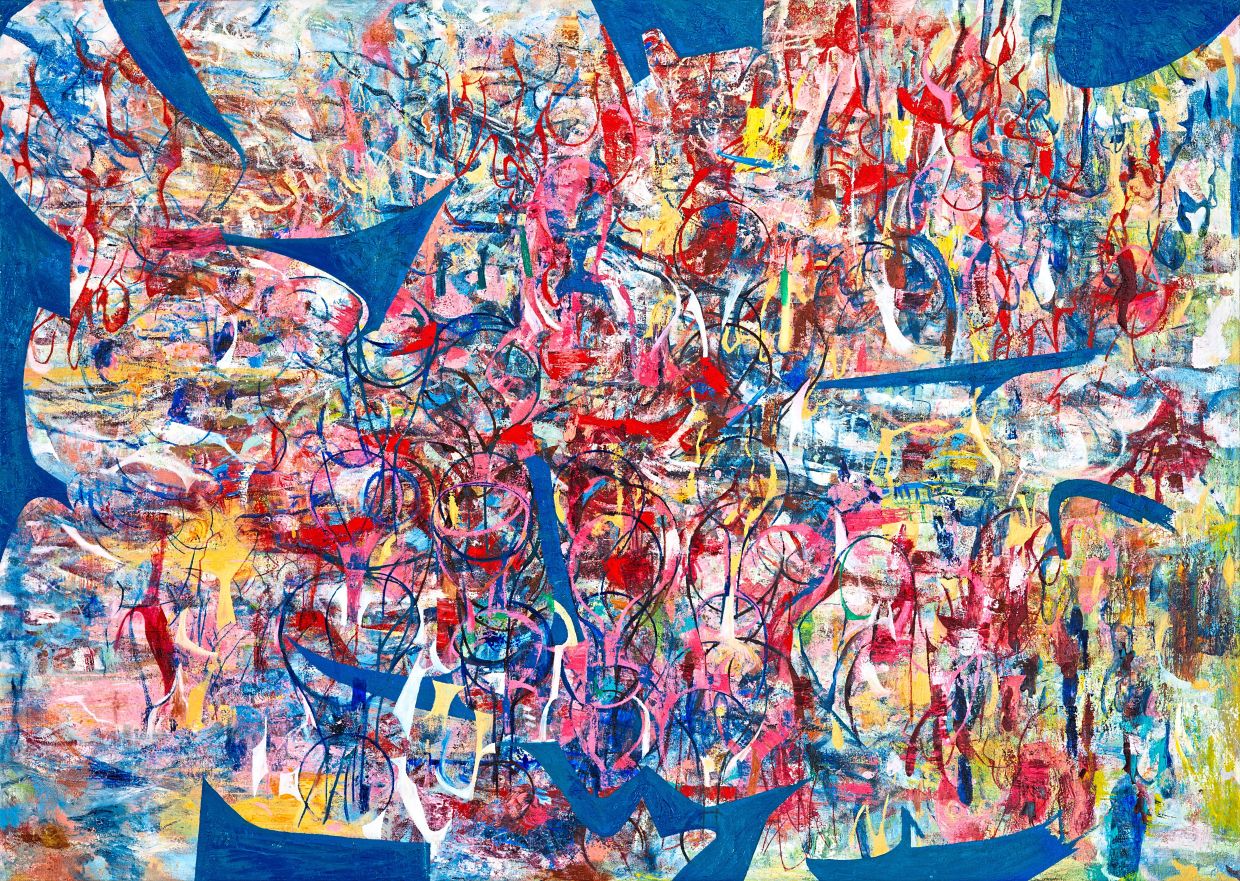
For Structural Voids, each canvas is built up in layers, with pigment applied and sanded back, and earlier decisions integrated into later ones until the surface contains all that went into it – a method as geological as it is painterly.
“These layers represent the layers of emotion, memory, brokenness and trauma that we accumulate over the years. If you never attempt to untangle these emotions and understand them, they’ll keep building up until you face emotional bankruptcy, breaking apart and collapsing under their weight,” she shares.
Drawing on another analogy, Yau – who balances motherhood, a long-term painting career, and mentoring – likens being an artist to being an archaeologist.
“Making art is about meeting ourselves and also discovering our own identity, so in a way, we’re like archaeologists digging through the remnants of your experiences and feelings in order to find out who we are and what our purpose is,” she says.
An identity beyond art
Alongside the new solo show, the long-awaited monograph The Weaving Of Life: Art Through Trials and Triumphs offers an extensive account of Yau’s career.
Supported by the National Art Gallery, it documents Yau’s artistic evolution from 1990 to 2025 across 250 full-colour pages, highlighting the practice of a Malaysian woman artist, where resilience is threaded through her work.
“What sets Bee Ling apart is the honesty of her subject matter. At a time when female artists in Malaysia faced pressure to sidestep questions of gender, she leaned into them by painting femininity, motherhood, domestic life and female identity with candour,” outlines an essay in the book.
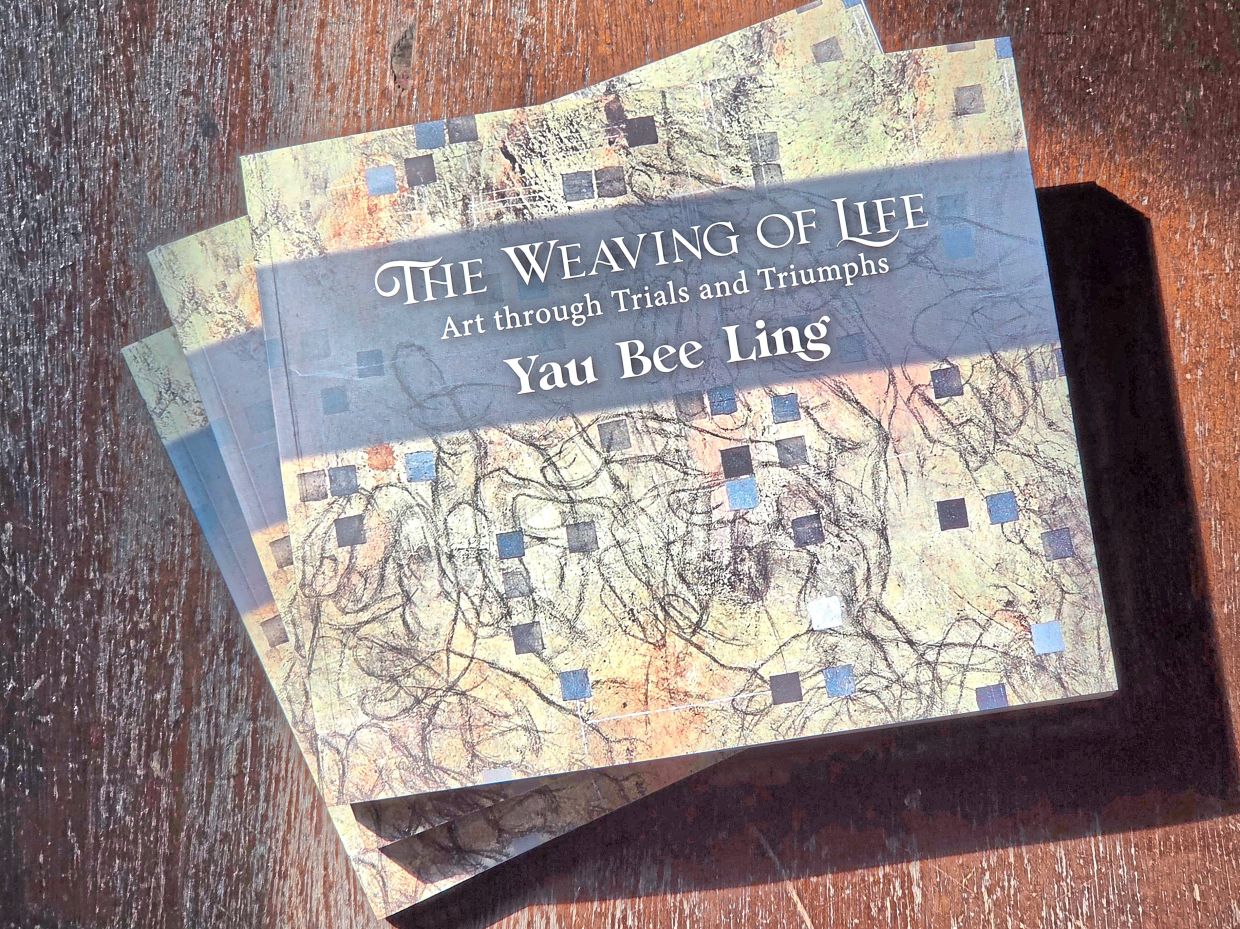
As a timely document, the book presents layered, colour-saturated canvases drawn from her experiences as a woman in a traditional Chinese family navigating the roles of wife, mother, and artist, lending the decades-long career work an emotional weight that extends beyond the personal.
It also includes essays by curators Louis Ho and Gowri Balasegaram, among others, alongside large-scale reproductions and extensive fold-out documentation.
Yau, married to fellow artist Choy Chun Wei, whom she met at art school in Kuala Lumpur, says the monograph – available through Wei-Ling Gallery – stems from a need to archive her artistic journey.
“Over the years, after working on solo after solo and taking part in various art events, I increasingly felt the need to extend my artistic practice beyond paintings on the wall, to leave an ‘artefact’ behind in the form of a book or a story.
“Because I believe whether you’re an artist or not, we as human beings are meant to transform the lives of others,” she adds.
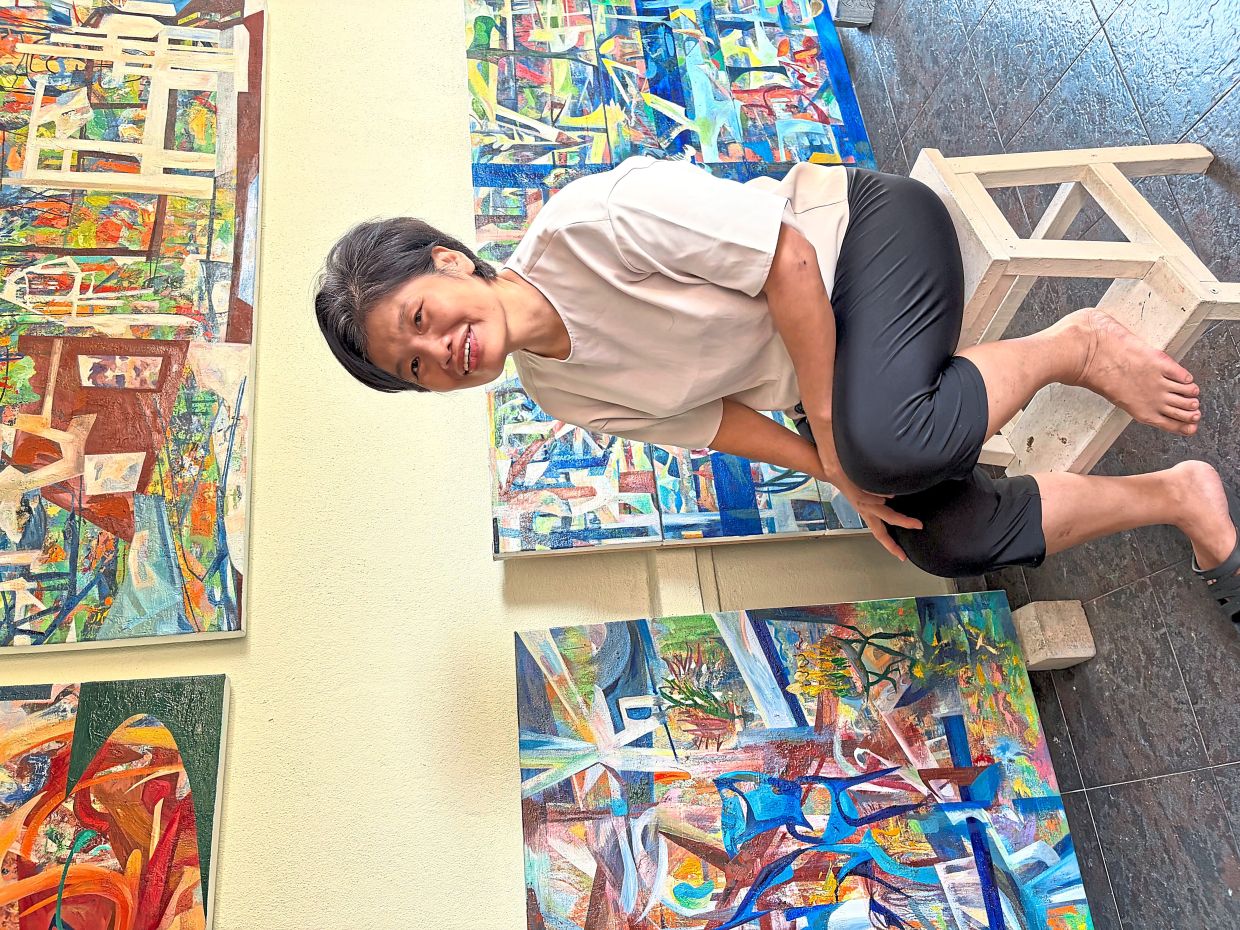
Born in Port Klang, Selangor, Yau was the fourth of eight children in a non-artistic family grounded in Confucian values. As a middle child, she was able to pursue her artistic interests with relative freedom.
“My family wasn’t well-off, so my parents told me I could pursue art as long as they didn’t have to pay for it,” says Yau, who received a full scholarship to the Malaysian Institute of Art, graduating in Fine Arts in 1995.
Looking back on her life and career through the book’s pages, Yau expresses a deep sense of fulfilment and humility, shaped by the long arc of persistence and practice.
“A lot of artists think their identity lies in their art and in the making of it, but thanks to the book, I was able to gain clarity on my own identity and how it’s not defined solely by my art – my identity goes far beyond that.
“The monograph does not belong to me. It belongs to the community and the people I’ve met along the journey of my life,” she concludes.
Structural Voids is showing at Wei-Ling Gallery in Kuala Lumpur until June 6, by appointment only. Open: Tuesday to Friday (10am-6pm), Saturday (10am-5pm). More info: weiling-gallery.com.