There are many ways a nation carries its stories. For Palestinians, one of the most enduring is “tatreez”, the centuries-old tradition of embroidered dress that preserves memories of place, identity and community.
At the Islamic Arts Museum Malaysia (IAMM) in Kuala Lumpur, the new exhibition Tatreez: Reclaiming Palestine Through Embroidery demonstrates how traditional garments can preserve culture and history across generations.
For Malaysians, traditional attire such as batik, baju kurung, cheongsam, and kurta remains woven into everyday life, adapting to contemporary expressions while retaining its cultural meaning.
The IAMM exhibition, running through April 25, 2027, offers a broader perspective, showing how traditional embroidery, like clothing itself, becomes a living archive.
The show in Kuala Lumpur is also timely, highlighting tatreez as a powerful expression of cultural resilience. This wider global recognition is echoed at this year’s Venice Biennale in Italy, where the Palestine Museum US presents a collateral exhibition featuring nearly 100 tatreez embroideries by Palestinian women from the diaspora and refugee communities in Lebanon, Jordan, and the West Bank. Together, these works form the "Gaza Genocide Tapestry", weaving individual and collective histories through thread.
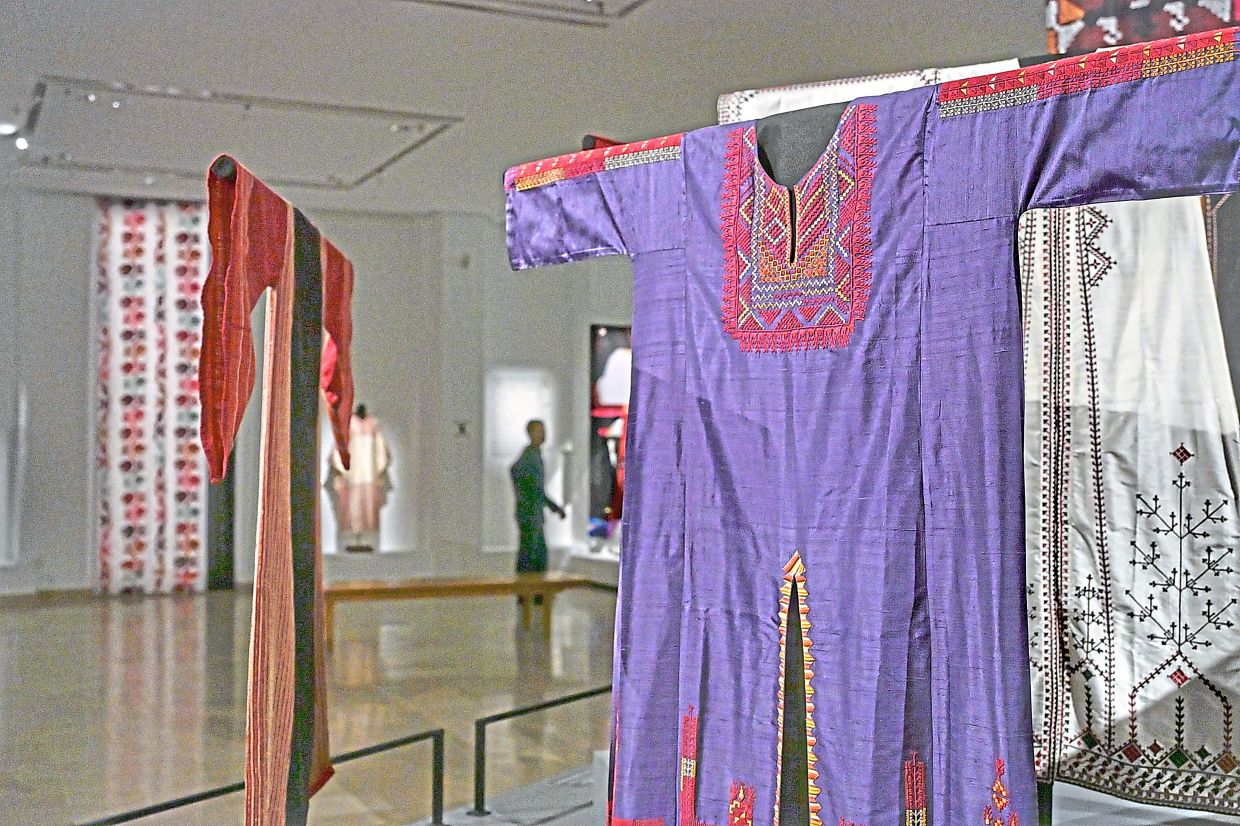
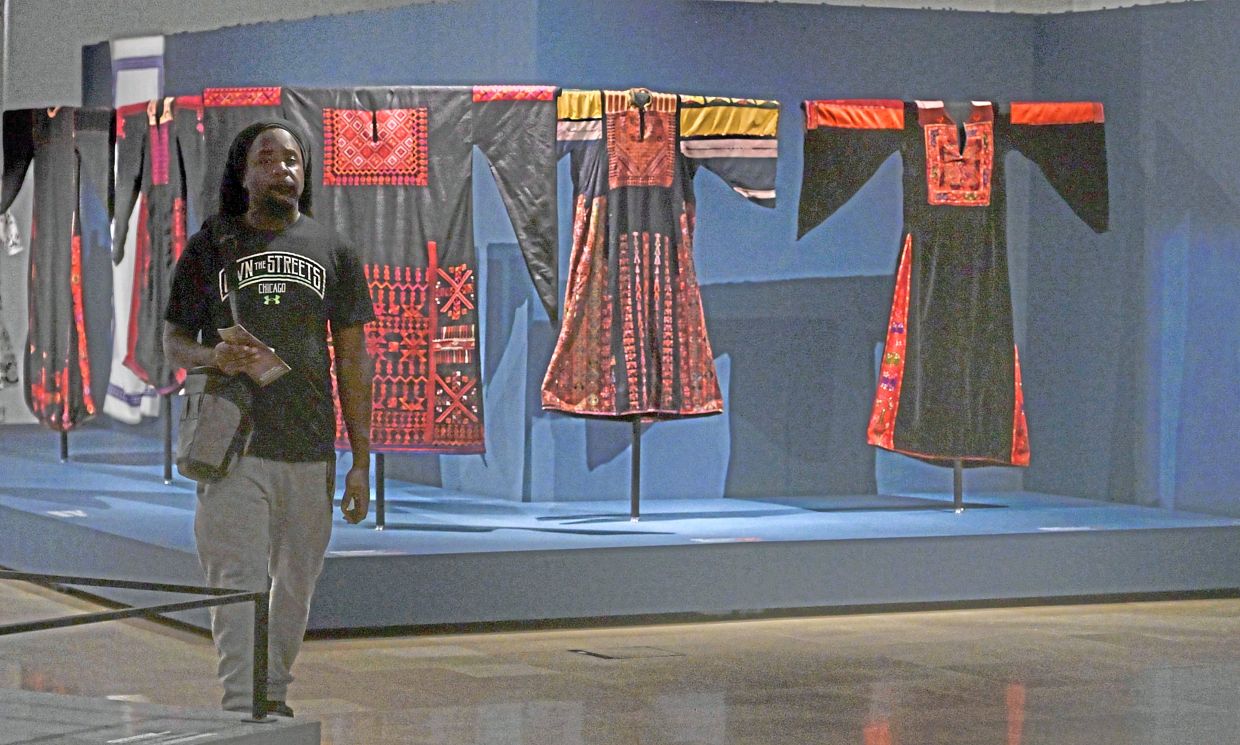
For the IAMM, the Tatreez exhibition presents a narrative journey. Organised by region, the show - 15 years in the making - reveals the diversity of Palestinian tatreez.
Each Palestinian locality developed its own distinctive motifs, colours and stitching techniques, transforming garments into markers of identity.
IAMM curators Siti Marina and Sharifah Shahanaz describe these exhibits as carriers of memory for Palestinian women. During a recent gallery tour, they shared that for some, these were among the only possessions carried through the displacement of 1948.
“The (IAMM) collection featured in this exhibition is the largest tatreez showcase in South-East Asia. These textiles are considered endangered cultural heritage. Many skilled designers and weaving tools have been lost, but surviving tatreez design books allow these patterns to be recreated,” says Marina.
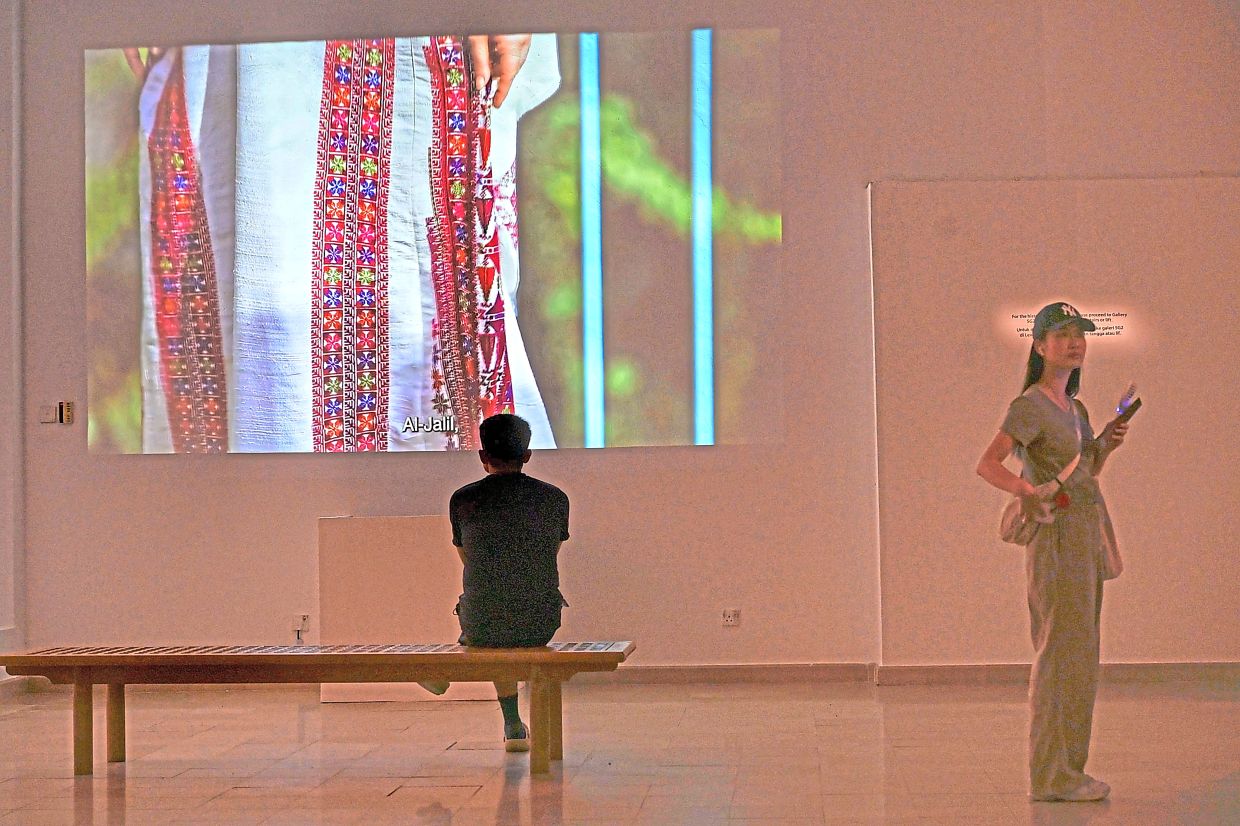
The tatreez (which means “embroidery”) exhibition features more than 150 artefacts, including intricately detailed dresses, accessories and historical photographs from the US Library of Congress, revealing a strong bond between Palestinian women across generations.
There is a different weight to this textile presentation. Beyond embroidery and dresses, IAMM’s exhibition offers a clear-eyed view of Palestine’s deep history, giving its people’s stories a wider platform to endure.
“For visitors, we wanted to begin the exhibition with a map and timeline tracing Palestine’s history, from the Roman Empire to the Nakba in 1948. Palestinians lived under different rulers, including the Ottomans, Abbasids and other Islamic dynasties, as well as the British. These influences can be traced through the artefacts and embroidery patterns found on the garments, known as thobes,” says Marina.
Colonial influence also shaped the evolution of tatreez, as British and French rule introduced new materials like silk into embroidery-making. Scholars later documented these techniques, helping preserve a tradition that continues to be practiced today.
“There are a lot of influences over the course of history, but what is important for visitors to understand is that Palestine is a vital place for old Abrahamic religions, pilgrimages and trading, hence textiles were a way of keeping track of those influences,” she adds.
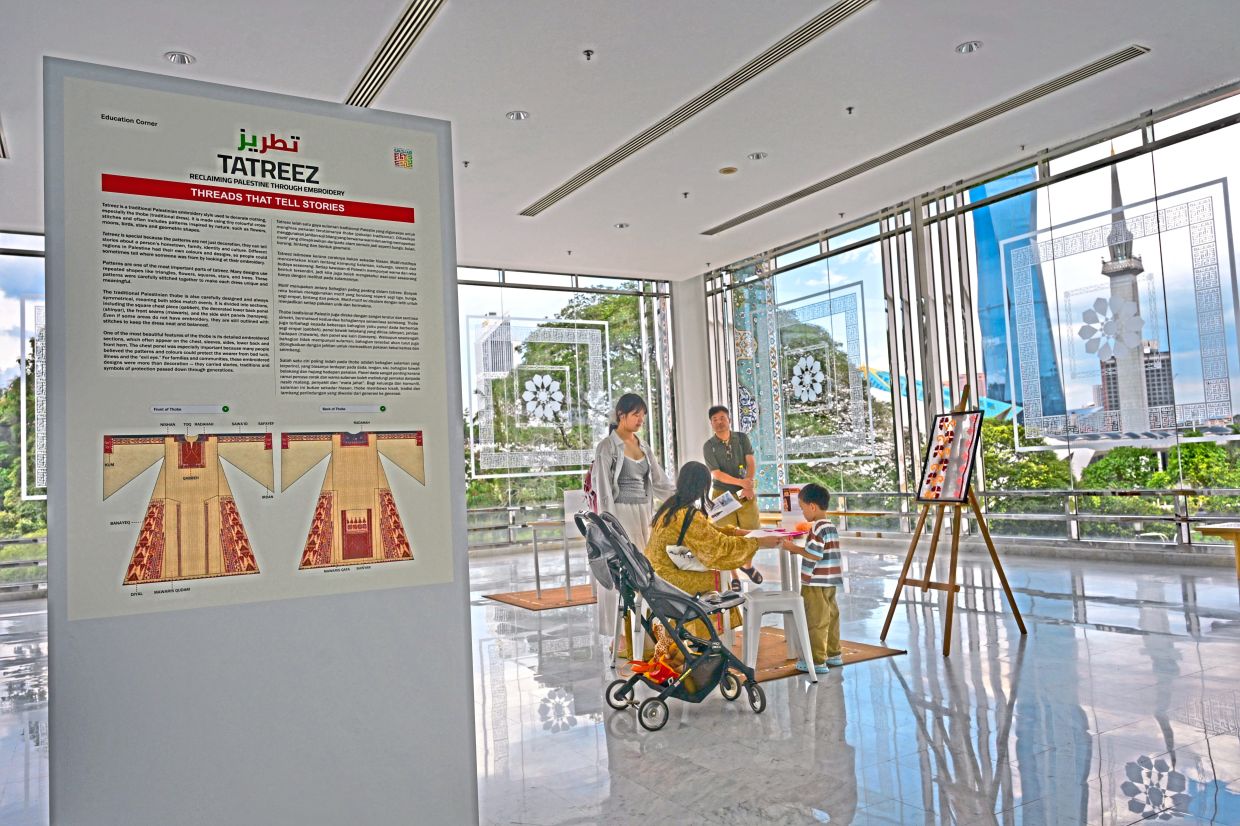
The exhibition is divided into two galleries: one exploring Palestine’s past, and the other examining how tatreez continues to evolve today.
Upstairs at Special Gallery 2, the historical section is organised into 10 regions – Galilee, Nablus, Ramallah, Bethlehem, Jerusalem, Hebron, Jaffa, Ramlah-Lydda, Gaza and Naqab – each with its own embroidery styles, colours and textile traditions.
Sharifah says that even subtle differences can reveal a garment’s place of origin and the religious communities that shaped its designs.
“Like many weavers and designers, inspiration often came from their surroundings. In the Gaza section, you’ll notice triangular neck designs used to showcase jewellery, alongside variations of the cypress tree motif, which is popular in southern Palestine.
“The thobes reflect the tree’s tall, conical and symmetrical form,” she says.
Photographs of old Palestine accompany the garments, accessories and jewellery, offering glimpses of wedding ceremonies, markets and the exchange of textiles through traditional barter systems.
“In wedding ceremonies, Palestinian brides would wear traditional headdresses known as Aaraqieh or Burqa, which feature slots for attaching coins as a form of dowry. With travellers bringing different currencies into the region, these coins also became indicators of the era and social status. Even today, some weddings continue this practice, with many Palestinians viewing it as an expression of sumud, or resilience,” says Sharifah.
In Special Gallery 1, traditional motifs and regional styles are reinterpreted through contem- porary perspectives while pre- serving their cultural significance. The museum has collaborated with the Inaash Association, a Lebanese organisation founded in 1969 that produces handcrafted artisanal works while providing training, income opportunities and early education for refugee women.
The gallery also features an IAMM-commissioned documentary I Am Tatreez highlighting the lives of Palestinian refugees in Lebanon, with many of the garments worn by its subjects displayed alongside it.
“The exhibition offers visitors, especially Malaysians, a different perspective. We have grown up wearing baju kurung and other traditional attire, with materials suited to our climate, allowing these garments to remain part of everyday life.
“In contrast, Palestinian traditional costumes are often reserved for special occasions. Their preservation remains ongoing, as many practitioners have been displaced to cities such as Cairo (in Egypt), Beirut (Lebanon) and Damascus (Syria), where they now work with different materials to embroider the thobe,” says Sharifah.
The exhibition also features a range of public programmes.
This month, visitors can join guided tours on July 24 (10am and 3pm), participate in the Palestinian Traditional Dress Day Celebration and Tatreez Workshop on July 25, or attend Discover Palestine Through Stories & Craft on July 26 at 10.30am.
Tatreez: Reclaiming Palestine Through Embroidery at the Islamic Arts Museum Malaysia in Kuala Lumpur runs till April 25, 2027.