As Muslims prepare to welcome Hari Raya Aidilfitri, the festive atmosphere is growing livelier. From home kitchens to markets, traditional essentials are being readied, including ketupat casings – a key component of the iconic dish rarely absent during the celebration.
For many, Aidilfitri would feel incomplete without ketupat wrapped in woven coconut or palm leaves. The delicacy is often enjoyed with richly spiced rendang, thick peanut sauce or mildly spiced sayur lodeh.
Yet behind its enduring popularity, concerns remain that the tradition could one day fade as fewer people, especially among the younger generation, know how to weave ketupat, said Nur Fatin Yasmin Firdaus, a cultural faciliator.
The 25-year-old noted that many now opt for ready-made ketupat casings, seen as more convenient and time-saving than the often tedious manual weaving.
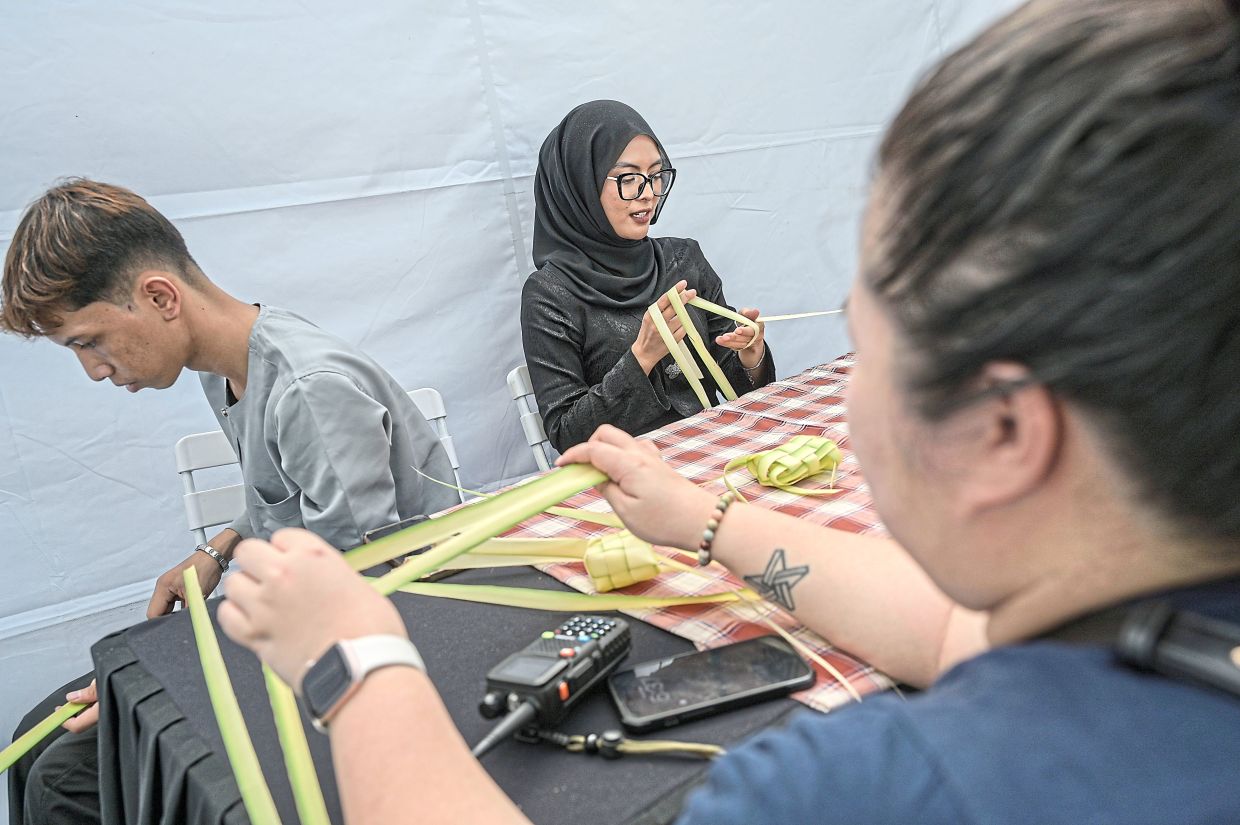
“If no one is willing to learn and continue this skill, it may eventually disappear. Yet ketupat is a heritage passed down from our ancestors,” she said at the recent Ketupat Weaving Workshop during the Riuh Raya Baik Baik programme in Kuala Lumpur.
Concerned about the tradition fading, Nur Fatin, founder of Ruang Memoir – a community space – started ketupat weaving workshops to give the public a hands-on experience.
She said many assume weaving ketupat is difficult, but the process is simpler than commonly thought.
"I hope that through this sharing, even if they do not succeed on their first attempt, they will try again. Who knows, one day they may be able to weave their own ketupat when Hari Raya arrives,” she said.
Her interest began at age 10, watching a canteen operator weave coconut leaves into neat ketupat casings.
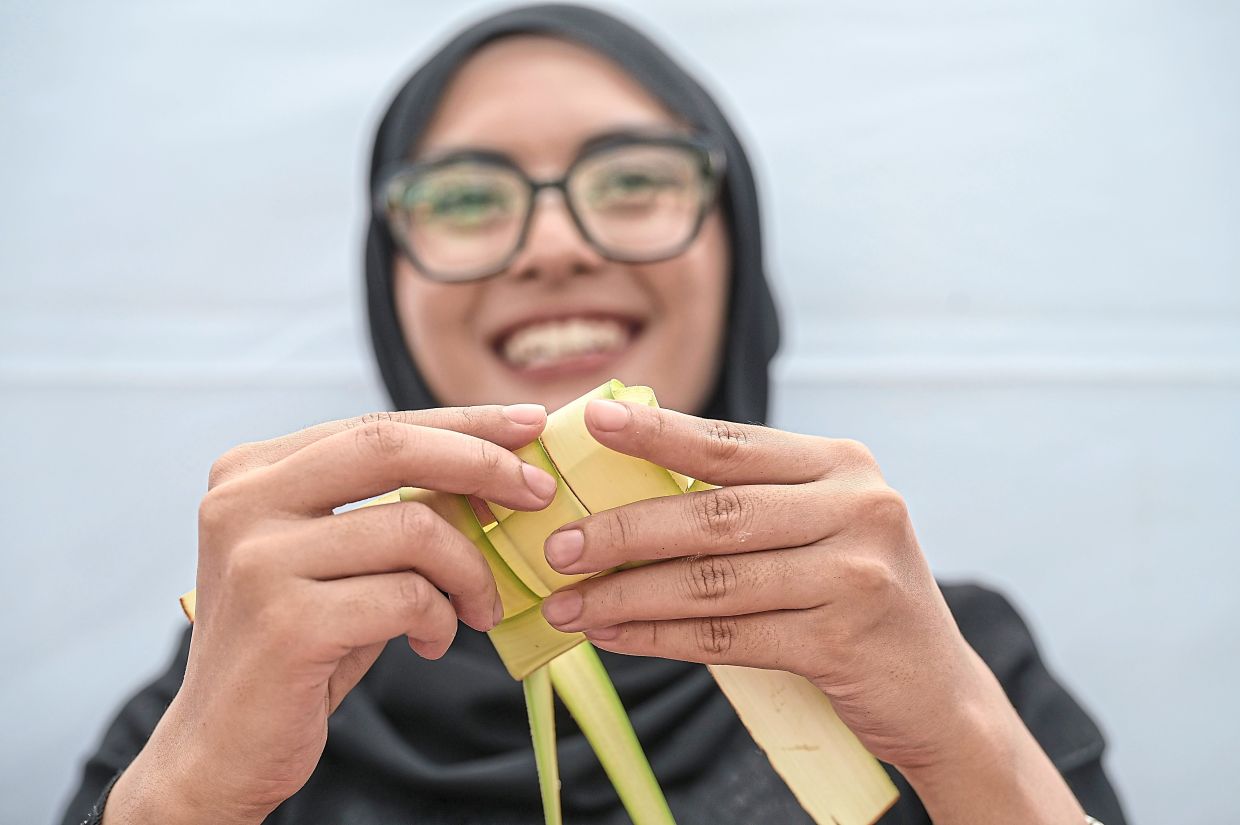
"I became curious and wanted to learn because I wondered how two coconut leaves could be transformed into a ketupat casing. So during recess or after school, I would sit and watch the canteen auntie weaving while trying to learn from her,” she said.
It took her about two weeks to master basic styles like ketupat sate, bawang and jantung, which require precision, as a small mistake can tangle or unravel the weave.
"At first it was quite difficult because we did not know which part to insert or tuck in. But with frequent practice, the weaving pattern becomes easier to understand and over time the process becomes much simpler,” she said.
Workshop participant Ashraf Azahan Mohd Raisham, 24, a barista from Shah Alam, Selangor, said the skill should be passed to younger generations.
"Ketupat is a traditional dish every Raya. That is why I think young people should learn to make it themselves. Otherwise, in time future generations may no longer know how to weave ketupat,” he said, noting it is a must-have dish for his family every Aidilfitri morning. – Bernama