The inaugural Kuala Kangsar Panjut Festival Competition 2026, held on March 15 and 16 in the Perak royal town, marked a new chapter for the traditional Malay art of panjut-making (giant oil-lamp displays).
For the first time, participants incorporated recycled materials such as used beverage cans alongside natural elements like bamboo and rattan, giving the festival an environmental twist.
Kuala Kangsar, renowned for its thousands of panjut lamps lighting up the town ahead of Aidilfitri, buzzed with activity as eight government agencies, an NGO and over 13 villages joined the event.
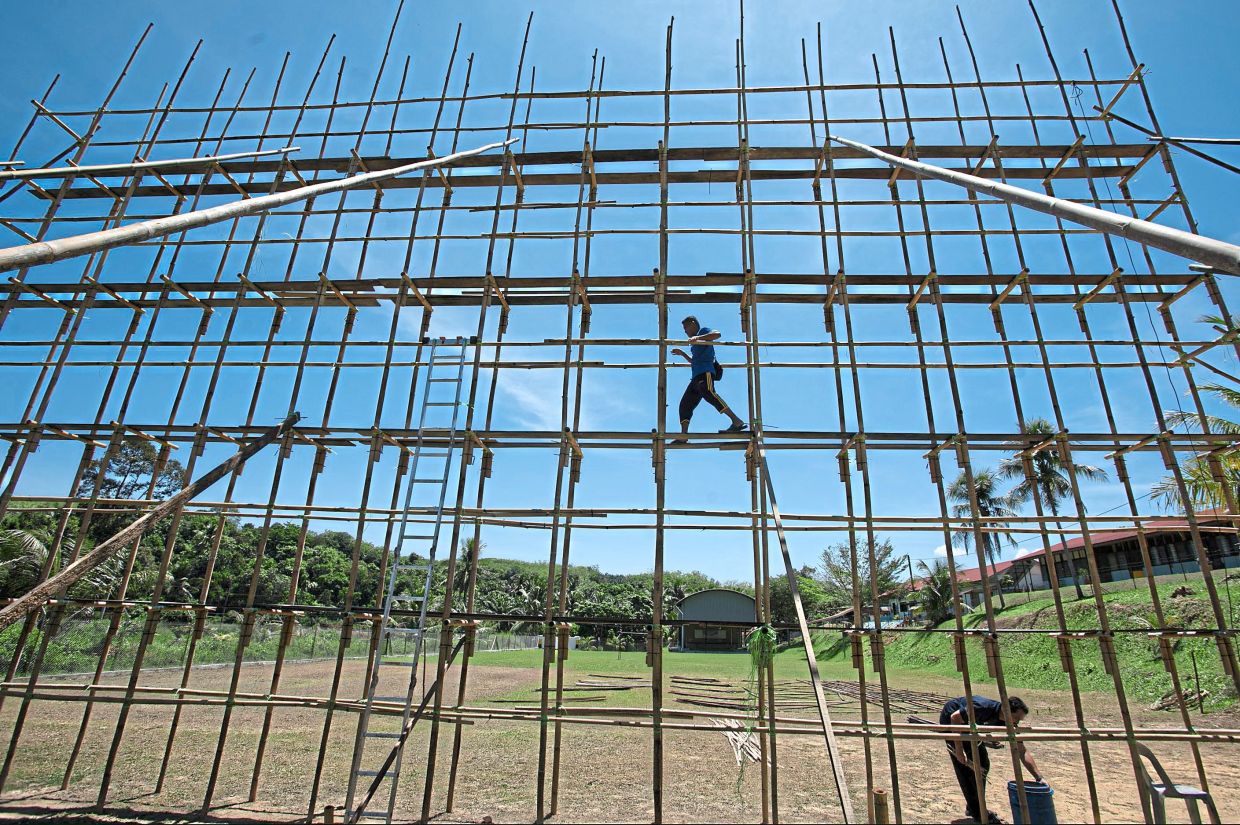
The festival concluded two weeks of nightly construction following terawih prayers in Kampung Ribu, Kuala Kangsar, where the hammering, the scraping of saws, and the laughter of villagers punctuated the quiet of Ramadan nights. In an open field, communities assembled towering panjut structures, regarded as the pride of Kampung Ribu.
Kampung Ribu Panjut Appreciation Association chairman Amiruddin Mohd Lazim said the effort went beyond village decoration.
“Our main objective from the beginning has been to preserve and sustain this heritage so that it does not disappear with time. If no one takes the initiative to organise it, it will eventually fade from history, and future generations may never experience it,” he said.
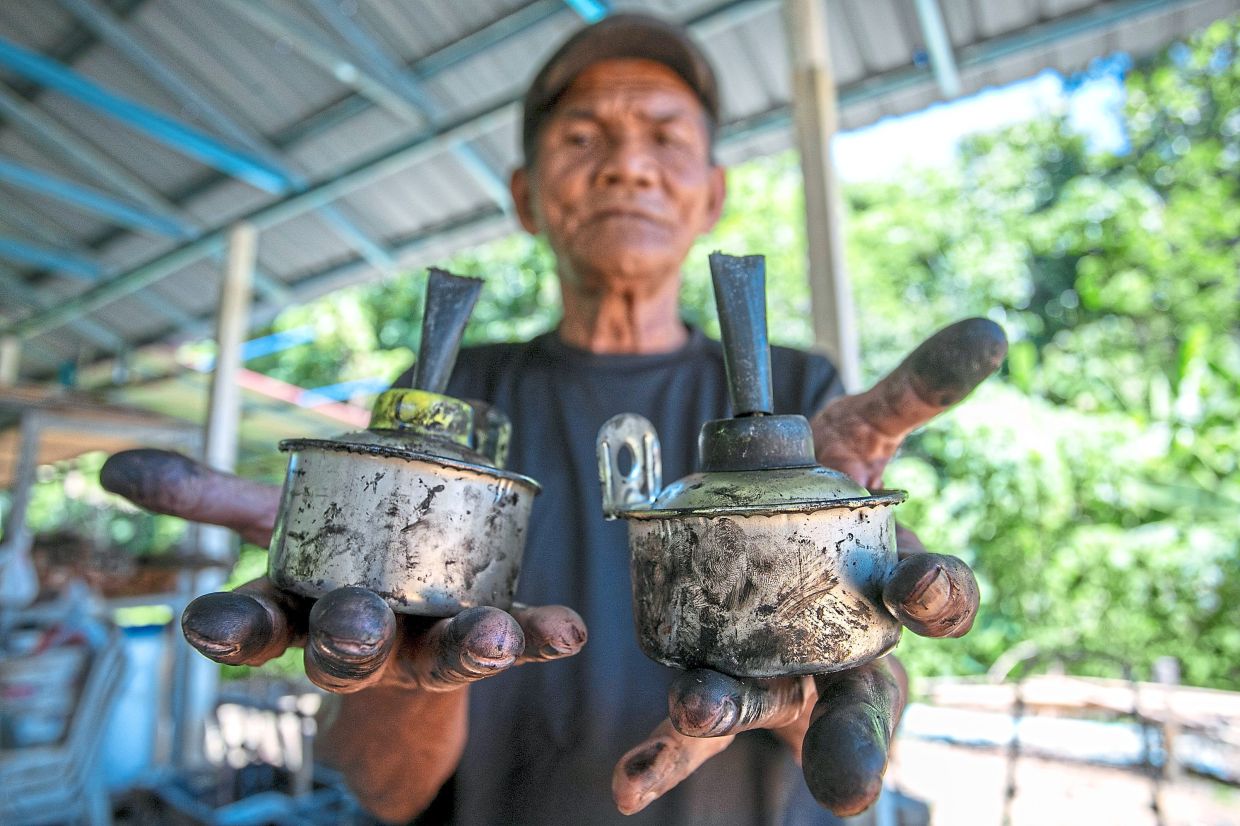
Lighting panjut on the 27th night of Ramadan has been a Kampung Ribu tradition for over a decade. Although the association was officially registered in 2019, community efforts to revive the practice began in 2014.
Today, it counts around 90 members, with nearly 20 core members actively maintaining the tradition each year. Amiruddin’s research into historical records revealed that large-scale panjut installations in Padang Rengas were reported in newspapers as early as 1963 and 1964.
“In those early reports, panjut structures displayed political party logos because the election season coincided with Ramadan and Hari Raya. Over time, the practice evolved into a community tradition that continues today,” he said.
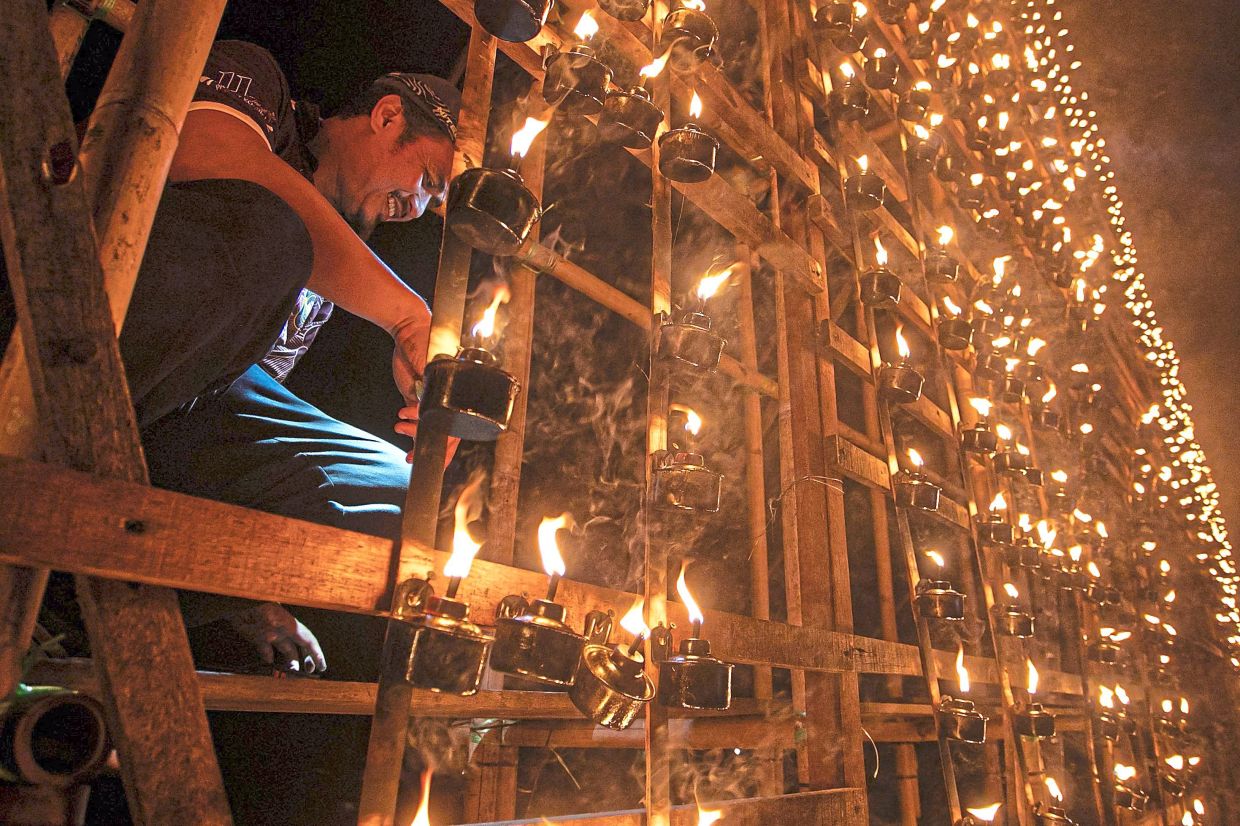
By the early 1990s, the route from Kampung Jamuan to Kuala Kangsar town was illuminated with panjut, but the tradition eventually waned until its revival in 2014–2015 through competitions organised by then Padang Rengas MP Datuk Seri Mohamed Nazri Abdul Aziz.
Kampung Ribu won the competition in 2016 and 2017, motivating the village to continue even after the contests ended.
Despite modern lighting technology, the community has remained faithful to traditional methods.
“Our panjut structures are still built with bamboo, wood, and oil lamps – no LED lights,” said Amiruddin.
Association secretary and project technical head Ahmad Ridzuan Kamaruddin noted that construction begins about two months before Ramadan, with around 130–150 bamboo poles required per structure, sometimes up to 200 for larger designs, sourced from unused village land.
“It usually takes between 14 and 20 days to complete the entire panjut stage before the lamps are lit on the 27th night of Ramadan,” said Ahmad Ridzuan.
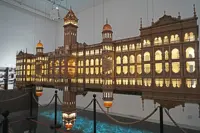
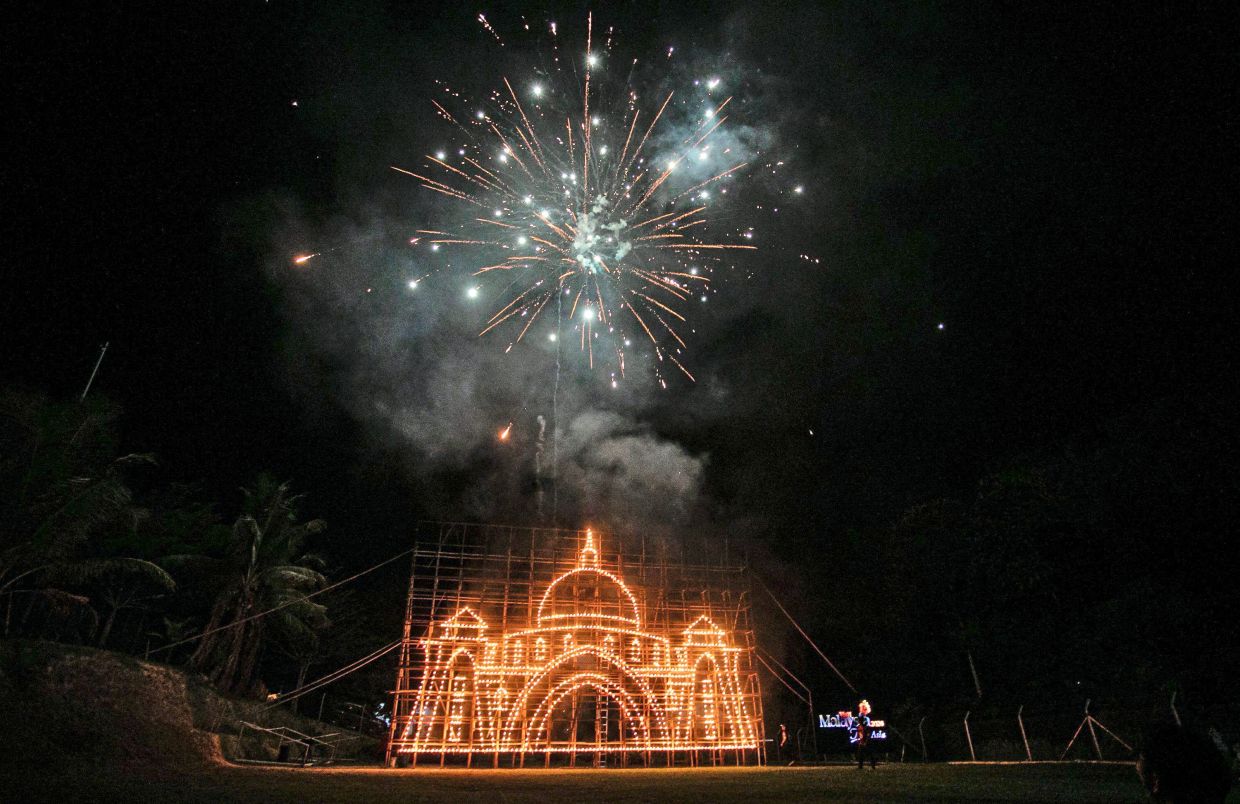
This year, the design recreated the Malacca Straits Mosque structure which reached 9m high and 15m wide, with 1,200–1,400 oil lamps illuminating the site.
The Kampung Ribu panjut has grown beyond a village activity, attracting corporate collaborations and thousands of visitors nationwide.
“The programme also provides opportunities for local youths to earn extra income as transport riders, ferrying visitors from the parking area to the panjut site,” he concluded. – Bernama