
PETALING JAYA: For Malaysians staying indoors to escape the haze and keeping the windows shut may offer some protection from the polluted air outside, but some households are also taking additional measures to keep the air inside their homes clean.
With the haze affecting air quality in several areas, families with young children, the elderly and those with respiratory conditions are becoming more conscious of what they are breathing indoors.
For 30-year-old private-sector worker Afiqah Idris, the haze has aggravated her asthma, requiring her to undergo nebulisation treatment often since it began.
“I usually think that being indoors and keeping the windows closed means I am protected from the haze, but lately I have been wondering whether the air inside is actually clean.
ALSO READ: Experts: Closing windows will not block fine particles
“Even when I am at home, sometimes I feel really stuffy.”
Afiqah said she has been using an air purifier at home and was also more conscious about keeping her air conditioner clean during the haze.
“For me, keeping an air purifier running and making sure there is good ventilation indoors has helped keep the indoor air cleaner during the haze,” she said.
The Health Ministry has advised the public to stay indoors and keep windows closed during the haze.
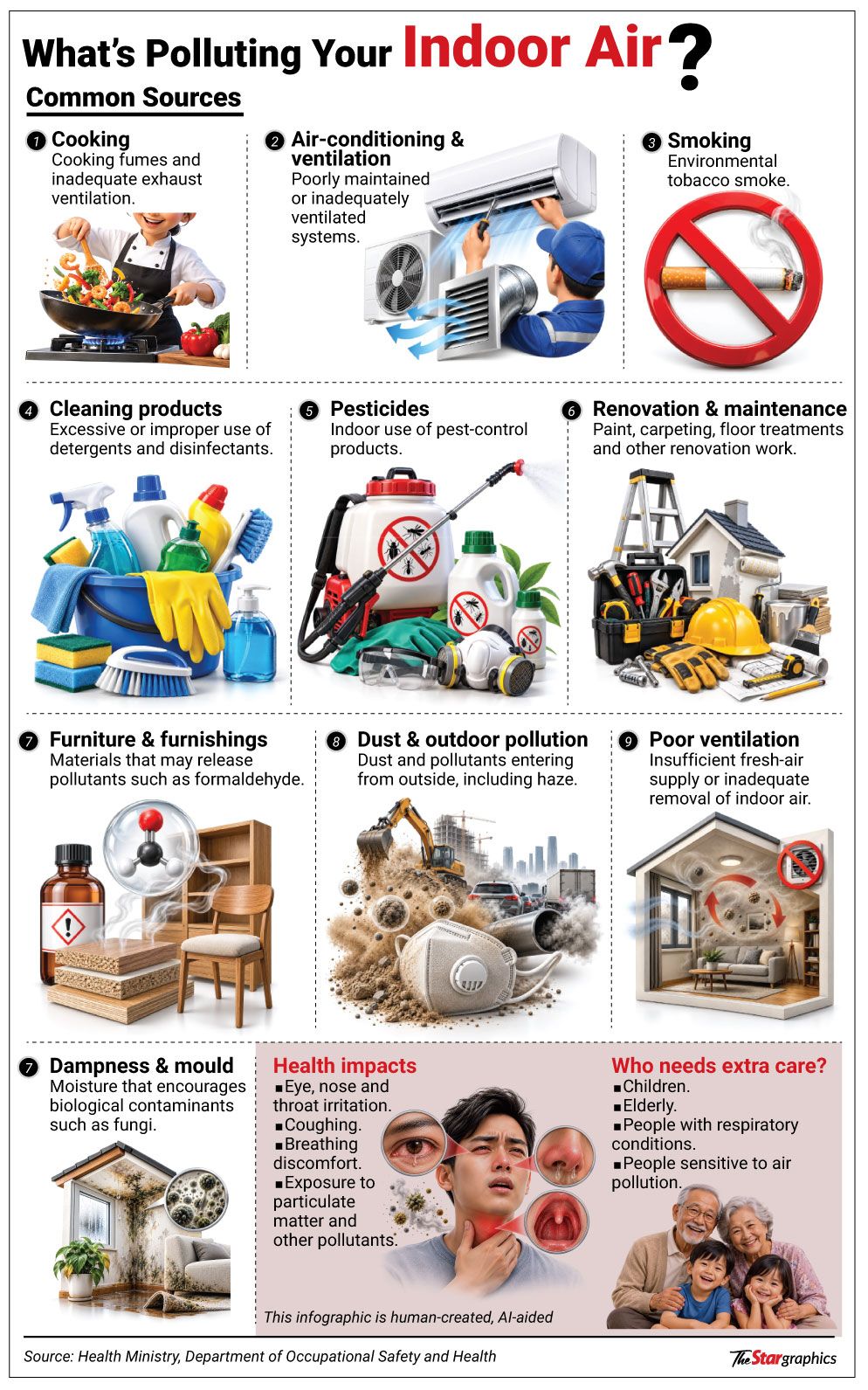
It also recommends reducing sources of indoor air pollution and, where possible, using air-conditioning and high-efficiency air purifiers to help filter fine particles.
The ministry has identified children, the elderly and those with respiratory conditions such as asthma as groups that are more vulnerable to the effects of the haze.
For Iman Shafiq Mohamed, 41, who lives with his elderly mother, the haze has similarly changed the way the family manages its time at home.
Iman has been keeping the windows closed and using an air purifier to reduce his mother’s exposure to the haze.
“I am actually very concerned about my mother’s condition. At times, we can even smell the smoke from the haze inside the house.
“As such, we try not to open the windows when the haze is really bad,” said the data analyst.
He said his family had previously assumed that staying indoors was enough to protect elderly family members.
“But now we are more aware that the air inside the house may not necessarily be completely free from pollutants,” he said.
Meanwhile, Alia Zahra, 36, who has a nine-month-old baby at home, has made protecting her child from the haze a priority.
The family has been keeping the windows closed, limiting outdoor activities and using an air purifier.
“I am very worried about my baby and the quality of the air indoors, especially since my baby has a history of respiratory problems,” she said.
The housewife said she has also become more careful about activities inside the house that could affect air quality.
“Now I think more about what could be in the air indoors too, especially things like cooking smoke, incense or mosquito coils,” she said.