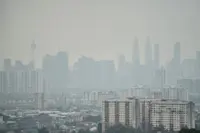
PETALING JAYA: Closing windows may keep haze at bay, but it fails to block microscopic PM2.5 fine particulate matter, public health experts warn.
Measuring 2.5 micrometres or smaller, these fine particles enter homes through structural gaps around doors and windows, while everyday activities like cooking, burning incense and lighting mosquito coils compound indoor pollution.
Universiti Malaya occupational health and public health medicine specialist Prof Dr Victor Hoe noted that while staying indoors reduces outdoor exposure, standard homes are rarely airtight.
“Indoor environments offer protection, but they can quickly become secondary sources of pollution,” Dr Hoe said.
He explained that PM2.5 particles easily pass through cracks, gaps and ventilation points.
“The upper size limit of PM2.5 is 2.5 micrometres, compared to a human hair which is about 70 micrometres. Closing windows reduces airflow, but it does not seal the building.”
Dr Hoe said indoor air is frequently contaminated by cigarette smoke, vaping fumes, cooking emissions, mosquito coils, incense and chemicals from air fresheners or paints.
He warned that conventional split air-conditioners offer no protection against fine particulates.
“Standard household air-conditioners simply cool and recirculate air – their filters catch large dust particles, not PM2.5,” Dr Hoe said, advising households to minimise indoor combustion activities.
Universiti Kebangsaan Malaysia public health medicine specialist Prof Dr Sharifa Ezzat Wan Puteh emphasised that clean air is crucial for vulnerable groups, including children, the elderly and individuals with heart or respiratory conditions.
“Children are at heightened risk because their lungs are developing and they breathe in more air per kilogramme of body weight.”
She noted that PM2.5 triggers coughing, sore throats, rhinitis, breathing difficulties and eye irritation, adding that indoor dust, mould and furniture off-gassing compound the risk.
Dr Sharifa noted that poorly ventilated homes trap volatile organic compounds (VOCs) alongside airborne particulates.
While well-maintained air-conditioners ease heat stress, she recommended units with High-Efficiency Particulate Air (HEPA) filters to capture fine particles effectively.
Public health medicine specialist Datuk Dr Zainal Ariffin Omar said the level of protection from closed windows varied depending on how airtight a home was.
“With closed windows, indoor PM2.5 levels generally hover between 55% and 60% of outdoor concentrations, though this ranges from 30% to 100% depending on home construction.”
For households without an air purifier, Zainal said controlling indoor sources should come first.
“Identify what is polluting the air inside your home and reduce those sources first.”
He advised households to avoid smoking or vaping indoors, minimise activities that produce smoke and use kitchen exhaust systems when cooking.