SINGAPORE: Sweeping changes are being proposed to Singapore’s haze law, to give authorities here more tools to investigate and act against firms linked to fires in the region.
The Bill to amend the Transboundary Haze Pollution Act will also increase financial and commercial penalties for those found guilty, and allow Singapore to take action even before the pollutive smoke reaches its shores.
Speaking on the need for the amendments in Parliament on Wednesday (Nov 4), Minister for Sustainability and the Environment Grace Fu said the haze is not an act of nature but rather a consequence of human action, driven by errant firms’ irresponsible practices in the pursuit of profit.
To avoid losing critical evidence in ongoing investigations, Singapore must quickly strengthen its laws to trace corporate relationships, penalise those responsible, and stop haze pollution before it reaches the Republic, she added.
In order to achieve this, the amendments are being tabled under a certificate of urgency, which is signed by the President, and allows for changes to be debated and voted on in the same sitting, instead of taking days.
Currently, the Act targets those responsible for causing or condoning fires. It can be triggered if the haze causes the Pollutant Standards Index – a measure of air quality in Singapore – to stay in the unhealthy range in any part of the country for 24 hours or more.
Those guilty under the Act can be fined up to S$100,000 a day, capped at a total of S$2 million.
The law has been wielded twice so far – in 2015, during the last major haze crisis to affect Singapore, and again in 2026. But no fines have been meted out so far.
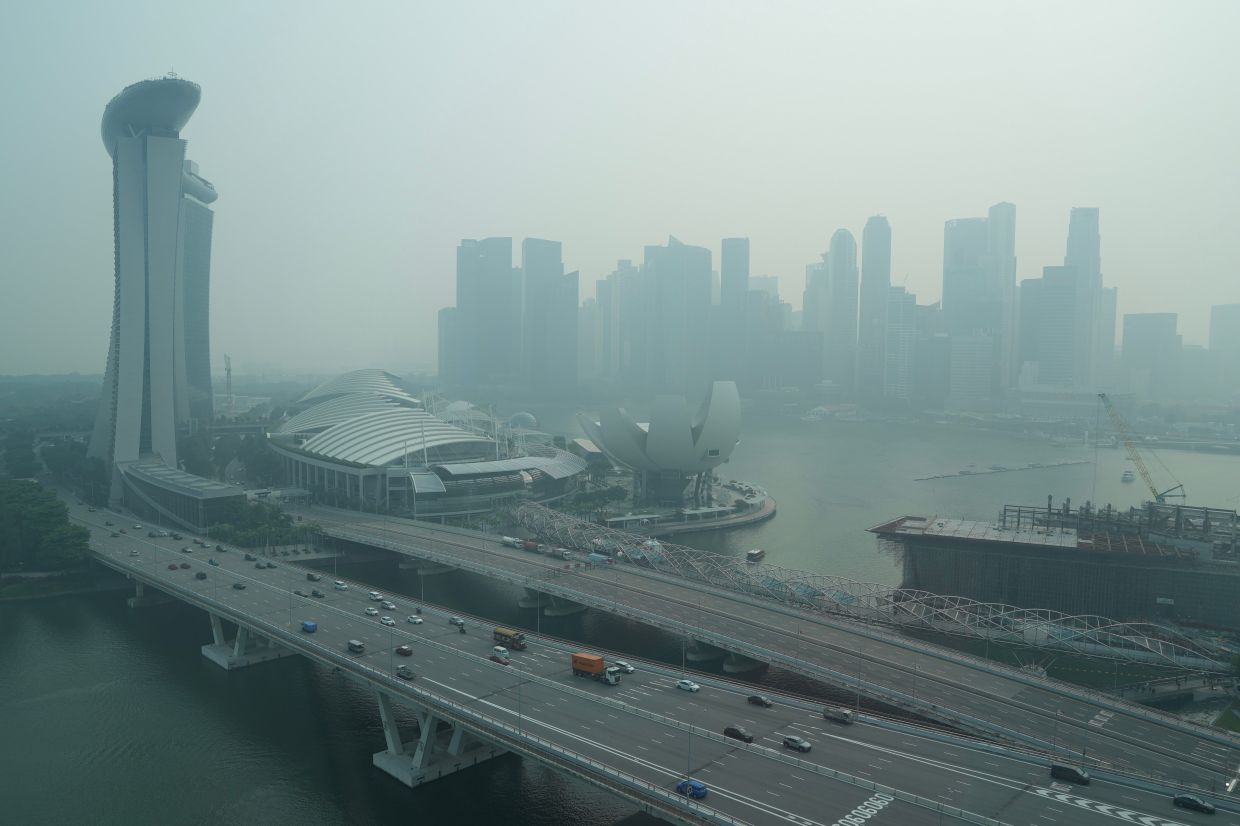
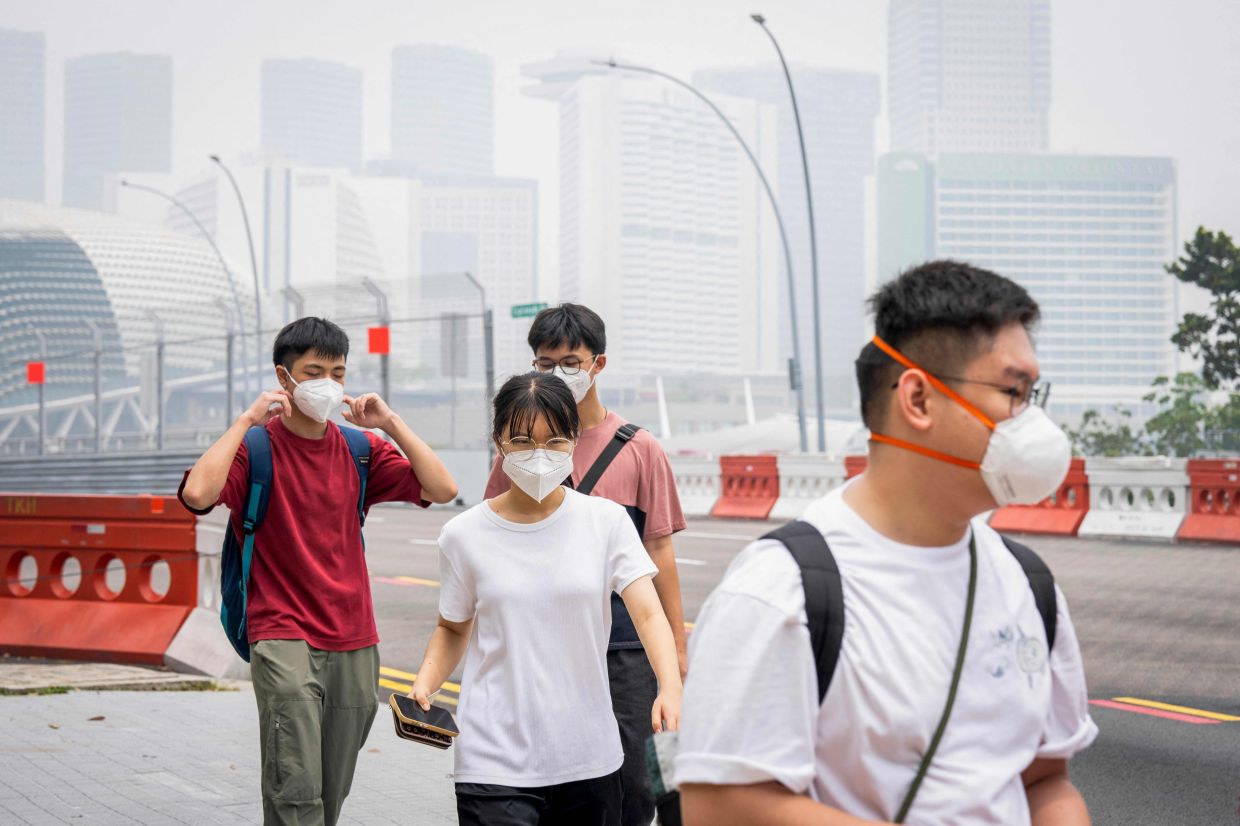
Fu said that following the recent haze episode in Singapore – in which the country experienced stretches of unhealthy air quality from Sept 4 until Oct 26 – many Singaporeans want to see more effective action to prevent haze and hold those responsible accountable.
“The Government shares these concerns,” Fu said.
Establishing liability
One of the key changes proposed is the overhaul of the investigative approach taken to investigate a firm’s links to the haze-belching fires.
Currently, the investigative process hinges mainly on a company’s willingness to provide information to Singapore authorities after they are issued legal notices under the law.
But the proposed amendments will enable Singapore authorities to be more proactive in finding evidence.
To this end, Fu said the Director-General of Environmental Protection will be given the authority to direct firms with suspected links to haze pollution here to appoint assessors from the private sector.
These assessors will be specified by the director-general, and builds on a recent move by the Government to convene a panel of experts to look into 10 Singapore-based firms issued notices under the THPA.
Based on the reports submitted to the National Environment Agency (NEA), the authorities can then decide to exonerate or pursue the firms that had been identified.
Failing to comply with this direction could result in a fine of up to S$20 million if convicted.
The proposed changes to the law will also enable the authorities here to serve legal documents to companies electronically, such as through e-mail. This also includes publishing notices on the NEA’s website, or through the media.
Currently, such documents need to be served physically, making it difficult to initiate formal processes with overseas entities.
While this may not necessarily compel cooperation, Fu said it eliminates longstanding obstacles that have hindered Singapore’s ability to carry out investigations and legal proceedings.
Additionally, the Director-General of Environmental Protection, as well as certain authorised officers, will be able to arrest individuals in Singapore to secure their cooperation if the law permits.
In the event that those accused are not in the country, hearings will still be able to proceed in Singapore’s court.
The proposed changes will also hold companies to a higher bar of responsible corporate behaviour.
The Act now allows firms suspected of causing fires to avoid blame under certain scenarios. For instance, if the fires were solely caused by a natural disaster or an act of war, an individual acting without the firms’ knowledge, or if the firms show they have taken reasonable steps to prevent and fight them, then they can deflect responsibility.
This excuse had been given by firms currently being investigated under the law. First Resources, one of the 10 Singapore firms being looked into, had said fires detected in their Indonesian concessions originated from elsewhere.
But the Bill will tighten these statutory defences.
Fu said firms seeking a defence will now need to prove that the fire was caused by another person acting without their knowledge, and that they have taken reasonable measures to prevent and fight the fire.
Targeting business and financial interests
The penalties for those convicted of causing or contributing to fires that bring unhealthy haze to Singapore have been increased 10-fold under the proposed amendments.
With the changes, the fine will go up from $100,000 to $1 million for every day of haze pollution caused in Singapore, with the maximum amount capped at $20 million.
The Court will also be empowered to assess the profit gained or loss avoided as a result of committing the offence, and to impose this as an additional penalty on the entity convicted.
The revised law, if passed, will also provide the authorities here with additional levers to target a company’s business interests and revenue streams, opening up other punitive pathways apart from prosecution.
In addition, the NEA will be empowered to publicise the names of entities that have not complied with notices or directions under the Act, as well as those that have been told to appoint an external assessor.
Fu said: “This will ensure transparency on the use of these powers, and where wrongdoing or non-compliance has been established, strengthen public accountability.”
The amended THPA will have powers to impose prohibitions or measures on companies or individuals that have been designated by the Minister for Sustainability and the Environment.
An entity can be designated by the minister under a few conditions.
A firm that is convicted or suspected of offences under the THPA can be designated. A designation can also be levied if the entity fails to comply with notices, or is found with an adverse assessment report by external assessors.
Through this designation process, the Government can then issue orders that restrict business dealings with such entities, Fu said. This could come in the form of prohibiting the provision of goods and services to them, including financial services.
Measures relating to the provision of financial services by financial institutions are overseen by the Minister-in-charge of the Monetary Authority of Singapore.
Doing business with designated entities could result in a maximum fine of $1 million for each infraction, with an additional fine of up to $100,000 each day for not cooperating.
However, imposing these restrictions may not be enough, as it may not be practical to identify every entity or component of the supply chain that is involved in irresponsible burning.
Therefore, entities linked to designated companies – including retailers selling the firms’ palm oil or paper products, for instance – can be put on notice to ensure that their business arrangements and supply chains are free of any products or links to potentially offending firms.
If a firm or individual maintains business dealings with errant companies, then they can be fined up to $1 million for each violation, with an additional fine of $100,000 each day the infringement continues.
Acting before air quality dips to unhealthy levels
The proposed amendments will also expand the scope of the Act to include the risk of haze.
This means entities can be held responsible as long as they cause or contribute to overseas fires that potentially result in Singapore experiencing haze, even if the smoke plumes have not drifted here.
Doing so would enable Singapore to take preventive action, she said, adding that the intention is not to police every single fire in the region, but only those that pose a credible risk here.
“These changes will give us the flexibility to act in a wider range of circumstances.
“However, we will continue to be focused in terms of which fires we will look into,” she said.
Acknowledging the practical challenges of tracing overseas activities, Fu noted that investigations may delve into complex corporate structures and business arrangements.
“The changes we are proposing will not guarantee successful prosecutions, nor will legislation alone solve the transboundary haze problem.
“But they will strengthen our ability to act to protect Singaporeans, including by imposing economic consequences on errant entities even where criminal prosecution remains difficult,” she said. - The Straits Times/ANN