WHO: Antimicrobial resistance a leading public health threat
PETALING JAYA: Climate change may have just accelerated one of the world’s fastest-growing threats to global health – antimicrobial resistance (AMR).
Experts say it is time for Malaysia to take the findings of a recent global study seriously, given its tropical climate.

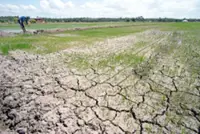
The findings have raised concerns as nations grapple with rising temperatures, more frequent floods and droughts, and growing AMR, which the World Health Organisation has identified as one of the world’s leading public health threats.
Universiti Putra Malaysia’s Faculty of Medicine and Health Sciences medical lecturer Dr Tengku Zetty Maztura Tengku Jamaluddin, who is also Hospital Sultan Abdul Aziz Shah Infection Control Unit head, said climate change does not directly cause AMR, but can contribute to its emergence and spread alongside factors such as antibiotic use, infection control practices and sanitation conditions.
ALSO READ: El Nino can cause rise in disease outbreaks
“There is a growing body of evidence suggesting that climate change may act as a contributing factor in the emergence and spread of antimicrobial resistance,” she said.
She said the study is particularly relevant to Malaysia given its tropical climate, periodic flooding and close interaction between human, animal, food production and environmental systems.
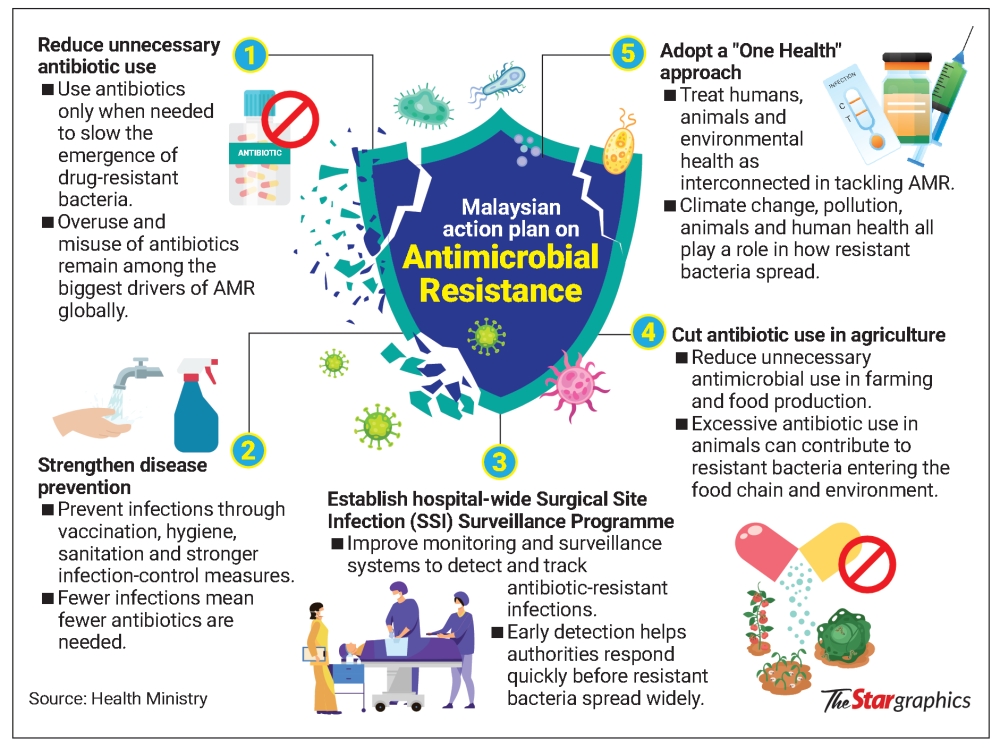
“These factors underscore the importance of adopting a comprehensive One Health approach, recognising that AMR is influenced by interconnected drivers across multiple sectors rather than healthcare alone,” she said.
Dr Tengku Zetty said the findings are significant because antimicrobial-resistant and multidrug-resistant salmonella strains have been detected in Malaysia across human, food, poultry and environmental sources.
Studies have identified resistance to commonly used antibiotics including ampicillin, tetracyclines, sulphonamides and quinolones, while genomic analyses have shown resistance genes circulating across the human-animal-food interface.
Dr Tengku Zetty said the Lancet study does not necessarily require a new policy direction, but reinforces existing efforts under the WHO Global Action Plan and Malaysia’s Action Plan on Antimicrobial Resistance (MyAP-AMR) 2022-2026.
“As climate-related pressures become more pronounced, continued investment in surveillance, environmental monitoring, resilient sanitation systems, antimicrobial stewardship and cross-sectoral collaboration will be important to ensure Malaysia’s AMR response remains adaptive and evidence-based,” she said.
Consultant infectious disease physician Prof Dr Sasheela Sri La Sri Ponnampalavanar of UM Specialist Centre said salmonella is among the most common causes of food poisoning worldwide and can be transmitted through undercooked poultry, contaminated eggs, unpasteurised milk and contaminated meat.
“Critically, it infects not just humans but also poultry, cattle, pigs, reptiles, wild birds and pets.
“It is found in farm animals, wildlife, soil and water, travelling through the food chain from farm to fork.
“Because it lives across so many species and environments, it is much harder to control and much more exposed to the effects of climate change.”
Prof Sasheela said warmer temperatures accelerate the rate at which bacteria shared resistance genes, while floods and droughts can spread resistant bacteria into water supplies and food chains.
“Climate disruption acts as an invisible amplifier of a problem we are already struggling to control,” she said.
Universiti Malaya senior lecturer Dr Muhamad Afiq Aziz said climate disruption and extreme weather allowed resistant bacteria to spread rapidly.
“Warmer temperatures accelerate bacterial growth and the transfer of resistance genes between microorganisms.”
He said storms and floods contaminate water sources and disrupt sanitation, while droughts favour the survival of tougher, resistant strains.
These environmental shifts, he said, turn rivers, soil and wildlife into pathways for resistance to move between nature, animals and humans.