
PETALING JAYA: While Malaysia’s anti-littering push is shifting public awareness, environmental groups warn that a more standardised framework and tighter enforcement are critical to tackling the problem.
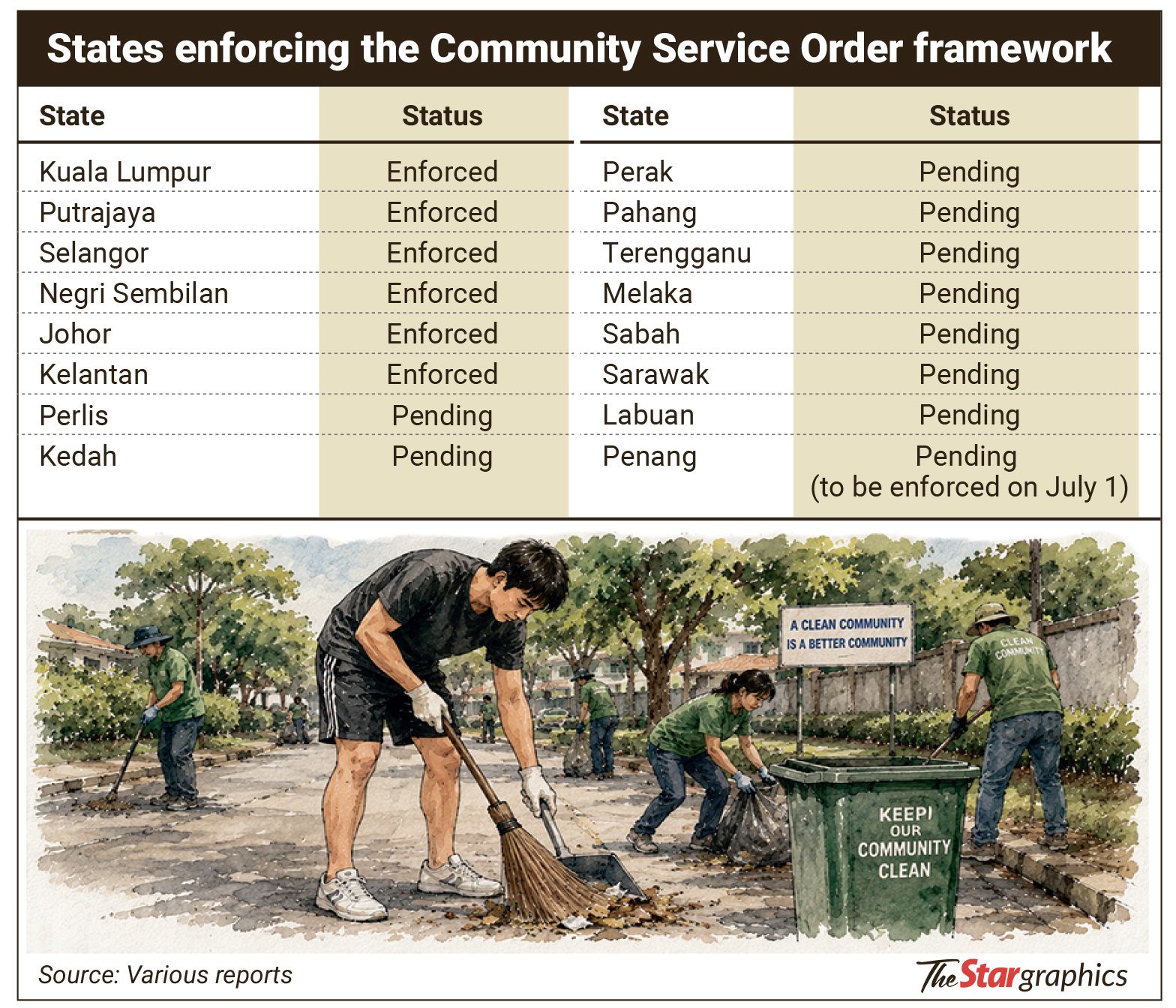
The Community Service Order (CSO) framework, enforced under Solid Waste and Public Cleansing Management Act 2007 across six states since Jan 1, forces offenders to clean public spaces rather than just pay a fine.
The crackdown has already netted nearly 8,000 litterbugs nationwide, with 158 sentenced to community service. While lauding the initiative, Pertubuhan Pelindung Khazanah Alam Malaysia (Peka) president Rajesh Nagarajan called for a more uniform approach to ensure consistency in enforcement and penalties across all states.
However, he added that there should also be flexibility for local councils to implement it according to local needs.
On the CSO initiative, Rajesh said that though it had changed public discourse, “it was still too early to say Malaysia has achieved a dramatic shift”, adding that six months was not enough to reverse decades of normalised behaviour.
“What has changed is the conversation. Littering is no longer seen as something that can simply be settled with a fine. There is now a stronger sense of public accountability.
“A fine punishes, but a CSO educates,” he said, adding that offenders must confront the consequences of their actions, like clogged drains and the burden on municipal workers.
Despite this, Rajesh warned of an enforcement gap, as only a fraction of those caught have actually performed community service.
“If thousands are caught but only a small number face community service, people may assume the risk of real punishment is low,” he said, stressing that consistency and visibility are key to deterrence.
Greenpeace Malaysia also welcomed the stricter enforcement but argued that long-term success hinges on broader systemic reforms.
Its spokesperson Heng Kiah Chun said enforcement must be paired with education, better waste management and corporate accountability.
“Lasting change will not come from enforcement alone. Businesses and corporations must also take responsibility for reducing waste at its source, especially plastic pollution,” Heng said.
“Keeping Malaysia clean should be a shared responsibility between government, industry and the public.”