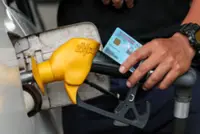
PETALING JAYA: Speed up the issuance of subsidised fuel fleet cards to eligible school bus operators, urges the Federation of Malaysian School Bus Associations, following delays that have persisted since January.
Its president Amali Munif Rahmat claimed that many members who are operating petrol-run school vans and qualify for the Subsidised Petrol Control Scheme have yet to receive their fleet cards despite applying months ago.
“Their applications have been approved but the cards have not been issued.
“Some have been waiting for nearly three months,” he said in an interview yesterday.
Owing to the delay, Amali said those affected are forced to rely on their Budi95 subsidy quota of 200 litres a month and buy petrol at market rates once it is exhausted.
“If the delay continues until May, some operators may have no choice but to increase charges to cover costs.”
Amali noted that rising operations costs are adding to the financial strain already felt by operators.
He added that the issue was further compounded by about 1,000 operators who are ineligible for the fuel subsidy, as their vehicles are operating on petrol and natural gas (NGV).
“These operators are now in the process of removing their NGV systems and re-registering their vehicles before they can apply again,” Amali said, noting that the conversion process takes time and adds to costs.
On fare increases, Amali stressed that the association does not set fare prices because it contravenes competition laws.
“We can only advise, and each operator will decide based on their cost structure,” he said.
There are about 2,000 such school bus operators nationwide, with the highest numbers in Penang, Johor and the Klang Valley.
Recently, school bus operators had also raised concerns over their 200-litre monthly subsidised RON95 quota, saying it fell short of actual usage of up to 800 litres due to multiple daily trips.
Amali warned the shortfall was forcing operators to absorb higher fuel costs, with some considering fare hikes to stay afloat.
On Saturday, the Domestic Trade and Cost of Living Ministry said eligible operators could apply for subsidised fuel via the fleet card system.
Meanwhile, Amali said there is a growing reliance on unregistered private vehicles to ferry students.
He said this is because the number of school buses had declined from over 16,000 in 2010 to about 14,000 as of 2025, partly due to the Covid-19 pandemic.
“This gap has been filled by private vehicles,” Amali said, estimating that there are about 100,000 such vehicles nationwide.
Many of them operate outside the regulatory framework, with some charging as much as RM400 per student, he added.
He called on the government to introduce a “whitening” programme to formalise these operators.
Amali said such a move would improve oversight and safety and help stabilise the industry while rejuvenating the ageing school bus fleet, many of which are more than 20 years old.