
THE digital world does not end where the law begins.
While the Online Safety Act (ONSA) 2025 has introduced a robust framework for digital governance, the real work of protecting children, particularly those under 16, happens in our living rooms and classrooms.
As we move past the era of viewing online safety solely through the lens of enforcement, a new narrative is emerging – one of collective responsibility.
It is a realisation that while a law can penalise a platform, it cannot sit beside a child after hours as they navigate the complexities of social media and the digital world.
Parent dilemma
For the modern parent, the home has transformed into a dual environment – physical and digital.
While ONSA provides the guardrails, parents remain the primary navigators in a landscape that has changed drastically in just one generation.
Now, managing a child’s digital exposure is no longer about mere screen time limits, but about active contextual monitoring.
This leaves parents in a delicate balancing act to provide their children with the advanced “toys” of today, while mitigating the harmful risks of digital exposure.
For many, the memory of simpler technology serves as a stark contrast to the high-stakes online environment today.
“A decade or two ago, having a phone used to be just about SMSes and who had the coolest caller ringtones,” said 40-year-old Muhammad Azim from Puchong, reflecting on the evolution of mobile technology.
“But now, it has evolved into so much more. Children literally have the entire online world at their fingertips – which is both a good and bad thing.”
Azim, a father of two teenagers aged 15 and 13, added that this duality often leaves parents in a state of constant hyper-vigilance.
Before the implementation of ONSA, many parents like him felt they were in a losing battle against the unpredictable algorithms and a lack of accountability.
“We used to live in fear, not knowing what our children were being exposed to online. They could be watching harmless cartoons or educational YouTube videos, and a minute later, something inappropriate or harmful comes up.
“It was like the Wild West. You could never predict what would pop up as they scroll through social media, even with parental controls and safety filters,” he said.
However, the tide is turning as the Act has now shifted the burden of proof from the victim to the provider.
“Now, at least, we know that when a complaint is made or harmful content is flagged, the platforms will be held accountable and the government will be more proactive in safeguarding our children. It won’t be another ‘dead-end’ complaint,” said Azim.
“That being said, we still have to educate our children about digital literacy at home, now more so than ever, to prepare them for the realities of the online world when they come of age.
This conversation has also reignited broader discussions around age-appropriate access to social media.
As Malaysia moves towards stricter safeguards for younger users, there is growing recognition that certain online spaces may simply not be suitable for children under 16.
Rather than being viewed as a blanket ban, these measures reflect an evolving understanding that maturity, judgement and emotional resilience develop over time, and that digital exposure should be aligned with a child’s stage of development.
“I think this is a better way of educating them, rather than just expecting them to figure it out themselves,” said Azim.
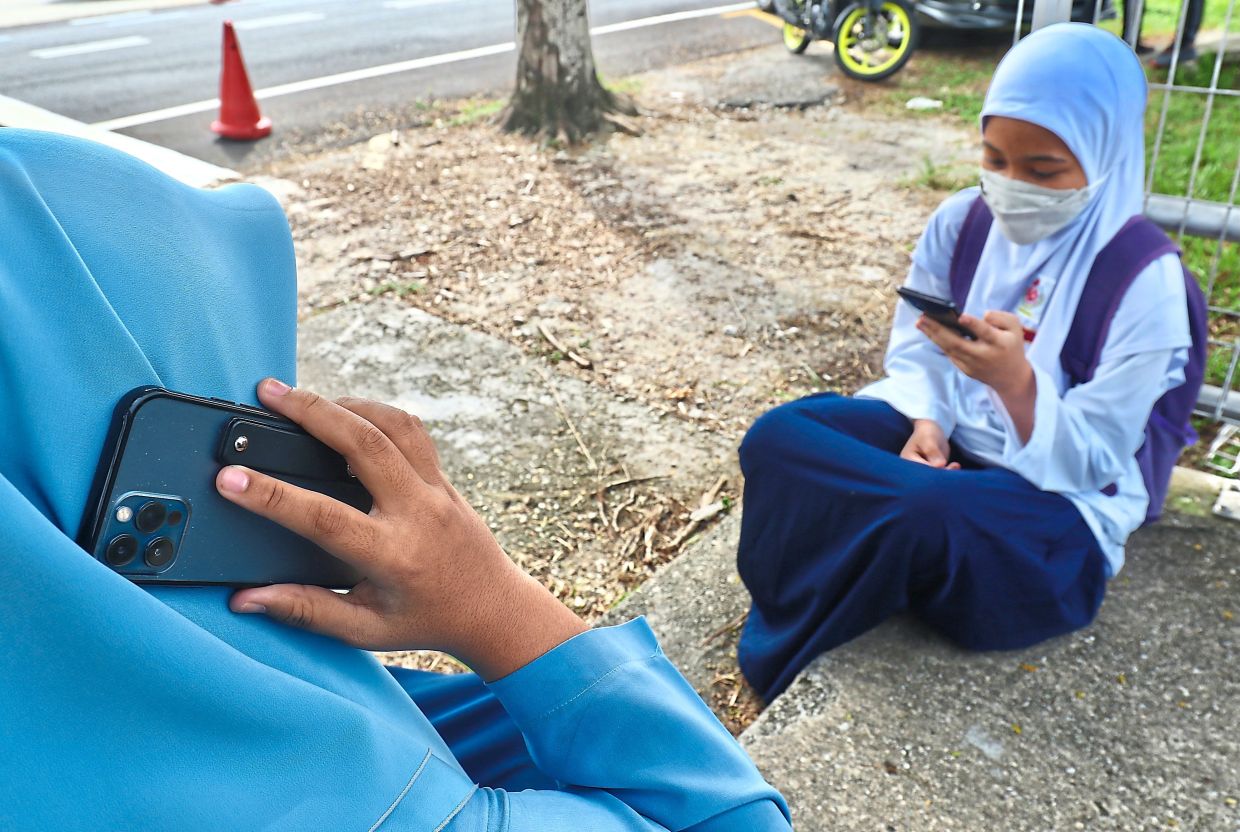
Schools play a role, too
If home is the frontline, school is the training ground where children are nurtured on digital best practices.
For educators like Ngo Yew Yung, a primary school teacher from Shah Alam, the digital world is not a distant concern, but an ever-present guest in his classroom.
He observes that the internet creates a feedback loop where digital trends disrupt physical learning.
“Digital safety issues like cyberbullying and inappropriate content affect the classroom environment almost daily,” he explains.
“Students often imitate inappropriate content by sharing it with their friends or engaging in cyberbullying, where they insult each other online and then bring those conflicts to school.”
Beyond managing distractions, Ngo believes schools must foster “digital agency”.
“In my experience, cultivating a sense of personal digital agency is far more effective than relying solely on strict filters and rules,” he said.
“Students today are more aware of their thoughts and emotions, so it is important to guide them in developing sound judgement.
“We (teachers) need to serve as guides, while students take ownership of their decisions and learn to navigate the digital world responsibly.”
Beyond compliance
While parents and teachers manage the human element, the responsibility for shaping a safer online environment also lies with the platforms themselves.
With stronger safeguards now in place, the focus is shifting from just removing harmful content to preventing it from appearing in the first place.
This places greater emphasis on safer algorithms, stronger moderation and faster response systems when users report issues.
Platforms today must be more than passive hosts of content and instead act as active architects of the digital experience, where every recommendation, suggested post or autoplay feature has the potential to significantly influence what users – especially children – are exposed to.
As accountability increases, so too does the need for platforms to prioritise user safety by design, ensuring that engagement does not come at the expense of well-being.
At the same time, the government’s role, through the Malaysian Communications and Multimedia Commission (MCMC), is moving beyond enforcement.
Alongside regulatory measures, there is a growing push to strengthen digital literacy through awareness initiatives and educational programmes.
These ongoing efforts aim to equip Malaysians, young and old, with the knowledge to recognise online risks, safeguard personal information and respond appropriately when issues arise.
Shared responsibility
Ultimately, online safety should not rest on any single party as it is a shared responsibility across homes, schools, platforms and institutions.
While stronger policies and safer systems provide a foundation, everyday habits remain just as important. These include:
> Being mindful of privacy: Avoid oversharing personal information and regularly review privacy settings on apps and platforms;
> Recognising potential risks: Be cautious of unfamiliar links, suspicious messages or content that seems inappropriate or harmful;
> Using reporting tools: Flag harmful content or behaviour on platforms to create a safer online environment for everyone; and
> Encouraging open communication: Parents and teachers should create safe spaces for children to speak up about their online experiences.
In essence, ensuring safety will require a collective effort. Parents must guide and communicate, educators must instil digital awareness and users themselves must learn to navigate the online space responsibly.
For more information, visit mcmc.gov.my.