
PETALING JAYA: A shortage of seafarers is deepening Malaysia’s reliance on foreign maritime labour, raising concerns about workforce development and the sustainability of national shipping interests.
Industry players say the shortage, driven by both global and domestic factors, is straining operations and threatening the long-term resilience of the country’s maritime ecosystem.
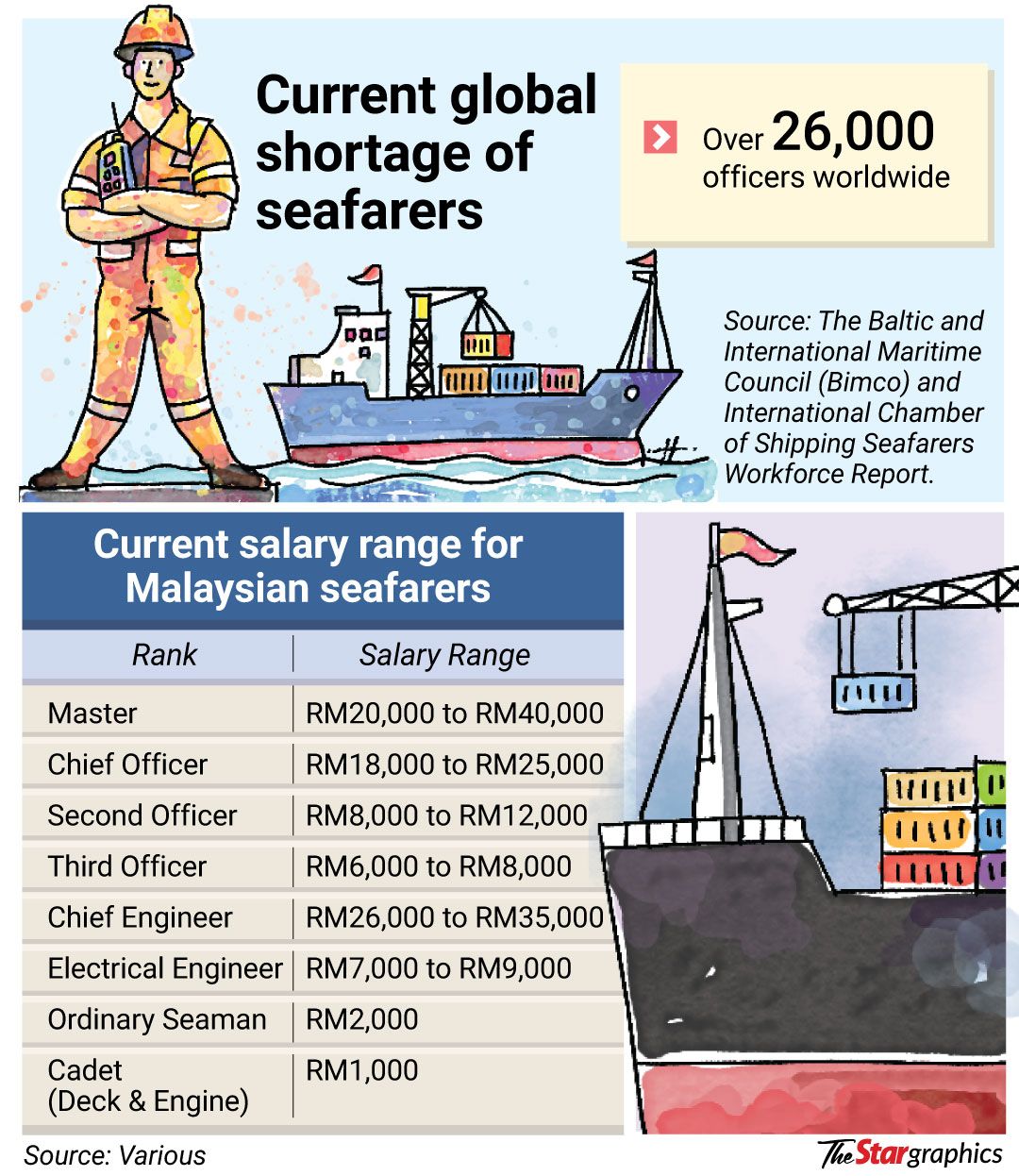
Marine manager of the Seafarer Management Centre, Capt Solahuddin Noor, said the issue mirrors a wider global trend.
He cited the Baltic and International Maritime Council (Bimco) and International Chamber of Shipping Seafarer Workforce Report, which estimated a shortfall of more than 26,000 officers worldwide.
ALSO READ: ‘Many jump ship for better wages’
“At the national level, Malaysian seafarers are less cost-competitive than those from Indonesia, the Philippines and India, making it harder for them to secure placements in the global fleet,” he said when contacted yesterday.
Solahuddin also noted that maritime careers are losing appeal among the younger people, citing long periods at sea, isolation and work-life balance concerns.
“Many prefer offshore roles within Malaysia, where locations are closer to home and contracts are shorter,” he said.
The shortage is already being felt across the industry, with existing seafarers facing heavier workloads, extended hours and fatigue, raising safety concerns.
“This shortage creates a dependence on foreign seafarers, even for vessels operating in local waters.
“This has direct implications for workforce development and national maritime interests,” he added.
Shipping companies are struggling to source qualified officers, potentially affecting efficiency, scheduling and compliance with international standards.
“This could lead to operational delays and increased costs for businesses that rely on maritime transport,” he warned, adding that Malaysia’s position in the global maritime ecosystem could weaken if the issue is not addressed.
To tackle the problem, Solahuddin called for stronger policy support, including improved wages, crew welfare and structured training pathways.
He stressed the importance of developing local talent by encouraging existing seafarers to advance into officer roles through internationally aligned training programmes.
“There is also a need to improve awareness and perception of maritime careers by highlighting career growth, income potential and global exposure,” he said.
Among ongoing initiatives, Solahuddin pointed to the digital platform MarineCareerHub, designed to connect shipowners with local maritime talent and improve job matching.
At the policy level, he suggested introducing incentives for shipowners to train local cadets, alongside stronger collaboration between the government, training institutions and industry stakeholders.
“The shortage is not just about numbers. It is about building a sustainable pipeline.
“We must ensure Malaysia’s talent receives proper training, placement, welfare and retention within the industry,” he said.
OMT Synergy CEO Muhammad Haris warned that the scarcity of experienced officers is particularly concerning, as it threatens the talent pipeline needed to sustain the maritime sector.
“When there are not enough senior officers, the entire maritime ecosystem suffers. These officers are future superintendents, marine managers, trainers and regulators,” he said.
Haris cautioned that over-reliance on junior officers will weaken the sector and increase dependence on expatriate workers.
He urged policymakers and industry stakeholders to collaborate in setting new standards to attract more Malaysians into seafaring careers.
He urged all the relevant associations and policymakers to sit together to establish guidelines to encourage local seafarers to join and stay in the industry.