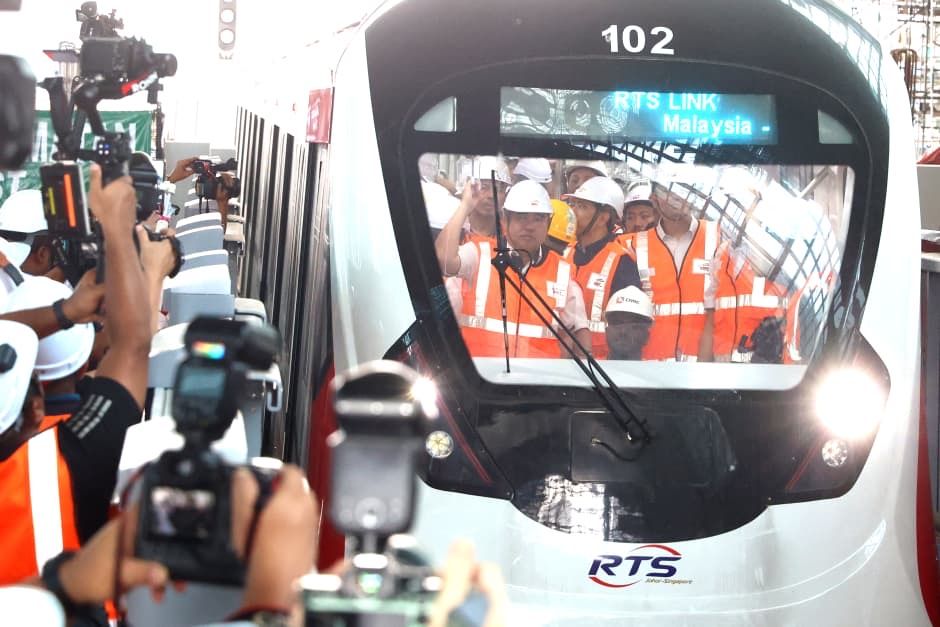
JOHOR BARU: The global geopolitical situation and conflict in the Middle East have a minimal impact on the progress of the ongoing Rapid Transit System Link (RTS Link) project connecting Johor Baru and Singapore by rail.
Transport Minister Anthony Loke said physical work for the Bukit Chagar station and immigration, customs and quarantine complex (ICQ) is nearly complete.
“The systems are being installed in phases so it does not involve much fuel costs at this point.
“The present situation will not affect the project’s progress. The contractor has not highlighted any issues or requests related to the cost of the project either.
“I am confident the project costs are still under control according to the original costing,” he said during a media briefing at the project site here on Friday (April 3).
Loke added that the installation of e-gates at the ICQ building is complete, while installation of body scanners and baggage scanners has begun, more than two months ahead of the original May 2026 target.
“Once completed, the hall will be equipped with 10 security screening lanes, 18 baggage scanners and 100 e-gate lanes, including dedicated lanes for passengers without baggage,” he said.
Loke said the next phase of the project includes system installation, acceptance testing, integration and dynamic testing, all of which will lead to the final field readiness (FFR) stage.
“The FFR is expected to begin as early as September, paving the way for the project’s targeted opening by the end of this year,” added Loke.
The RTS Link is a railway shuttle link approximately 4km in length with two stations, one in Bukit Chagar, Johor Bahru, Malaysia and one in Woodlands, Singapore.
The link will have a capacity of 10,000 passengers per hour, per direction and an expected ridership of about 40,000 passengers per day upon opening on Jan 1, 2027.