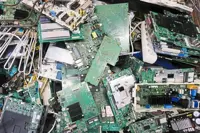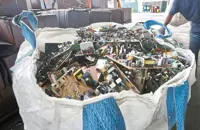
PETALING JAYA: Improper disposal habits, limited access to collection facilities in underserved areas and weak enforcement are among the key challenges in tackling Malaysia’s growing electronic waste (e-waste) problem, say environmental watchdogs.
Sahabat Alam Malaysia honorary secretary Mageswari Sangaralingam said despite being aware of proper disposal facilities, many households still discard e-waste as general waste which ends up in landfills.
She said some were disposed of at informal scrapyards, which eventually leads to toxic leakage.
Rural areas have fewer designated disposal centres, making urban hubs the most common disposal points, she added.
“People often dispose of e-waste indiscriminately because they are unaware of the health and environmental risks of e-waste, such as heavy metal contamination.
“Some lack knowledge about where official drop-off or e-waste collection points are located. Accessibility could also be an issue, as informal disposal is often more convenient, easier, and cheaper since people do not have to travel far to reach drop-off points, particularly for larger e-waste items.
“These factors result in large amounts of e-waste ending up in landfills or illegal dumps instead of certified recovery facilities,” she added.
In comparing Malaysia’s situation with that of Japan and Europe, she noted that Japan’s Home Appliance Recycling Law of 2001 requires retailers to collect appliances such as air conditioners, televisions, refrigerators, and washing machines.
“Consumers pay collection, transport and recycling fees, while retailers and manufacturers are obligated to recycle at certified facilities, which ensures high recovery rates,” she said.
Similarly, the European Union’s Waste Electrical and Electronic Equipment (WEEE) directive introduces Extended Producer Responsibility (EPR), making electronics producers financially and operationally responsible for the entire lifecycle of their products.
“However, the European Commission’s 2025 evaluation found that only a few member states meet the 65% collection target, and EPR systems differ widely between countries, limiting effectiveness,” she added.
She advised consumers to check whether retailers will take back old products when purchasing new electronics and to never discard e-waste with general rubbish.
Waste watchdog group Basel Action Network (BAN) researcher Wong Pui Yi said illegal e-waste recyclers often dump residues in oil palm plantations and villages.
“Some might discard e-waste in illegal dumpsites. It is difficult to estimate how much.
“Households are either keeping e-waste like old phones and laptops in their drawers or tossing it with general waste destined for landfills, especially small e-waste like children’s toys, wires and e-cigarettes,” she added.
Wong said developed countries have better collection for e-waste.
“What’s unacceptable is that the collectors and brokers in the rich countries are sending e-waste to be recycled or discarded in developing countries in Asia and Africa, despite knowing that many countries like Malaysia and Thailand have banned the importation of e-waste,” she said.