Publish attendance records, says watchdog
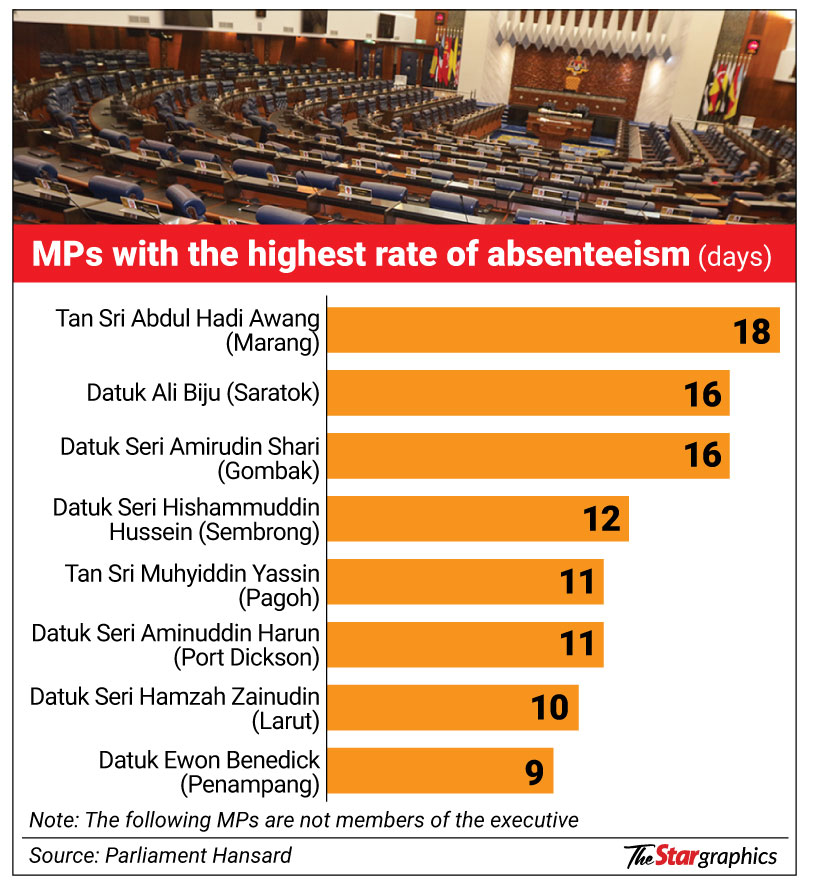
PETALING JAYA: Tan Sri Abdul Hadi Awang is the MP who has been absent the most during the recently concluded 20-day meeting of the Dewan Rakyat.
The Marang MP only attended two of the 20 sittings, according to the Hansard.
At the same time, over 90 MPs had perfect attendance during the meeting which ended on Tuesday.
Absenteeism was also recorded among members of the executive including the Prime Minister and his deputies. However, this is common as they have other official duties.
MPs who are not members of the executive but still recorded a poor rate of attendance were Gombak MP and Selangor Mentri Besar Datuk Seri Amirudin Shari (16 days), Saratok MP Datuk Ali Biju (16 days), Sembrong MP Datuk Seri Hishammuddin Hussein (12 days), Pagoh MP Tan Sri Muhyiddin Yassin (11 days), Port Dickson MP Datuk Seri Aminuddin Harun (11 days) and Larut MP Datuk Seri Hamzah Zainudin (10 days).
On March 2, when the constitutional amendment Bill to limit the term of the Prime Minister was tabled, eight MPs were absent.
They were Abdul Hadi, Hishammuddin, Muhyiddin, Ali Biju, Datuk Seri M. Saravanan (Tapah), Datuk Henry Sum Agong (Lawas), Riduan Rubin (Tenom) and Fathul Huzir Ayob (Gerik).
During the voting, a total of 32 MPs were absent.
Transparency International Malaysia (TI-M) called for practical and rule-based reforms to strengthen attendance in Parliament, especially after the Constitution (Amendment) Bill 2026 to cap the Prime Minister’s tenure to 10 years did not get the required two-thirds majority. It fell short by two votes.
TI-M president, Raymon Ram, said the reforms were necessary to enhance transparency and deter misconduct, strengthen democratic oversight and restore public confidence.
“Regardless of political affiliation, absence without clear justification during a critical vote erodes democratic accountability, undermines institutional reform, and weakens public confidence,” he said.
He proposed that attendance and leave records be published daily during parliamentary sittings, and made publicly accessible.
“TI-M also urges Parliament to formally recognise certain categories of votes as requiring heightened attendance. These include constitutional amendments, Supply and Budget votes, motions of confidence or no confidence and structural governance reforms.
“For such votes, written reasons for any absence should be filed and made publicly available,” he said in a statement yesterday.
He said unjustified absenteeism should require public explanations. Offenders should be referred to the Committee of Privileges or face structured financial deductions.
Raymon further called for Article 52(1) of the Federal Constitution, which allows for an MP to be disqualified due to absenteeism, to be applied consistently in cases of chronic absence.
Parliament, he said, should treat the provision as a constitutional safeguard rather than a symbolic measure.
He said parliamentary absenteeism during pivotal national votes cannot be normalised.
“TI-M calls on Parliament to strengthen attendance transparency mechanisms and for all MPs to show seriousness in upholding democratic responsibility.
“Malaysia’s democratic integrity depends not only on the laws we pass, but on the commitment of those entrusted to pass them,” he said.