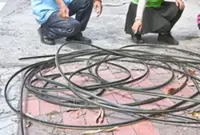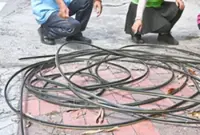
KUALA LUMPUR: The growing sophistication of cable theft affecting the MRT network and the danger it poses should be treated as a serious public safety issue rather than a minor property crime, says Tan Sri Lee Lam Thye.
The Alliance for a Safe Community chairman said any interference with rail signalling, power supply or control systems poses risks far beyond service inconvenience as it endangers passengers, frontline workers and the wider public.
ALSO READ: Putrajaya MRT disruptions found to be due to cable theft
"We welcome Prasarana Malaysia Berhad’s decision to speak openly and consistently about the problem, stressing that transparency is a responsible act by a government-linked entity entrusted with critical infrastructure.
"Raising public awareness is not a sign of weakness. It helps Malaysians understand that every disruption, repair and delay ultimately draws on public funds and affects national productivity," he said when contacted on Monday (Feb 2).
Lee said cable theft in the rail sector should no longer be viewed as petty theft, noting that the removal of copper and signalling components often requires technical knowledge and amounts to tampering with critical systems.
ALSO READ: Prasarana achieves 56% drop in rail disruptions in 2025
"In many jurisdictions, such acts are treated as offences against public safety and national infrastructure, with penalties reflecting the gravity of the risk created," he added.
He cautioned that enforcement efforts focused only on individuals caught stealing cables, with many of them being repeat offenders; and as such, the broader problem could be overlooked.
"Experience across sectors such as power, rail and telecommunications shows that arresting thieves alone rarely provides lasting deterrence, as stolen materials could still be absorbed quickly into legitimate-seeming channels," he added.
To address this, Lee urged the government to consider targeted amendments to existing laws, including reclassifying cable theft involving rail, power or communications systems as a public safety offence; enhancing action against those who knowingly deal in stolen infrastructure materials; and introducing stronger licensing, audit and compliance requirements for high-risk recycling sectors.
"These measures would better reflect the reality that cable theft is a systemic crime affecting national development, not an isolated nuisance," he said.
ALSO READ: Cashing in on illegal copper trade
Lee also called for the authorities to study international best practices, including asset-identification and traceability technologies that allow recovered materials to be linked to their rightful owners even after attempts to remove identifying features.
He noted that the Transport Ministry had indicated discussions with enforcement agencies and gave a commitment to step up action, adding that this should translate into sustained, visible efforts across agencies.
"At the same time, operators like Prasarana should be supported, not criticised, for taking proactive steps to protect passengers and assets.
"Malaysia’s progress depends on the integrity and resilience of its critical infrastructure.
"Addressing cable theft decisively is not merely about preventing losses, it is about protecting lives, safeguarding public confidence and upholding good governance," Lee said.