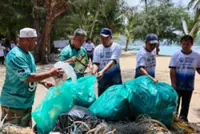
PUTRAJAYA: All visitors to marine parks in the country will be required to take all their rubbish back to the mainland for disposal starting from Jan 1, 2026.
The Agriculture and Food Security Ministry said this constitutes part of efforts to curb pollution, especially plastic waste, which has been identified as the greatest threat to marine ecosystems.
It added that the decision was made at the National Advisory Council of Marine Parks and Marine Reserves meeting on Monday (Nov 17).
"This directive is also supported by representatives from the state governments of Kedah, Pahang, Johor, Terengganu, Melaka and the Federal Territory of Labuan, as well as non-governmental organisations actively involved in marine conservation.
"This new requirement underscores the nation's commitment to ensuring that marine protected areas remain clean, healthy and sustainable," it said in a statement on Tuesday (Nov 18).
The ministry said plastic pollution has caused coral reef damage, marine life deaths and increased microplastic levels, which ultimately affect human health and the country's food security.
The ministry also urged boat operators, dive centres, tour guides, local communities and the tourism industry to support the "Take Your Rubbish Home" campaign.
It added that collective cooperation is vital to raise public awareness of the dangers posed by plastic pollution and the importance of safeguarding the nation's food sources.
Meanwhile, ministry secretary-general Datuk Seri Isham Ishak said that the decision reflects the government's commitment to protect the nation's marine biodiversity.
"Plastic pollution not only threatens marine life but also directly affects the food chain and public well-being.
"With support from all parties, conservation efforts can be strengthened to ensure Malaysia's marine parks remain preserved for future generations," he said.
It added that the meeting also presented a science-based strategic initiative as well as the mapping of malaysia's key coastal and marine areas aimed at identifying and protecting sensitive areas such as critical breeding sites and threatened coral reef habitats for more targeted conservation action.
"The ministry encourages state governments to give particular emphasis to marine conservation when considering the distribution of the Ecological Fiscal Transfer for Biodiversity Conservation received through the Natural Resources and Environmental Sustainability Ministry.
"The allocation should be channelled specifically towards high-impact conservation initiatives that support the implementation of Marine Protected Areas at the state level," the statement added. – Bernama