
NOT so long ago, McKenzie Bartley, 19, was one of thousands of young Britons struggling to get a foot in the door.
For three months in 2024, he trudged through Bristol, dropping off CVs in shop after shop. He applied for dozens of jobs online. Only one employer bothered to reply.
“You run out of money, and then you start getting desperate,” he said recently in his neighbourhood in South Bristol, where youth joblessness sits well above the national average. “The least they could do is tell you why they haven’t chosen you.”

Persistent youth unemployment now looms as a major test of Chancellor Rachel Reeves’ economic strategy – and of the political patience facing Prime Minister Keir Starmer’s government.
Bartley, like many of his peers, still lives with his parents. Home ownership feels increasingly out of reach.
And while youth unemployment is usually higher than overall unemployment, the gap has widened in recent years.
Economists say this feeds perceptions of deepening generational unfairness, sharpened by generous pension protections and the property advantages enjoyed by older Britons.
At Labour’s annual conference in September, Reeves promised new programmes guaranteeing young people jobs, education or training.
“We won’t leave a generation of young people to languish without prospects,” she said. “I commit this Labour government to nothing less than the abolition of long-term youth unemployment.”
Delivering that pledge will be difficult. Reeves and Starmer are boxed in by their campaign promise not to raise taxes – even as voters expect better public servi ces after a decade of Conservative austerity. And they must balance those pressures against an economy that has barely grown.
One of Labour’s proposed remedies is a higher minimum wage.
While that would lift the earnings of young workers who already have jobs, some economists and employers warn it could deter companies from hiring inexperienced staff, worsening the very problem the government wants to fix.
Bartley has had better luck than most.
A 12-week culinary course called How to be a chef, run by the charity Square Food Foundation, gave him a path into work.

It led to professional qualifications and an apprenticeship at the pub chain Mitchells & Butlers. One day a week, he preps ingredients at a Michelin-starred restaurant.
But his peers – in South Bristol and across Britain – are still stuck.
More than 15% of Britons aged 16 to 24 are unemployed, not in school or not receiving training, official statistics show.
That rate is far lower than the post-financial-crisis peak of 22% in 2011, but it is back to where it was in 2021, just after the pandemic battered the economy. Between July and September, 702,000 young people were out of work.
In Bristol, with a population of around half a million, the youth unemployment rate is just over 11%. But in the city’s poorer southern districts, it rises to 18%.
“Poverty and unemployment in South Bristol was a multi-generational, long-established issue,” said Jane Taylor, head of employment, skills and learning at Bristol City Council. “This didn’t just happen.”
The collapse of once-dominant tobacco and cigarette factories, she added, robbed entire families of stable work – and nothing has fully replaced it.
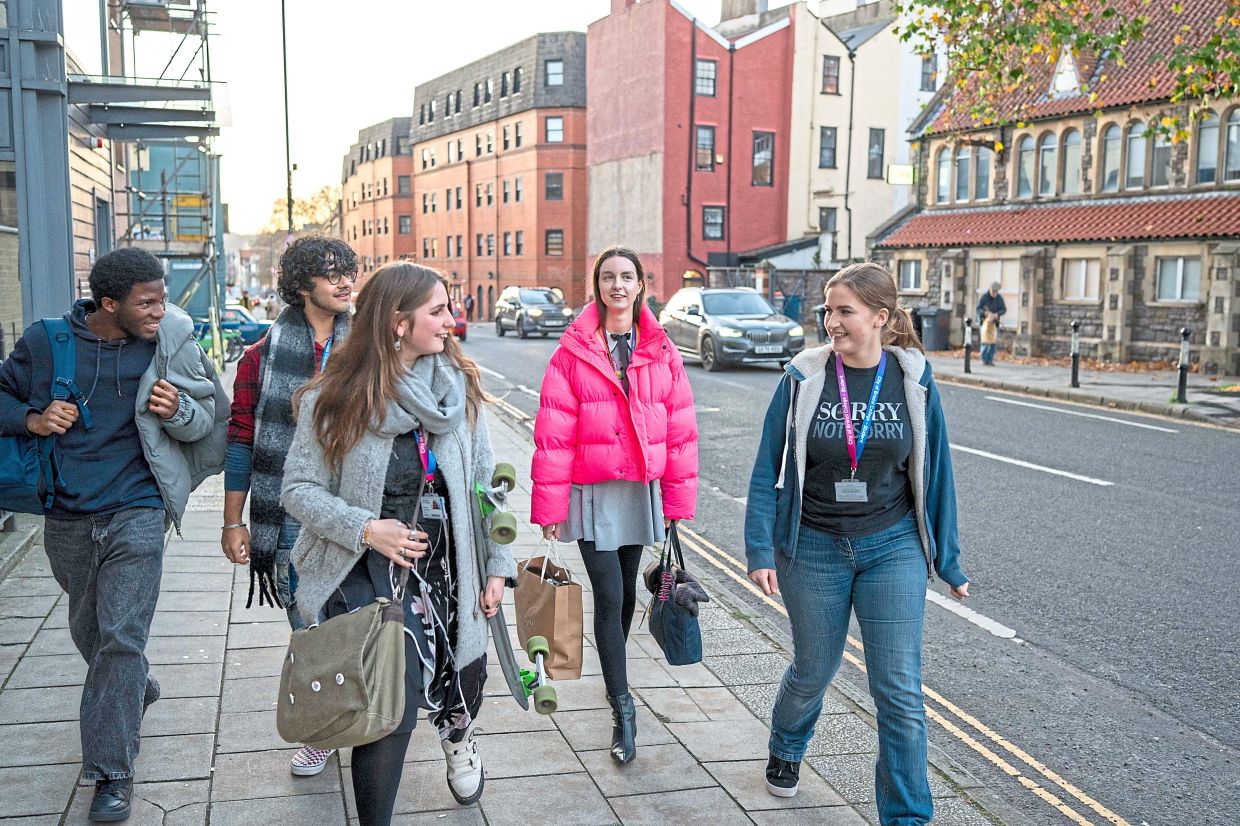
As part of its response, the city launched a new initiative in June, funded by £1.1mil from the central government.
The Youth Guarantee programme offers young people a four-week career counselling course and a guaranteed two-week job placement – a practical tryout that officials say often leads to long-term opportunities.
In its first five months, 139 young people enrolled. Taylor said funding for a second year has been promised, though anything beyond that remains uncertain.
Even those still in education feel anxious.
At City of Bristol College, which helps bridge the gap between school and university, students say conversations about work prospects dominate.
“I’ve seen lots of students my age struggling, trying to get work and even basic necessities,” said 17-year-old Agastya Dhar.
He has a part-time job in a chip shop, but landing even that role was a slog.
“They don’t want students,” he said. “They want experience, but they don’t want to give you the job. They’ll give you the job, but they don’t want you being a student. It just doesn’t make sense in any scenario.”
Eighteen-year-old Kateryna Kalinina, a Ukrainian student on a visa, said employers often dismiss young applicants as unreliable.
“They say young people are always not coming into work and they are not responsible for what they do,” she said.
Others face more practical barriers.
Sixteen-year-old Jemima Williams described a familiar catch-22: “I’m coming on 17 now, so I might want a car, which would also help me get a job. But to afford that car, I need to have a job.”
Jenna Cains, the college’s head of student experience, regularly reminds students that the picture isn’t entirely bleak.
The college has retooled its curriculum to focus heavily on life after education, with teachers emphasising personal development and employability alongside classroom lessons.
“All of that plays on the future development of our young people,” she said.
For Bartley, the path forward is clearer than it was a year ago. His apprenticeship has given him confidence – and ambitions.
His father once ran a small takeaway called Pasta Palace, known locally for its carbonara and lasagne, all made fresh. But the business closed a few years ago.
Bartley hopes to bring it back.
“I want to eventually, at some point, open up my own business with him,” he said. “Maybe a bigger restaurant, so people could actually come in and eat.” — ©2025 The New York Times Company
This article originally appeared in The New York Times